Loading...
This comparison has not been analyzed yet.
One-time AI generation (~1 minute). Scores and timeline are already available below.
Mayawati vs Michael Joseph Savage
Michael Joseph Savage leads by 2.9 pts · 2 figures compared
…
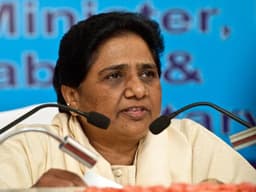
Mayawati
Politician · Modern
54.6Total

Michael Joseph Savage
Politician · Modern
57.5Total
Basic Information
Born
1956
1872
Died
—
1940
Era
Modern
Modern
Nationality
India
New Zealand
Occupation
Politician
Politician
Civilization
Indian
Western
Score Comparison
Military (10%)
35.8
47.8
Political (20%)
68.0
59.3
Influence (20%)
59.0
61.0
Legacy (20%)
48.3
54.0
Leadership (15%)
53.2
72.0
Strategy (15%)
60.0
42.6
TOTAL
54.6
57.5
Mayawati — Complete Timeline
1984 AD
Founded Bahujan Samaj Party (BSP)Political Action◆ Major
Mayawati co-founded the Bahujan Samaj Party with Kanshi Ram to represent Dalits, Adivasis, and other backward classes. The party aimed to challenge upper-caste dominance in Indian politics. This became the vehicle for her political career.
Party FormationDalit PoliticsBSP
Impact: nationalconstructive
1995 AD
First Dalit woman Chief Minister of Uttar PradeshPolitical Action◆ Major
Mayawati became Chief Minister of Uttar Pradesh for the first time with outside support from the BJP. She was the first Dalit woman to hold the office. Her tenure lasted only 139 days but marked a historic milestone for Dalit representation.
Chief MinisterDalitUttar Pradesh
Impact: nationalconstructive
2003 AD
Corruption allegations in Taj Corridor casePolitical Action
Mayawati was accused of corruption in the Taj Heritage Corridor project, which involved alleged misuse of funds for a development project near the Taj Mahal. The Supreme Court criticized her government. The case damaged her reputation but she was not convicted.
CorruptionTaj MahalControversy
Impact: nationaldestructive
2007 AD
Completed full term as Chief Minister (2007-2012)Political Action◆ Major
Mayawati led the BSP to a decisive victory in the 2007 Uttar Pradesh election, winning 206 seats. She served a full five-year term as chief minister, the first Dalit leader to do so. Her government focused on infrastructure and welfare schemes.
Chief MinisterUttar PradeshBSP
Impact: regionalconstructive
Installed statues of Dalit icons in LucknowCultural
Mayawati's government erected large statues of B.R. Ambedkar, Kanshi Ram, and herself in Lucknow's parks and intersections. The project cost hundreds of crores and was criticized as a waste of public funds. It symbolized Dalit assertion but drew accusations of a personality cult.
StatuesDalit IconographyLucknow
Impact: regional
Michael Joseph Savage — Complete Timeline
1935 AD
Became First Labour Prime Minister of New ZealandPolitical Action
Savage led the Labour Party to victory in the 1935 general election, becoming the first Labour prime minister in New Zealand history. His government implemented a sweeping program of social and economic reforms.
Labour PartyElectionSocial Reform
Impact: nationalprogressive
1936 AD
Introduced the 40-Hour Work WeekReform◆ Major
Savage's government passed the Industrial Conciliation and Arbitration Amendment Act, introducing a 40-hour work week and establishing minimum wage standards. This reform improved working conditions for New Zealand workers.
Labor RightsWork WeekMinimum Wage
Impact: nationalprogressive
1938 AD
Introduced the Social Security ActReform
Savage's government passed the Social Security Act, establishing a comprehensive welfare state in New Zealand. The act provided universal pensions, sickness benefits, unemployment benefits, and free healthcare, funded by a social security tax.
Welfare StateSocial SecurityHealthcare
Impact: nationalprogressive
1940 AD
Died in OfficeOther◆ Major
Savage died in office after a battle with cancer. His death was mourned by many New Zealanders, and he was remembered as the architect of the country's welfare state. He was succeeded by Peter Fraser.
DeathWelfare StateLabour Party
Impact: nationaltragic
This comparison has not been analyzed yet.
One-time AI generation (~1 minute). Scores and timeline are already available below.
Rankings
🥇
Michael Joseph SavageLeader
Mil: 47.8Pol: 59.3Inf: 61.0
57.5
🥈
Mayawati
Mil: 35.8Pol: 68.0Inf: 59.0
54.6
+2.9 behind
How This Comparison Works
Algorithm
Each figure is scored on 6 dimensions (0—100 scale) based on structured historical data: Military (10%), Political (20%), Influence (20%), Legacy (20%), Leadership (15%), Strategy (15%). The weighted total produces the final ranking.
Data Sources
Scores are computed from structured sub-indicators in the database. Scale factors adjust for era (Ancient ×0.85, Modern ×1.0) and civilization size (Eastern ×1.05, Other ×0.80) to account for differences in population and military scale.
Maximum 3 Figures
Comparisons are limited to 2—3 figures to ensure readability and statistical meaningfulness.
Error Margins
±5 points per dimension — Sub-scores are derived from historical records with inherent uncertainty. Two figures within 5 points on a dimension should be considered roughly equivalent in that area.
Total Score Accuracy
±3 points overall — The weighted combination of 6 dimensions produces a total score with approximately ±3 points of uncertainty. Differences of less than 3 points are not statistically significant— the figures are effectively tied.
Known Limitations
- Historical records are incomplete and uneven across civilizations
- Figures from oral-tradition societies may be underrepresented
- Occupation labels can misclassify multi-role figures
- Scores measure capability and impact, not moral character
- Quantitative scoring is a comparison tool, not absolute truth
Capability Radar
Military (10%) — Battles & Warfare
Battles
43
30
Win Rate
48
32
Expansion
51
38
Political (20%) — Governance & Reform
Reform
55
75
Diplomacy
50
65
Economy
40
70
Influence (20%) — Cultural & Global Reach
Cultural
55
55
Global
30
50
Legacy (20%) — Historical Impact
Historical
50
60
Longevity
40
55
Leadership (15%) — Power & Stability
Tenure
65
60
Stability
35
60
Strategy (15%) — Tactics & Innovation
Strategy
55
35
Tactics
53
43
Reform
59
45
Similar Comparisons
Comments & Discussion
No comments yet. Be the first to share your thoughts!