Loading...
Justin Trudeau vs Mayawati
Mayawati leads by 3.3 pts · 2 figures compared
…

Justin Trudeau
Politician · Modern
51.3Total
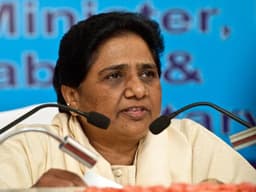
Mayawati
Politician · Modern
54.6Total
Basic Information
Born
1971
1956
Died
—
—
Era
Modern
Modern
Nationality
Canada
India
Occupation
Politician
Politician
Civilization
Western
Indian
Score Comparison
Military (10%)
10.0
35.8
Political (20%)
68.0
68.0
Influence (20%)
55.0
59.0
Legacy (20%)
46.7
48.3
Leadership (15%)
72.0
53.2
Strategy (15%)
38.6
60.0
TOTAL
51.3
54.6
Justin Trudeau — Complete Timeline
2015 AD
Election as Prime Minister of CanadaPolitical Action
Trudeau led the Liberal Party to a majority government victory, defeating Stephen Harper's Conservatives. His campaign focused on 'real change' and included promises of electoral reform, legalizing cannabis, and running deficits to stimulate the economy.
Canadian ElectionLiberal PartyMajority Government
Impact: nationalprogressive
2018 AD
Legalization of Cannabis in CanadaReform◆ Major
Trudeau's government passed the Cannabis Act, making Canada the second country in the world to legalize recreational cannabis. The law aimed to regulate production, distribution, and possession, while reducing the illegal market and criminal penalties.
Cannabis LegalizationDrug PolicySocial Reform
Impact: nationalprogressive
2019 AD
SNC-Lavalin ScandalPolitical Action◆ Major
Trudeau faced allegations that his office pressured Attorney General Jody Wilson-Raybould to intervene in the criminal prosecution of engineering firm SNC-Lavalin. The scandal led to Wilson-Raybould's resignation and damaged Trudeau's reputation for ethical governance.
Ethics ScandalPolitical InterferenceJustice
Impact: nationaldestructive
Mayawati — Complete Timeline
1984 AD
Founded Bahujan Samaj Party (BSP)Political Action◆ Major
Mayawati co-founded the Bahujan Samaj Party with Kanshi Ram to represent Dalits, Adivasis, and other backward classes. The party aimed to challenge upper-caste dominance in Indian politics. This became the vehicle for her political career.
Party FormationDalit PoliticsBSP
Impact: nationalconstructive
1995 AD
First Dalit woman Chief Minister of Uttar PradeshPolitical Action◆ Major
Mayawati became Chief Minister of Uttar Pradesh for the first time with outside support from the BJP. She was the first Dalit woman to hold the office. Her tenure lasted only 139 days but marked a historic milestone for Dalit representation.
Chief MinisterDalitUttar Pradesh
Impact: nationalconstructive
2003 AD
Corruption allegations in Taj Corridor casePolitical Action
Mayawati was accused of corruption in the Taj Heritage Corridor project, which involved alleged misuse of funds for a development project near the Taj Mahal. The Supreme Court criticized her government. The case damaged her reputation but she was not convicted.
CorruptionTaj MahalControversy
Impact: nationaldestructive
2007 AD
Completed full term as Chief Minister (2007-2012)Political Action◆ Major
Mayawati led the BSP to a decisive victory in the 2007 Uttar Pradesh election, winning 206 seats. She served a full five-year term as chief minister, the first Dalit leader to do so. Her government focused on infrastructure and welfare schemes.
Chief MinisterUttar PradeshBSP
Impact: regionalconstructive
Installed statues of Dalit icons in LucknowCultural
Mayawati's government erected large statues of B.R. Ambedkar, Kanshi Ram, and herself in Lucknow's parks and intersections. The project cost hundreds of crores and was criticized as a waste of public funds. It symbolized Dalit assertion but drew accusations of a personality cult.
StatuesDalit IconographyLucknow
Impact: regional
Expert Analysis
Origins
Justin Trudeau was born in 1971 in Ottawa, Canada, to Prime Minister Pierre Trudeau and Margaret Trudeau. He grew up in the political spotlight, attending prestigious schools like Collège Jean-de-Brébeuf and McGill University, where he studied literature and education. His formative years included teaching and outdoor leadership, shaping his progressive worldview.
Mayawati was born in 1956 in New Delhi, India, into a Dalit family. Her father was a government clerk, and she pursued a law degree from Delhi University. Her early life was marked by caste discrimination, which fueled her commitment to social justice. She joined the Bahujan Samaj Party (BSP) under Kanshi Ram's mentorship.
Rise to Power
Trudeau's political ascent began with his election as a Liberal MP in 2008. He became Liberal leader in 2013, capitalizing on his family name and charisma. In 2015, he led the party to a majority government victory, defeating Stephen Harper's Conservatives, with a campaign centered on 'real change' and progressive policies.
Mayawati rose through the BSP, co-founding it in 1984. She became Chief Minister of Uttar Pradesh for the first time in 1995, at age 39, with outside support from the BJP. Her rise was meteoric as a Dalit woman in a patriarchal society. She later won full terms in 2002 and 2007, the latter with a decisive majority of 206 seats.
Leadership & Governance
Trudeau's leadership style is inclusive and media-savvy, scoring 72.0 in leadership. He legalized cannabis in 2018, implemented a carbon tax, and promoted gender parity in his cabinet. However, his governance faced criticism for ethical lapses, like the SNC-Lavalin scandal, where his office allegedly pressured Attorney General Jody Wilson-Raybould.
Mayawati's governance focused on Dalit empowerment, scoring 60.0 in strategy. She erected statues of B.R. Ambedkar and reserved government positions. Her 2007-2012 term saw infrastructure projects but also corruption allegations, like the Taj Corridor case. Her political strategy involved shifting alliances, but her leadership (53.2) was less consensus-driven than Trudeau's.
Triumph & Tragedy
Trudeau's greatest success is legalizing cannabis, a global precedent. He also managed the COVID-19 pandemic with substantial aid. His failures include the SNC-Lavalin affair and the WE Charity scandal, which damaged his ethical image. His military score of 10.0 reflects minimal defense focus.
Mayawati's triumph is becoming the first Dalit woman Chief Minister and serving a full term, uplifting millions. Her tragedy is the corruption accusations and the perception of autocratic rule, with her party's decline after 2012. Her military score of 35.8 is higher due to India's security context but still low.
Character & Destiny
Trudeau is charismatic and idealistic, often prioritizing image over substance. His character led to progressive wins but also hubris, as seen in scandals. His destiny is tied to the Liberal brand, but his legacy is mixed.
Mayawati is determined and strategic, with a focus on Dalit rights. Her aloofness and reliance on symbolism (statues) drew criticism. Her destiny was to break caste barriers, but she failed to build a lasting party structure beyond her leadership.
Legacy
Trudeau's legacy includes cannabis legalization, climate action, and gender equality, but his ethical controversies may overshadow these. His political score of 68.0 and influence of 55.0 reflect significant but contested impact.
Mayawati's legacy is profound for Dalit empowerment, inspiring millions in India. Her total score of 54.6 edges Trudeau's 51.3. The BSP remains a force, though weakened. Her statues and policies created a visible change in Uttar Pradesh's political landscape.
Conclusion
Mayawati had greater impact because her work directly challenged systemic caste oppression, achieving concrete political power for Dalits. Trudeau's reforms, while progressive, occurred in a stable democracy with less structural inequality. Mayawati's total score of 54.6 vs. Trudeau's 51.3 reflects this. Her legacy of empowerment is more transformative than Trudeau's policy changes.
Rankings
🥇
MayawatiLeader
Mil: 35.8Pol: 68.0Inf: 59.0
54.6
🥈
Justin Trudeau
Mil: 10.0Pol: 68.0Inf: 55.0
51.3
+3.3 behind
How This Comparison Works
Algorithm
Each figure is scored on 6 dimensions (0—100 scale) based on structured historical data: Military (10%), Political (20%), Influence (20%), Legacy (20%), Leadership (15%), Strategy (15%). The weighted total produces the final ranking.
Data Sources
Scores are computed from structured sub-indicators in the database. Scale factors adjust for era (Ancient ×0.85, Modern ×1.0) and civilization size (Eastern ×1.05, Other ×0.80) to account for differences in population and military scale.
Maximum 3 Figures
Comparisons are limited to 2—3 figures to ensure readability and statistical meaningfulness.
Error Margins
±5 points per dimension — Sub-scores are derived from historical records with inherent uncertainty. Two figures within 5 points on a dimension should be considered roughly equivalent in that area.
Total Score Accuracy
±3 points overall — The weighted combination of 6 dimensions produces a total score with approximately ±3 points of uncertainty. Differences of less than 3 points are not statistically significant— the figures are effectively tied.
Known Limitations
- Historical records are incomplete and uneven across civilizations
- Figures from oral-tradition societies may be underrepresented
- Occupation labels can misclassify multi-role figures
- Scores measure capability and impact, not moral character
- Quantitative scoring is a comparison tool, not absolute truth
Capability Radar
Military (10%) — Battles & Warfare
Battles
0
43
Win Rate
0
48
Expansion
0
51
Political (20%) — Governance & Reform
Reform
55
55
Diplomacy
60
50
Economy
50
40
Influence (20%) — Cultural & Global Reach
Cultural
50
55
Global
55
30
Legacy (20%) — Historical Impact
Historical
40
50
Longevity
30
40
Leadership (15%) — Power & Stability
Tenure
65
65
Stability
45
35
Strategy (15%) — Tactics & Innovation
Strategy
0
55
Tactics
0
53
Reform
5
59
Similar Comparisons
Comments & Discussion
No comments yet. Be the first to share your thoughts!