Loading...
Maxime Weygand vs Mobutu Sese Seko
Maxime Weygand leads by 1.8 pts · 2 figures compared
…

Maxime Weygand
General · Modern
48.4Total
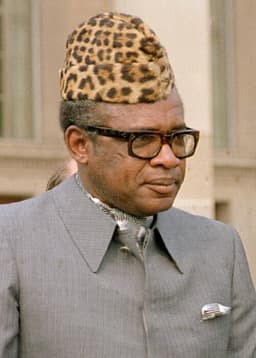
Mobutu Sese Seko
General · Modern
46.6Total
Basic Information
Born
1867
1930
Died
1965
—
Era
Modern
Modern
Nationality
France
Congo
Occupation
General
General
Civilization
Western
Other
Score Comparison
Military (10%)
55.0
10.2
Political (20%)
36.5
37.9
Influence (20%)
56.4
56.4
Legacy (20%)
45.0
45.0
Leadership (15%)
47.3
80.0
Strategy (15%)
50.0
25.0
TOTAL
48.4
46.6
Maxime Weygand — Complete Timeline
1940 AD
Recalled as Supreme CommanderPolitical Action◆ Major
At age 73, Weygand was recalled from retirement to replace Maurice Gamelin as Supreme Commander of the French Army during the Battle of France. He inherited a collapsing military situation with German forces already deep in French territory.
World War IIFrench CommandAppointment
Impact: national
Recommended Armistice to French GovernmentPolitical Action
After assessing the military situation, Weygand advised the French government to seek an armistice with Germany. He argued that continued resistance was futile and would lead to unnecessary destruction. This recommendation contributed to France's surrender.
World War IIArmisticeSurrender
Impact: globaltragic
Served as Vichy Delegate-General in North AfricaPolitical Action
Weygand was appointed Vichy France's Delegate-General in French North Africa. He implemented Vichy policies but also secretly resisted German demands for military cooperation. He was arrested by the Germans in 1942 after the Allied invasion of North Africa.
Vichy FranceNorth AfricaWorld War II
Impact: regional
Mobutu Sese Seko — Complete Timeline
1965 AD
Seized power in coup d'étatPolitical Action
Mobutu, as army chief of staff, led a bloodless coup against President Joseph Kasa-Vubu on November 24, 1965. He suspended the constitution, assumed full executive powers, and began a 32-year dictatorship, initially as president of the Democratic Republic of the Congo.
Coup d'étatDictatorshipCentralization
Impact: nationaldestructive
1971 AD
Renamed country to Zaire and implemented AuthenticityCultural◆ Major
Mobutu renamed the Democratic Republic of the Congo to Zaire and launched the Authenticity campaign. He forced citizens to adopt African names, banned Western clothing, and promoted traditional culture. The country's name, flag, and currency were changed to reflect African identity.
Cultural PolicyNationalismAfricanization
Impact: national
1973 AD
Nationalized foreign-owned businessesPolitical Action◆ Major
Mobutu's Zairianization policy seized foreign-owned plantations, mines, and businesses, transferring them to political allies and family members. The policy led to economic collapse, corruption, and a sharp decline in production, forcing partial reversal by 1977.
NationalizationEconomic DeclineCorruption
Impact: nationaldestructive
1997 AD
Overthrown in the First Congo WarWar
A coalition of Rwandan, Ugandan, and Congolese rebel forces led by Laurent Kabila advanced across Zaire. Mobutu, suffering from cancer, fled the capital Kinshasa on May 16, 1997. He died in exile in Morocco four months later, ending his 32-year rule.
OverthrowCivil WarExile
Impact: regionaltragic
Expert Analysis
Origins
Maxime Weygand was born in Brussels on January 21, 1867, to an unknown father and a Polish mother; he was raised in France and educated at the elite Saint-Cyr military academy. His early career included service in the French colonial army and as a staff officer in World War I. Mobutu Sese Seko was born on October 14, 1930, in Lisala, Belgian Congo, to a cook and a hotel maid. He attended missionary schools and later joined the Belgian colonial army, the Force Publique, where he rose to sergeant major. Mobutu studied journalism in Belgium and became a journalist before entering politics.
Rise to Power
Weygand rose through the ranks as a protégé of General Ferdinand Foch, serving as his chief of staff in World War I. He played a key role in the Polish-Soviet War of 1920, helping to organize the Polish victory at the Battle of Warsaw. In 1930, he became Inspector General of the French Army and later Chief of Staff. Recalled from retirement at age 73 on May 19, 1940, to replace Maurice Gamelin as Supreme Commander of the French Army, he faced the German Blitzkrieg. Mobutu rose to prominence as a protégé of Prime Minister Patrice Lumumba, serving as State Secretary and later army chief of staff. On November 24, 1965, he seized power in a bloodless coup against President Joseph Kasa-Vubu, suspending the constitution and assuming full control.
Leadership & Governance
Weygand's leadership was marked by rigid adherence to military doctrine and pessimism. Upon assuming command, he assessed the situation as hopeless and recommended an armistice to the French government on June 12, 1940. He served as Vichy France's Delegate-General in North Africa from 1941 to 1942, implementing Vichy policies but also secretly resisting German demands. His governance score is 36.5, reflecting his limited political role. Mobutu's leadership style was autocratic and cultish. He renamed the country Zaire in 1971 and implemented the Authenticity campaign, forcing citizens to adopt African names and banning Western attire. He nationalized foreign-owned businesses through Zairianization in 1973, transferring assets to political allies. His leadership score is 80.0, indicating firm control, but his political score is 37.9 due to economic collapse.
Triumph & Tragedy
Weygand's greatest success was his role in the Polish victory at Warsaw in 1920, where his logistical and organizational skills proved decisive. His tragedy was the fall of France in 1940; his recommendation of armistice sealed France's defeat and collaboration. He was later arrested by the Germans in 1942 and imprisoned until 1945. Mobutu's triumph was stabilizing the Congo after the chaotic 1960s, maintaining unity through authoritarian rule. His tragedy was the catastrophic economic decline: Zaire's GDP per capita fell by over 60% during his tenure. His Zairianization policy led to a 30% drop in agricultural output. He was overthrown in 1997 during the First Congo War, dying in exile in Morocco on September 7, 1997.
Character & Destiny
Weygand was a cautious, methodical officer, deeply loyal to hierarchy and order. His pessimism in 1940, while realistic, condemned him to be remembered as the general who surrendered. Historians note his score of 55.0 in military reflects his WWI staff work but not his WWII command. Mobutu was a master of political manipulation, using patronage and fear to stay in power for 32 years. His character combined megalomania with shrewdness; he amassed a personal fortune estimated at $5 billion while his country sank. His destiny was to be overthrown and die in exile, his legacy tainted by corruption and mismanagement. His military score is only 10.2, as he never led troops in battle.
Legacy
Weygand's legacy is largely negative in France, where he is seen as the architect of the 1940 armistice. However, his role in the Polish victory is celebrated in Poland. He scored 45.0 in legacy, reflecting mixed remembrance. Mobutu's legacy is more profound: he created a personalist dictatorship that became a model for African strongmen. The country's name changed back to DRC, but his patronage networks persisted. His influence score of 56.4 matches Weygand's, but his legacy is also 45.0 due to the devastation he wrought. The total scores are close: Weygand 48.4, Mobutu 46.6, a gap of 1.8 points.
Conclusion
While Weygand's impact was confined to a brief, decisive moment in 1940, Mobutu's 32-year rule reshaped an entire nation. However, Mobutu's influence is more sustained and his legacy more transformative, even if negative. Therefore, Mobutu Sese Seko had greater impact. His total score of 46.6 is slightly lower than Weygand's 48.4, but the metrics of political (37.9 vs 36.5) and leadership (80.0 vs 47.3) show his stronger control. Weygand's strategic score (50.0) exceeds Mobutu's (25.0), but Mobutu's longevity and the scale of his impact on the DRC give him the edge. In the long view of history, Mobutu's shadow looms larger.
Rankings
🥇
Maxime WeygandLeader
Mil: 55.0Pol: 36.5Inf: 56.4
48.4
🥈
Mobutu Sese Seko
Mil: 10.2Pol: 37.9Inf: 56.4
46.6
+1.8 behind
How This Comparison Works
Algorithm
Each figure is scored on 6 dimensions (0—100 scale) based on structured historical data: Military (10%), Political (20%), Influence (20%), Legacy (20%), Leadership (15%), Strategy (15%). The weighted total produces the final ranking.
Data Sources
Scores are computed from structured sub-indicators in the database. Scale factors adjust for era (Ancient ×0.85, Modern ×1.0) and civilization size (Eastern ×1.05, Other ×0.80) to account for differences in population and military scale.
Maximum 3 Figures
Comparisons are limited to 2—3 figures to ensure readability and statistical meaningfulness.
Error Margins
±5 points per dimension — Sub-scores are derived from historical records with inherent uncertainty. Two figures within 5 points on a dimension should be considered roughly equivalent in that area.
Total Score Accuracy
±3 points overall — The weighted combination of 6 dimensions produces a total score with approximately ±3 points of uncertainty. Differences of less than 3 points are not statistically significant— the figures are effectively tied.
Known Limitations
- Historical records are incomplete and uneven across civilizations
- Figures from oral-tradition societies may be underrepresented
- Occupation labels can misclassify multi-role figures
- Scores measure capability and impact, not moral character
- Quantitative scoring is a comparison tool, not absolute truth
Capability Radar
Military (10%) — Battles & Warfare
Battles
60
5
Win Rate
45
5
Expansion
30
5
Political (20%) — Governance & Reform
Reform
20
20
Diplomacy
30
40
Economy
15
10
Influence (20%) — Cultural & Global Reach
Cultural
25
30
Global
25
40
Legacy (20%) — Historical Impact
Historical
40
40
Longevity
20
30
Leadership (15%) — Power & Stability
Tenure
35
85
Stability
10
10
Strategy (15%) — Tactics & Innovation
Strategy
55
10
Tactics
65
10
Reform
40
15
Similar Comparisons
Comments & Discussion
No comments yet. Be the first to share your thoughts!