Loading...
This comparison has not been analyzed yet.
One-time AI generation (~1 minute). Scores and timeline are already available below.
Marthanda Varma vs Njoya Ibrahim
Marthanda Varma leads by 5.0 pts · 2 figures compared
…
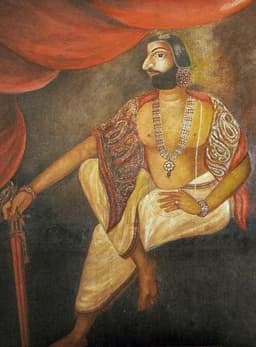
Marthanda Varma
Emperor · Modern
59.2Total
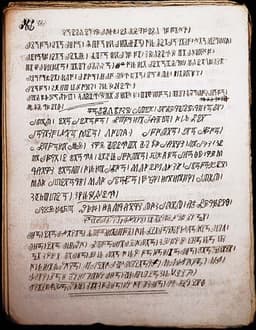
Njoya Ibrahim
Emperor · Modern
54.2Total
Basic Information
Born
1706
1876
Died
1758
1933
Era
Modern
Modern
Nationality
India
Cameroon
Occupation
Emperor
Emperor
Civilization
Indian
Other
Score Comparison
Military (10%)
72.5
22.6
Political (20%)
60.0
70.0
Influence (20%)
56.4
59.0
Legacy (20%)
49.2
49.2
Leadership (15%)
66.0
72.0
Strategy (15%)
66.3
35.7
TOTAL
59.2
54.2
Marthanda Varma — Complete Timeline
1729 AD
Annexation of the Venad kingdomWar◆ Major
Marthanda Varma ascended the throne of Venad (later Travancore) and began a campaign to unify the fragmented principalities of southern Kerala. He defeated rival chieftains and annexed territories, including the powerful Ettuveetil Pillamar, consolidating his rule and laying the foundation for the Travancore kingdom.
UnificationVenadKerala
Impact: regionalconstructive
1733 AD
Construction of the Padmanabhaswamy Temple gopuramCultural
Marthanda Varma commissioned the construction of the seven-tiered gopuram (tower) of the Padmanabhaswamy Temple in Thiruvananthapuram. This architectural project symbolized his devotion and the wealth of Travancore. The temple became the state's spiritual center and a major pilgrimage site.
Temple ArchitecturePadmanabhaswamyThiruvananthapuram
Impact: regionalconstructive
1741 AD
Battle of ColachelWar◆ Major
Marthanda Varma's forces defeated the Dutch East India Company at the Battle of Colachel, a rare Asian victory over a European colonial power. The Dutch commander Eustachius De Lannoy was captured and later served as a general in the Travancore army. This victory established Travancore as a major power in southern India.
Dutch East India CompanyTravancoreColonial Conflict
Impact: regionalconstructive
1753 AD
Treaty with the British East India CompanyPolitical Action◆ Major
Marthanda Varma signed a treaty with the British East India Company, agreeing to provide military support in exchange for protection against the Dutch and other rivals. This alliance ensured Travancore's security and allowed the kingdom to focus on internal development, though it also began a dependency on the British.
British AllianceTravancoreColonial Diplomacy
Impact: regional
Njoya Ibrahim — Complete Timeline
1896 AD
Invention of the Bamum ScriptInvention◆ Major
Sultan Njoya Ibrahim created a syllabic writing system for the Bamum language. Over several decades, the script evolved through multiple stages, enabling the recording of Bamum history, law, and culture. It is one of the few indigenous scripts invented in sub-Saharan Africa.
Writing SystemCultural InnovationBamum Kingdom
Impact: regionalconstructive
1900 AD
Establishment of the Bamum Kingdom's Administrative SystemReform◆ Major
Njoya Ibrahim reorganized the Bamum state administration, creating a centralized bureaucracy with appointed officials. He codified laws and established a court system, strengthening royal authority and governance efficiency.
Administrative ReformCentralizationBamum
Impact: nationalconstructive
1918 AD
Conversion to Islam and Religious ReformsCultural
Sultan Njoya Ibrahim converted to Islam and introduced Islamic practices in the Bamum kingdom. He built mosques and integrated Islamic law with traditional customs, though he maintained some indigenous rituals, creating a syncretic religious system.
Religious ConversionIslamSyncretism
Impact: national
1931 AD
Exile and Death under French Colonial RulePolitical Action◆ Major
French colonial authorities deposed Njoya Ibrahim and exiled him to Yaound
ExileColonialismFrench Rule
Impact: nationaltragic
This comparison has not been analyzed yet.
One-time AI generation (~1 minute). Scores and timeline are already available below.
Rankings
🥇
Marthanda VarmaLeader
Mil: 72.5Pol: 60.0Inf: 56.4
59.2
🥈
Njoya Ibrahim
Mil: 22.6Pol: 70.0Inf: 59.0
54.2
+5.0 behind
How This Comparison Works
Algorithm
Each figure is scored on 6 dimensions (0—100 scale) based on structured historical data: Military (10%), Political (20%), Influence (20%), Legacy (20%), Leadership (15%), Strategy (15%). The weighted total produces the final ranking.
Data Sources
Scores are computed from structured sub-indicators in the database. Scale factors adjust for era (Ancient ×0.85, Modern ×1.0) and civilization size (Eastern ×1.05, Other ×0.80) to account for differences in population and military scale.
Maximum 3 Figures
Comparisons are limited to 2—3 figures to ensure readability and statistical meaningfulness.
Error Margins
±5 points per dimension — Sub-scores are derived from historical records with inherent uncertainty. Two figures within 5 points on a dimension should be considered roughly equivalent in that area.
Total Score Accuracy
±3 points overall — The weighted combination of 6 dimensions produces a total score with approximately ±3 points of uncertainty. Differences of less than 3 points are not statistically significant— the figures are effectively tied.
Known Limitations
- Historical records are incomplete and uneven across civilizations
- Figures from oral-tradition societies may be underrepresented
- Occupation labels can misclassify multi-role figures
- Scores measure capability and impact, not moral character
- Quantitative scoring is a comparison tool, not absolute truth
Capability Radar
Military (10%) — Battles & Warfare
Battles
55
15
Win Rate
70
10
Expansion
55
10
Political (20%) — Governance & Reform
Reform
65
85
Diplomacy
55
60
Economy
60
55
Influence (20%) — Cultural & Global Reach
Cultural
45
60
Global
35
35
Legacy (20%) — Historical Impact
Historical
50
55
Longevity
45
50
Leadership (15%) — Power & Stability
Tenure
60
70
Stability
55
50
Strategy (15%) — Tactics & Innovation
Strategy
60
15
Tactics
65
20
Reform
50
25
Similar Comparisons
Comments & Discussion
No comments yet. Be the first to share your thoughts!