Loading...
Mario Monti vs Muhammad Ali Jinnah
Muhammad Ali Jinnah leads by 2.1 pts · 2 figures compared
…

Mario Monti
Politician · Modern
56.1Total
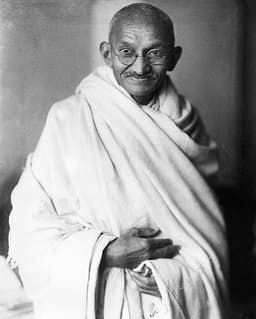
Muhammad Ali Jinnah
Politician · Modern
58.2Total
Basic Information
Born
1943
1876
Died
—
1948
Era
Modern
Modern
Nationality
Italy
Pakistan
Occupation
Politician
Politician
Civilization
Western
Indian
Score Comparison
Military (10%)
49.9
48.7
Political (20%)
72.0
70.0
Influence (20%)
54.9
40.0
Legacy (20%)
45.0
70.0
Leadership (15%)
74.0
72.0
Strategy (15%)
41.9
45.0
TOTAL
56.1
58.2
Mario Monti — Complete Timeline
1994 AD
Appointed European Commissioner for CompetitionPolitical Action◆ Major
Monti served as European Commissioner for Competition under Jacques Santer, later becoming Commissioner for the Internal Market. He was known for antitrust actions against Microsoft and GE/Honeywell, shaping EU competition policy.
European UnionCompetition PolicyAntitrust
Impact: regionalconstructive
2011 AD
Appointed Prime Minister of ItalyPolitical Action◆ Major
Monti was appointed as a technocratic Prime Minister by President Napolitano, replacing Silvio Berlusconi during the European debt crisis. He formed a government of unelected experts to implement austerity measures and structural reforms.
Debt CrisisTechnocracyAusterity
Impact: national
2012 AD
Implemented Austerity Measures and ReformsReform◆ Major
Monti's government passed a series of austerity budgets, pension reforms, and labor market liberalization (Fornero reform) to reduce Italy's public debt and restore market confidence. These measures sparked protests and social unrest.
Economic ReformAusterityLabor Market
Impact: nationaldestructive
2013 AD
Resigned as Prime MinisterPolitical Action◆ Major
Monti resigned after the center-left coalition led by Pier Luigi Bersani withdrew support, following the 2013 general election where his centrist coalition performed poorly. He was succeeded by Enrico Letta.
Government CrisisElectionTransition
Impact: national
Muhammad Ali Jinnah — Complete Timeline
1929 AD
Fourteen Points of JinnahPolitical Action◆ Major
Jinnah presented fourteen constitutional reforms to the British government demanding safeguards for Muslim rights in India. The points rejected the Nehru Report and became the basis for the Muslim League's political platform.
Constitutional ReformMuslim RightsIndian Politics
Impact: national
1940 AD
Lahore ResolutionPolitical Action
Jinnah presided over the Muslim League session in Lahore where the resolution for separate Muslim states was passed. This formally demanded the creation of Pakistan, marking a turning point in the independence movement.
Pakistan MovementPartitionMuslim League
Impact: regional
1946 AD
Direct Action DayPolitical Action◆ Major
Jinnah called for a day of protest to demand Pakistan. The protest in Calcutta escalated into communal riots that killed over 4,000 people. This violence accelerated the partition process.
Communal ViolencePartitionCalcutta
Impact: nationaltragic
1947 AD
Independence of PakistanPolitical Action
Pakistan became an independent nation on August 14, 1947. Jinnah became its first Governor-General, delivering a famous speech about unity and democracy. The partition caused massive population transfers and violence.
IndependencePartitionFounding of Pakistan
Impact: global
Jinnah's Address to Constituent AssemblyPolitical Action◆ Major
Jinnah addressed the first Constituent Assembly of Pakistan, outlining his vision for a secular, democratic state where all citizens had equal rights regardless of religion. This speech remains influential in Pakistani politics.
ConstitutionSecularismPakistan Vision
Impact: nationalconstructive
Expert Analysis
Origins
Mario Monti was born on March 19, 1943, in Varese, Italy, into a middle-class family. He studied economics at Bocconi University in Milan and later at Yale University under James Tobin. His academic background shaped his technocratic approach. Monti entered public service as a European Commissioner in 1995, focusing on competition policy.
Muhammad Ali Jinnah was born on December 25, 1876, in Karachi, then part of British India, into a merchant family. He studied law at Lincoln's Inn in London and became a successful barrister in Bombay. Jinnah initially joined the Indian National Congress, advocating Hindu-Muslim unity, but later joined the All-India Muslim League, championing Muslim rights.
Rise to Power
Monti rose to prominence through his roles in the European Commission. He served as Commissioner for Competition (1999-2004) under Romano Prodi, where he blocked mergers and fined companies for antitrust violations. His reputation as a fiscal hawk led to his appointment as Prime Minister in November 2011, replacing Silvio Berlusconi during the eurozone crisis. Monti formed a technocratic government with support from centrist parties.
Jinnah's rise began in the 1910s as a leader of the Muslim League. He negotiated with the British and Congress, presenting the Fourteen Points in 1929 to safeguard Muslim interests. The turning point came with the Lahore Resolution in 1940, where the Muslim League demanded separate states for Muslims. Jinnah's leadership unified Muslims across India, culminating in the creation of Pakistan on August 14, 1947, with him as its first Governor-General.
Leadership & Governance
Monti's leadership was technocratic and crisis-driven. He implemented austerity measures, including spending cuts, tax hikes, and pension reforms (the Fornero reform), to reduce Italy's debt. His government passed a labor market liberalization law, but his approach faced criticism for lacking political legitimacy. Monti scored 74.0 in leadership, reflecting his decisive but unpopular decisions.
Jinnah's leadership was visionary and constitutional. As Governor-General, he focused on state-building, delivering a famous speech on August 11, 1947, advocating secularism and equal rights. He worked to integrate refugees and establish a civil service. Jinnah's leadership score of 72.0 highlights his role in founding a nation under immense pressure.
Triumph & Tragedy
Monti's greatest success was stabilizing Italy's finances during the debt crisis, reducing bond yields and restoring confidence. However, his austerity policies caused a deep recession, with unemployment rising to 12%. He resigned in 2013 after his centrist coalition failed to gain support. His legacy score of 45.0 reflects limited long-term impact.
Jinnah's triumph was the creation of Pakistan, a homeland for Muslims in South Asia. His tragedy includes the violence of Partition, with Direct Action Day in 1946 triggering riots that killed over 4,000. He also failed to establish a stable democracy, dying in 1948 just a year after independence. His legacy score of 70.0 underscores his enduring role as founder.
Character & Destiny
Monti was analytical and reserved, preferring technocratic solutions over political maneuvering. His destiny was tied to the eurozone crisis; he was the right person at the right time for Italy's immediate needs but lacked the political base to sustain reforms. His character as an economist shaped his focus on fiscal discipline.
Jinnah was determined and disciplined, known for his legal mind and constitutional approach. His destiny was to lead the Muslim League to independence, but his early death prevented him from shaping Pakistan's future. His character as a secular nationalist influenced his vision, but the state later moved toward Islamization.
Legacy
Monti's legacy is mixed: he is remembered as a competent crisis manager but also as a symbol of austerity. His reforms, like the Fornero pension reform, remain controversial. He scored 54.9 in influence and 45.0 in legacy, indicating limited lasting impact compared to founders.
Jinnah's legacy is foundational: he is revered as Quaid-e-Azam (Great Leader) in Pakistan. His vision of a democratic, secular state is debated but remains influential. He scored 40.0 in influence but 70.0 in legacy, reflecting his role as a nation-builder.
Conclusion
Muhammad Ali Jinnah had greater impact overall, with a total score of 58.2 compared to Monti's 56.1. Jinnah's creation of a nation of over 200 million people and his enduring legacy as founder outweigh Monti's temporary stabilization of Italy. While Monti's technocratic leadership was effective in a crisis, Jinnah's visionary state-building changed the course of history. The 2.1-point gap reflects the difference between a crisis manager and a nation founder.
Rankings
🥇
Muhammad Ali JinnahLeader
Mil: 48.7Pol: 70.0Inf: 40.0
58.2
🥈
Mario Monti
Mil: 49.9Pol: 72.0Inf: 54.9
56.1
+2.1 behind
How This Comparison Works
Algorithm
Each figure is scored on 6 dimensions (0—100 scale) based on structured historical data: Military (10%), Political (20%), Influence (20%), Legacy (20%), Leadership (15%), Strategy (15%). The weighted total produces the final ranking.
Data Sources
Scores are computed from structured sub-indicators in the database. Scale factors adjust for era (Ancient ×0.85, Modern ×1.0) and civilization size (Eastern ×1.05, Other ×0.80) to account for differences in population and military scale.
Maximum 3 Figures
Comparisons are limited to 2—3 figures to ensure readability and statistical meaningfulness.
Error Margins
±5 points per dimension — Sub-scores are derived from historical records with inherent uncertainty. Two figures within 5 points on a dimension should be considered roughly equivalent in that area.
Total Score Accuracy
±3 points overall — The weighted combination of 6 dimensions produces a total score with approximately ±3 points of uncertainty. Differences of less than 3 points are not statistically significant— the figures are effectively tied.
Known Limitations
- Historical records are incomplete and uneven across civilizations
- Figures from oral-tradition societies may be underrepresented
- Occupation labels can misclassify multi-role figures
- Scores measure capability and impact, not moral character
- Quantitative scoring is a comparison tool, not absolute truth
Capability Radar
Military (10%) — Battles & Warfare
Battles
29
23
Win Rate
29
31
Expansion
38
34
Political (20%) — Governance & Reform
Reform
65
85
Diplomacy
70
90
Economy
75
40
Influence (20%) — Cultural & Global Reach
Cultural
20
70
Global
50
75
Legacy (20%) — Historical Impact
Historical
40
85
Longevity
30
75
Leadership (15%) — Power & Stability
Tenure
30
60
Stability
55
50
Strategy (15%) — Tactics & Innovation
Strategy
36
37
Tactics
43
39
Reform
42
43
Similar Comparisons
Comments & Discussion
No comments yet. Be the first to share your thoughts!