Loading...
Devan Nair vs Muhammad Ali Jinnah
Muhammad Ali Jinnah leads by 20.5 pts · 2 figures compared
…
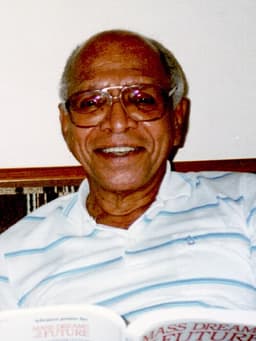
Devan Nair
Politician · Modern
37.7Total
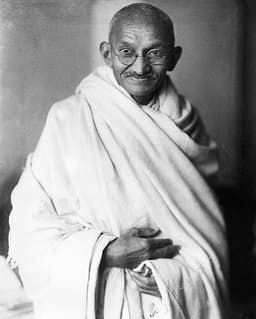
Muhammad Ali Jinnah
Politician · Modern
58.2Total
Basic Information
Born
1923
1876
Died
—
1948
Era
Modern
Modern
Nationality
Singapore
Pakistan
Occupation
Politician
Politician
Civilization
Eastern
Indian
Score Comparison
Military (10%)
11.4
48.7
Political (20%)
32.2
70.0
Influence (20%)
47.9
40.0
Legacy (20%)
35.8
70.0
Leadership (15%)
48.4
72.0
Strategy (15%)
35.9
45.0
TOTAL
37.7
58.2
Devan Nair — Complete Timeline
1961 AD
Co-founded the National Trades Union CongressPolitical Action◆ Major
Nair was a key figure in the labor movement and co-founded the National Trades Union Congress (NTUC) in 1961. He served as its secretary-general, advocating for workers' rights and industrial harmony.
Labor movementNTUC
Impact: nationalconstructive
1979 AD
Served as Member of Parliament for AnsonPolitical Action
Nair was elected as the Member of Parliament for Anson constituency in 1979 under the PAP. He served until his election as President, representing the constituency in Parliament.
MPPAP
1981 AD
Elected Third President of SingaporePolitical Action◆ Major
Devan Nair was elected as the third President of Singapore by Parliament in October 1981. He succeeded Benjamin Sheares and served as a ceremonial head of state until 1985.
PresidencyHead of state
Impact: national
1985 AD
Resigned as President Amid ScandalPolitical Action◆ Major
Nair resigned as President in March 1985 following allegations of alcoholism and inappropriate behavior. His resignation was accepted by Parliament, and he left Singapore shortly after, living in exile in the United States.
ResignationScandal
Impact: nationaltragic
Muhammad Ali Jinnah — Complete Timeline
1929 AD
Fourteen Points of JinnahPolitical Action◆ Major
Jinnah presented fourteen constitutional reforms to the British government demanding safeguards for Muslim rights in India. The points rejected the Nehru Report and became the basis for the Muslim League's political platform.
Constitutional ReformMuslim RightsIndian Politics
Impact: national
1940 AD
Lahore ResolutionPolitical Action
Jinnah presided over the Muslim League session in Lahore where the resolution for separate Muslim states was passed. This formally demanded the creation of Pakistan, marking a turning point in the independence movement.
Pakistan MovementPartitionMuslim League
Impact: regional
1946 AD
Direct Action DayPolitical Action◆ Major
Jinnah called for a day of protest to demand Pakistan. The protest in Calcutta escalated into communal riots that killed over 4,000 people. This violence accelerated the partition process.
Communal ViolencePartitionCalcutta
Impact: nationaltragic
1947 AD
Independence of PakistanPolitical Action
Pakistan became an independent nation on August 14, 1947. Jinnah became its first Governor-General, delivering a famous speech about unity and democracy. The partition caused massive population transfers and violence.
IndependencePartitionFounding of Pakistan
Impact: global
Jinnah's Address to Constituent AssemblyPolitical Action◆ Major
Jinnah addressed the first Constituent Assembly of Pakistan, outlining his vision for a secular, democratic state where all citizens had equal rights regardless of religion. This speech remains influential in Pakistani politics.
ConstitutionSecularismPakistan Vision
Impact: nationalconstructive
Expert Analysis
Origins
Devan Nair was born on August 5, 1923, in Malacca, British Malaya, to a working-class Tamil family. He received his early education at the Anglo-Chinese School in Singapore but left school early due to poverty. Nair became involved in labor activism, joining the Singapore Naval Base Labour Union in the 1940s. His formative experiences were shaped by the struggle for workers' rights in colonial Singapore.
Muhammad Ali Jinnah was born on December 25, 1876, in Karachi, British India, into a prosperous merchant family. He studied at the Sindh Madrasa and later at the Christian Missionary Society High School. Jinnah traveled to England at age 16 to study law at Lincoln's Inn, becoming a barrister in 1896. His legal training and exposure to British politics shaped his constitutionalist approach.
Rise to Power
Nair rose through the labor movement. He co-founded the National Trades Union Congress (NTUC) in 1961, serving as its secretary-general. His advocacy for workers brought him into the People's Action Party (PAP). He was elected Member of Parliament for Anson in 1979. In 1981, Parliament elected him as the third President of Singapore, a largely ceremonial role. His rise was steady, based on labor credentials and party loyalty.
Jinnah's rise was more dramatic. He joined the Indian National Congress in 1906 but left in 1920, disillusioned with Hindu dominance. He led the All-India Muslim League, presenting the Fourteen Points in 1929 to safeguard Muslim rights. The Lahore Resolution in 1940, which he presided over, formally demanded separate states for Muslims. Jinnah's political maneuvering turned the League into the voice of Indian Muslims, culminating in Pakistan's independence on August 14, 1947.
Leadership & Governance
Nair's presidency was ceremonial. He had no executive power; his role was to act as a figurehead. He focused on promoting social cohesion and workers' welfare but lacked authority to implement policy. His leadership score of 48.4 reflects his limited influence. He was seen as a consensus builder but ultimately failed to maintain personal discipline.
Jinnah, as Governor-General of Pakistan, wielded significant power. He led the new nation through its early months, delivering a vision of a secular, democratic state in his address to the Constituent Assembly on August 11, 1947. His leadership score of 72.0 indicates strong command. However, he was also autocratic, centralizing authority and dismissing the first prime minister, Liaquat Ali Khan, in 1951. His governance laid the foundation for Pakistan's political instability.
Triumph & Tragedy
Nair's greatest success was co-founding the NTUC, which became a pillar of Singapore's labor system. His political score of 32.2 is modest, but his influence on labor rights is lasting. His tragedy was his resignation in 1985 amid allegations of alcoholism and misconduct, which tarnished his legacy. He died in 2005 in relative obscurity.
Jinnah's triumph was the creation of Pakistan, a nation for Muslims of the subcontinent. His political score of 70.0 and legacy score of 70.0 underscore his monumental impact. His tragedy includes the violence of Direct Action Day in 1946, which killed over 4,000 people, and his failure to establish a stable democratic system. He died in 1948, just a year after independence, leaving Pakistan without clear direction.
Character & Destiny
Nair was pragmatic and conciliatory, but his personal weaknesses—alcoholism—undermined his career. His character led to a disgraceful end, with a total score of 37.7. He is often remembered as a tragic figure who could not live up to his position.
Jinnah was determined, disciplined, and constitutionalist. His character drove him to achieve Pakistan against immense odds. However, his aloofness and authoritarian tendencies contributed to Pakistan's early governance issues. His total score of 58.2 reflects a more impactful but flawed legacy.
Legacy
Nair's legacy is limited. The NTUC remains influential, but his presidency is a footnote. He is not widely remembered in Singapore. His scores: influence 47.9, legacy 35.8.
Jinnah's legacy is immense. He is revered as the Father of the Nation in Pakistan. His vision for a secular state has been debated but remains foundational. His scores: influence 40.0, legacy 70.0. The lower influence score perhaps reflects that his impact is regional, not global.
Conclusion
Muhammad Ali Jinnah had a greater impact. With a total score of 58.2 against Nair's 37.7, the gap of 20.5 points is decisive. Jinnah founded a nation that today has over 220 million people. Nair's contributions to labor are notable but dwarfed by Jinnah's role in history. Jinnah's legacy is permanent; Nair's is forgotten.
Rankings
🥇
Muhammad Ali JinnahLeader
Mil: 48.7Pol: 70.0Inf: 40.0
58.2
🥈
Devan Nair
Mil: 11.4Pol: 32.2Inf: 47.9
37.7
+20.5 behind
How This Comparison Works
Algorithm
Each figure is scored on 6 dimensions (0—100 scale) based on structured historical data: Military (10%), Political (20%), Influence (20%), Legacy (20%), Leadership (15%), Strategy (15%). The weighted total produces the final ranking.
Data Sources
Scores are computed from structured sub-indicators in the database. Scale factors adjust for era (Ancient ×0.85, Modern ×1.0) and civilization size (Eastern ×1.05, Other ×0.80) to account for differences in population and military scale.
Maximum 3 Figures
Comparisons are limited to 2—3 figures to ensure readability and statistical meaningfulness.
Error Margins
±5 points per dimension — Sub-scores are derived from historical records with inherent uncertainty. Two figures within 5 points on a dimension should be considered roughly equivalent in that area.
Total Score Accuracy
±3 points overall — The weighted combination of 6 dimensions produces a total score with approximately ±3 points of uncertainty. Differences of less than 3 points are not statistically significant— the figures are effectively tied.
Known Limitations
- Historical records are incomplete and uneven across civilizations
- Figures from oral-tradition societies may be underrepresented
- Occupation labels can misclassify multi-role figures
- Scores measure capability and impact, not moral character
- Quantitative scoring is a comparison tool, not absolute truth
Capability Radar
Military (10%) — Battles & Warfare
Battles
14
23
Win Rate
18
31
Expansion
22
34
Political (20%) — Governance & Reform
Reform
20
85
Diplomacy
25
90
Economy
20
40
Influence (20%) — Cultural & Global Reach
Cultural
15
70
Global
10
75
Legacy (20%) — Historical Impact
Historical
10
85
Longevity
5
75
Leadership (15%) — Power & Stability
Tenure
30
60
Stability
10
50
Strategy (15%) — Tactics & Innovation
Strategy
22
37
Tactics
27
39
Reform
28
43
Similar Comparisons
Comments & Discussion
No comments yet. Be the first to share your thoughts!