Loading...
This comparison has not been analyzed yet.
One-time AI generation (~1 minute). Scores and timeline are already available below.
Maravarman Sundara Pandya vs Ordoño II of Leon
Maravarman Sundara Pandya leads by 4.1 pts · 2 figures compared
…

Maravarman Sundara Pandya
Emperor · Medieval
52.0Total
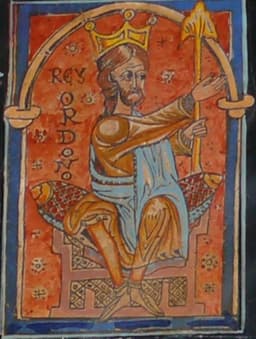
Ordoño II of Leon
Emperor · Medieval
47.9Total
Basic Information
Born
1216
873
Died
1240
924
Era
Medieval
Medieval
Nationality
India
Leon
Occupation
Emperor
Emperor
Civilization
Indian
Western
Score Comparison
Military (10%)
55.0
30.0
Political (20%)
42.3
42.3
Influence (20%)
51.8
51.8
Legacy (20%)
45.8
43.3
Leadership (15%)
65.0
58.8
Strategy (15%)
60.0
60.0
TOTAL
52.0
47.9
Maravarman Sundara Pandya — Complete Timeline
1216 AD
Overthrow of Chola supremacyWar
Maravarman Sundara Pandya led a successful campaign against the Chola king Kulothunga III. He defeated the Chola army and captured the Chola capital, ending Chola dominance in the region and establishing Pandya supremacy.
PandyaCholaSupremacy
Impact: regionalconstructive
1220 AD
Consolidation of Pandya rulePolitical Action◆ Major
After defeating the Cholas, Maravarman Sundara Pandya consolidated his rule over the Pandya kingdom. He expanded his territory and established a strong administration, laying the foundation for the later Pandya empire.
PandyaConsolidationAdministration
Impact: regionalconstructive
1240 AD
Death and successionPolitical Action
Maravarman Sundara Pandya died, and his son Jatavarman Sundara Pandya succeeded him. His death marked the end of the initial phase of Pandya resurgence, which would be continued by his son.
PandyaSuccessionDeath
Impact: regional
Ordoño II of Leon — Complete Timeline
914 AD
Union of Leon and GaliciaPolitical Action◆ Major
Upon the death of his brother Garcia I, Ordo
UnionLeonGalicia
Impact: regionalconstructive
917 AD
Battle of San Esteban de GormazWar◆ Major
Ordoño II led a Leonese army to victory against the forces of the Emirate of Cordoba at San Esteban de Gormaz. The battle was a significant Christian success, temporarily halting Muslim advances into the Duero Valley and boosting the morale of the Leonese kingdom.
BattleReconquistaCordoba
Impact: regionalconstructive
920 AD
Defeat by Abd al-Rahman III at ValdejunqueraWar◆ Major
Ordoño II suffered a major defeat at the hands of the Cordoban Caliph Abd al-Rahman III at the Battle of Valdejunquera. The Leonese army was routed, and many nobles were killed or captured. This defeat weakened Leonese power and forced Ordoño to sue for peace, paying tribute to Cordoba.
DefeatAbd al-Rahman IIITribute
Impact: regionaltragic
This comparison has not been analyzed yet.
One-time AI generation (~1 minute). Scores and timeline are already available below.
Rankings
🥇
Maravarman Sundara PandyaLeader
Mil: 55.0Pol: 42.3Inf: 51.8
52.0
🥈
Ordoño II of Leon
Mil: 30.0Pol: 42.3Inf: 51.8
47.9
+4.1 behind
How This Comparison Works
Algorithm
Each figure is scored on 6 dimensions (0—100 scale) based on structured historical data: Military (10%), Political (20%), Influence (20%), Legacy (20%), Leadership (15%), Strategy (15%). The weighted total produces the final ranking.
Data Sources
Scores are computed from structured sub-indicators in the database. Scale factors adjust for era (Ancient ×0.85, Modern ×1.0) and civilization size (Eastern ×1.05, Other ×0.80) to account for differences in population and military scale.
Maximum 3 Figures
Comparisons are limited to 2—3 figures to ensure readability and statistical meaningfulness.
Error Margins
±5 points per dimension — Sub-scores are derived from historical records with inherent uncertainty. Two figures within 5 points on a dimension should be considered roughly equivalent in that area.
Total Score Accuracy
±3 points overall — The weighted combination of 6 dimensions produces a total score with approximately ±3 points of uncertainty. Differences of less than 3 points are not statistically significant— the figures are effectively tied.
Known Limitations
- Historical records are incomplete and uneven across civilizations
- Figures from oral-tradition societies may be underrepresented
- Occupation labels can misclassify multi-role figures
- Scores measure capability and impact, not moral character
- Quantitative scoring is a comparison tool, not absolute truth
Capability Radar
Military (10%) — Battles & Warfare
Battles
45
40
Win Rate
50
35
Expansion
50
55
Political (20%) — Governance & Reform
Reform
35
40
Diplomacy
40
35
Economy
40
40
Influence (20%) — Cultural & Global Reach
Cultural
30
30
Global
20
20
Legacy (20%) — Historical Impact
Historical
40
35
Longevity
35
25
Leadership (15%) — Power & Stability
Tenure
55
45
Stability
45
30
Strategy (15%) — Tactics & Innovation
Strategy
45
50
Tactics
40
45
Reform
30
30
Similar Comparisons
Comments & Discussion
No comments yet. Be the first to share your thoughts!