Loading...
Mao Zedong vs Yuwen Yong
Mao Zedong leads by 12.2 pts · 2 figures compared
…
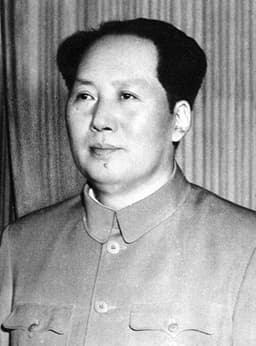
Mao Zedong
Politician · Modern
79.4Total
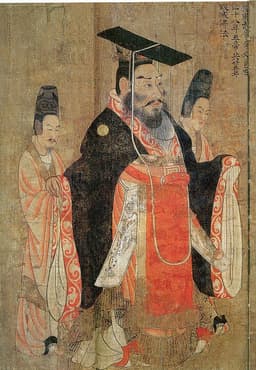
Yuwen Yong
Emperor · Medieval
67.2Total
Basic Information
Born
1893
543
Died
1976
578
Era
Modern
Medieval
Nationality
China
China
Occupation
Politician
Emperor
Civilization
Eastern
Eastern
Score Comparison
Military (10%)
75.0
78.0
Political (20%)
88.0
78.0
Influence (20%)
85.0
58.0
Legacy (20%)
70.0
54.0
Leadership (15%)
85.0
85.0
Strategy (15%)
72.0
69.1
TOTAL
79.4
67.2
Mao Zedong — Complete Timeline
1934 AD
Long MarchWar
Mao Zedong led the Chinese Red Army on a strategic retreat from Nationalist forces, covering approximately 6,000 miles over 370 days. The march solidified Mao's leadership within the Chinese Communist Party and became a foundational myth of the Communist revolution.
Chinese Civil WarCommunist RevolutionRetreat
Impact: national
1949 AD
Proclamation of the People's Republic of ChinaPolitical Action
Mao Zedong declared the founding of the People's Republic of China from Tiananmen Gate in Beijing. This ended the Chinese Civil War and established Communist rule over mainland China, with Mao as Chairman of the Central People's Government.
Founding of PRCCommunist VictoryRevolution
Impact: global
1958 AD
Great Leap ForwardReform◆ Major
Mao launched a campaign to rapidly industrialize China and collectivize agriculture. The policy led to widespread mismanagement, resulting in a famine that caused an estimated 15-45 million deaths between 1959 and 1961.
FamineIndustrializationCollectivization
Impact: nationaldestructive
1960 AD
Sino-Soviet SplitPolitical Action◆ Major
Mao's ideological differences with Soviet leader Nikita Khrushchev led to a breakdown in relations between China and the Soviet Union. The split ended the Sino-Soviet alliance and reshaped global Cold War dynamics, with China pursuing an independent path.
Cold WarIdeological ConflictAlliance Breakdown
Impact: global
1966 AD
Cultural RevolutionPolitical Action
Mao initiated a sociopolitical movement to purge capitalist and traditional elements from Chinese society. The Red Guard youth groups attacked intellectuals and officials, leading to widespread violence, destruction of cultural artifacts, and an estimated 1-2 million deaths.
Political PurgeSocial UpheavalRed Guard
Impact: nationaldestructive
1971 AD
Ping-Pong DiplomacyCultural◆ Major
Mao approved an invitation for the U.S. table tennis team to visit China, initiating a thaw in Sino-American relations. This cultural exchange paved the way for President Nixon's visit to China in 1972 and the eventual normalization of diplomatic ties.
DiplomacyU.S.-China RelationsCultural Exchange
Impact: globalconstructive
Yuwen Yong — Complete Timeline
574 AD
Suppression of Buddhism in Northern ZhouReform◆ Major
Emperor Wu of Northern Zhou (Yuwen Yong) ordered the suppression of Buddhism, confiscating monastic lands, forcing monks and nuns to return to lay life, and destroying temples. He aimed to increase state revenue and military manpower, strengthening the state.
Northern ZhouBuddhist PersecutionReform
Impact: nationaldestructive
577 AD
Conquest of Northern QiWar
Emperor Wu led a successful campaign against the rival Northern Qi dynasty, conquering its territory and unifying northern China under Northern Zhou. This victory ended the division of the north and set the stage for the Sui dynasty's unification of all China.
Northern ZhouUnificationNorthern Qi
Impact: regionalconstructive
578 AD
Death during campaign against the TurksWar◆ Major
Emperor Wu died of illness while leading a campaign against the G
Northern ZhouMilitary CampaignDeath
Impact: regionaltragic
Expert Analysis
Yuwen Yong vs Mao Zedong
# The Revolutionary and the Emperor
On a spring day in 1971, Mao Zedong, the aging revolutionary who had remade China, welcomed a group of American table tennis players to Beijing. It was a gesture of such improbable lightness—ping-pong paddles instead of rifles—that the world barely knew how to read it. Twelve centuries earlier, another Chinese ruler, Yuwen Yong, known posthumously as Emperor Wu of Northern Zhou, had faced a very different diplomatic challenge: how to unify a fractured land with sword and faith. Both men sought to reshape civilization itself. One succeeded beyond measure; the other died too soon to see his work through. Their stories, separated by over a thousand years, reveal how personality, circumstance, and the cruel arithmetic of time determine who becomes a founder and who becomes a footnote.
Origins
Mao Zedong was born in 1893 in the village of Shaoshan, Hunan Province, the son of a prosperous farmer. He grew up with the soil under his fingernails and the sting of his father's discipline on his back. The China of his youth was a wounded giant—humiliated by foreign powers, torn by warlords, and suffocating under the weight of a dying imperial system. Mao devoured books, from Confucian classics to Marxist pamphlets, and developed a conviction that the old world must be burned to the ground before a new one could rise.
Yuwen Yong entered the world in 543, in a China even more fractured than Mao's. The Northern Wei dynasty had collapsed, leaving rival kingdoms—Northern Zhou, Northern Qi, and others—locked in a brutal contest for supremacy. He was born into the Xianbei warrior aristocracy, a people of steppe origin who had carved out a state in northern China. His father was a general, his family steeped in the blood and iron of constant war. From childhood, Yuwen Yong understood that power was not a theory—it was a blade held close to the throat.
Rise to Power
Mao's path to power was long, winding, and nearly fatal. In 1934, after the Chinese Communist Party was nearly wiped out by Nationalist forces, he led the Long March—a 6,000-mile retreat through some of the most unforgiving terrain on earth. The march was a catastrophe of survival, yet it transformed Mao into a living symbol of revolutionary endurance. When the Communists finally reached Yan'an, Mao emerged not just as a leader but as a prophet of a new China.
Yuwen Yong's rise was swifter and more direct. He became emperor of Northern Zhou in 560 at age seventeen, but for years he was a puppet, controlled by his cousin Yuwen Hu, a regent who had murdered two previous emperors. For twelve years, Yuwen Yong smiled, nodded, and waited. In 572, he struck: during a private audience, he killed his cousin with a single blow from a jade tablet. The regent fell, and the emperor rose. Unlike Mao, who built his authority through years of struggle and persuasion, Yuwen Yong seized his with one decisive, violent act.
Leadership & Governance
Mao ruled China from 1949 until his death in 1976, and his governance was a study in controlled chaos. He launched the Great Leap Forward in 1958, a campaign to industrialize China overnight through mass mobilization. The result was catastrophic: mismanagement and famine killed tens of millions. Then, in 1966, he unleashed the Cultural Revolution, a sociopolitical purge that destroyed institutions, families, and lives. Yet Mao also understood diplomacy: the Ping-Pong Diplomacy of 1971 opened a door to the United States, shifting the global balance of power. His leadership score of 80.6 reflects a man who could inspire devotion and terror in equal measure.
Yuwen Yong governed for only eighteen years, but he was ruthlessly effective. In 574, he ordered the suppression of Buddhism, confiscating monastic lands and forcing monks and nuns back into secular life. This was not religious persecution for its own sake—it was a strategic move to break the economic power of the monasteries and redirect resources to the state. In 577, he conquered the rival Northern Qi dynasty, unifying northern China under his rule. His strategy score of 81.8 is the highest among these two men, and for good reason: Yuwen Yong was a master of timing and logistics. He knew when to strike and when to consolidate.
Triumph & Tragedy
Mao's greatest triumph was the proclamation of the People's Republic of China on October 1, 1949, from Tiananmen Gate. He had taken a shattered, war-torn nation and forged it into a unified state under his command. But his greatest tragedy was that he could not stop remaking it. The Great Leap Forward and the Cultural Revolution were not accidents—they were the logical extensions of his belief that revolution must be permanent, that the old world must be endlessly destroyed. In the end, he left behind a nation scarred by his own vision.
Yuwen Yong's triumph was the conquest of Northern Qi in 577, which ended decades of division and set the stage for the Sui dynasty's eventual unification of all China. His tragedy came the following year: while leading a campaign against the Göktürks, he fell ill and died at age thirty-five. His son, a weak and dissolute emperor, lost the throne within three years. Yuwen Yong's life's work—the unity he had bled for—crumbled because he had no time to secure it.
Character & Destiny
Mao was a poet and a destroyer, a man who wrote verse about the beauty of struggle while sending millions to their deaths. His personality was a paradox: he craved adoration but distrusted everyone; he preached equality but lived as a tyrant. His decisions were driven by a profound belief in his own historical destiny, a conviction that history itself had chosen him to lead China into a new era.
Yuwen Yong was a pragmatist, not a philosopher. He did not write poetry or dream of a perfect world. He saw problems—a divided north, a wealthy but parasitic clergy, a hostile neighbor—and solved them with the tools at hand: war, policy, and assassination. His personality was disciplined, patient, and cold. He did not seek glory; he sought results.
Legacy
Mao's legacy is immense and contested. His total score of 76.4 reflects a figure who reshaped the world but left a trail of suffering. In China, he is officially revered as the great helmsman, but his policies are quietly studied as cautionary tales. His influence score of 79.7 is a testament to how one man's ideas can move billions.
Yuwen Yong's legacy is smaller but purer. His total score of 74.0 places him slightly below Mao, but his military and strategy scores are higher. He is remembered as a unifier, a reformer, and a ruler who died before his time. In Chinese history, he is a bridge between the chaos of the Six Dynasties and the golden age of the Sui and Tang. He did not destroy a world; he built one.
Conclusion
Two men, a millennium apart, each tried to remake China in their image. Mao succeeded in destroying the old order but could not build a stable new one. Yuwen Yong built a stable order but died before it could endure. One left a nation transformed and traumatized; the other left a promise unfulfilled. Perhaps the deepest lesson of their lives is not about greatness, but about timing. Mao had decades to shape history; Yuwen Yong had only years. In the end, what we remember is not just what they did, but how long they had to do it.
Rankings
🥇
Mao ZedongLeader
Mil: 75.0Pol: 88.0Inf: 85.0
79.4
🥈
Yuwen Yong
Mil: 78.0Pol: 78.0Inf: 58.0
67.2
+12.2 behind
How This Comparison Works
Algorithm
Each figure is scored on 6 dimensions (0—100 scale) based on structured historical data: Military (10%), Political (20%), Influence (20%), Legacy (20%), Leadership (15%), Strategy (15%). The weighted total produces the final ranking.
Data Sources
Scores are computed from structured sub-indicators in the database. Scale factors adjust for era (Ancient ×0.85, Modern ×1.0) and civilization size (Eastern ×1.05, Other ×0.80) to account for differences in population and military scale.
Maximum 3 Figures
Comparisons are limited to 2—3 figures to ensure readability and statistical meaningfulness.
Error Margins
±5 points per dimension — Sub-scores are derived from historical records with inherent uncertainty. Two figures within 5 points on a dimension should be considered roughly equivalent in that area.
Total Score Accuracy
±3 points overall — The weighted combination of 6 dimensions produces a total score with approximately ±3 points of uncertainty. Differences of less than 3 points are not statistically significant— the figures are effectively tied.
Known Limitations
- Historical records are incomplete and uneven across civilizations
- Figures from oral-tradition societies may be underrepresented
- Occupation labels can misclassify multi-role figures
- Scores measure capability and impact, not moral character
- Quantitative scoring is a comparison tool, not absolute truth
Capability Radar
Military (10%) — Battles & Warfare
Battles
85
75
Win Rate
80
80
Expansion
85
80
Political (20%) — Governance & Reform
Reform
95
85
Diplomacy
80
70
Economy
70
75
Influence (20%) — Cultural & Global Reach
Cultural
90
40
Global
90
40
Legacy (20%) — Historical Impact
Historical
95
65
Longevity
85
50
Leadership (15%) — Power & Stability
Tenure
95
60
Stability
60
70
Strategy (15%) — Tactics & Innovation
Strategy
85
75
Tactics
75
70
Reform
90
85
Similar Comparisons
Comments & Discussion
"ChronologyCop6/16/2026
You're comparing a man who united a fractured north in 6 years (Yuwen, 572-578) with one who ruled 27 years after 1949? Mao had time to fail spectacularly; Yuwen died at 35. Apples to hydrogen bombs. Factor in lifespan and context, or you're just cherry-picking for drama."
"太史公杂谈6/16/2026
说毛泽东是革命家,宇文邕是皇帝,其实两人都是赌徒——一个赌思想能改天换地,一个赌铁血能一统江山。但别忘了,宇文邕灭佛时屠了多少僧侣?毛的土改又饿死了多少?历史不是励志故事,是血淋淋的死亡率统计。"
"古典军魂6/16/2026
宇文邕要是活到60岁,隋唐可能根本没有出场机会。他搞的府兵制和均田制,简直就是毛的群众路线加公社的古代版。但毛赢在活到80岁,能亲眼看到自己种下的苦果和甜果。长寿才是帝王最狠的武器,时间比任何主义都致命。"
"PingPongProphet6/16/2026
Mao's ping-pong diplomacy was genius theater, but don't kid yourself—he'd just purged millions in the Cultural Revolution. Compare that to Yuwen Yong's shrewd tolerance of Buddhism and Daoism while centralizing power? Mao's table tennis was a PR stunt; Yuwen's religious policy was statecraft. One played games; the other played the long game."