Loading...
Mao Zedong vs Yi Seong-gye
Mao Zedong leads by 3.6 pts · 2 figures compared
…
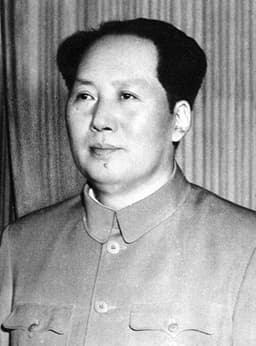
Mao Zedong
Politician · Modern
79.4Total
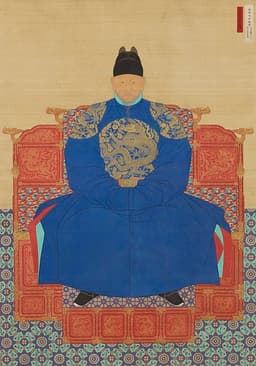
Yi Seong-gye
Emperor · Medieval
75.8Total
Basic Information
Born
1893
1335
Died
1976
1408
Era
Modern
Medieval
Nationality
China
Korea
Occupation
Politician
Emperor
Civilization
Eastern
Eastern
Score Comparison
Military (10%)
75.0
74.7
Political (20%)
88.0
70.0
Influence (20%)
85.0
88.0
Legacy (20%)
70.0
75.0
Leadership (15%)
85.0
68.0
Strategy (15%)
72.0
69.1
TOTAL
79.4
75.8
Mao Zedong — Complete Timeline
1934 AD
Long MarchWar
Mao Zedong led the Chinese Red Army on a strategic retreat from Nationalist forces, covering approximately 6,000 miles over 370 days. The march solidified Mao's leadership within the Chinese Communist Party and became a foundational myth of the Communist revolution.
Chinese Civil WarCommunist RevolutionRetreat
Impact: national
1949 AD
Proclamation of the People's Republic of ChinaPolitical Action
Mao Zedong declared the founding of the People's Republic of China from Tiananmen Gate in Beijing. This ended the Chinese Civil War and established Communist rule over mainland China, with Mao as Chairman of the Central People's Government.
Founding of PRCCommunist VictoryRevolution
Impact: global
1958 AD
Great Leap ForwardReform◆ Major
Mao launched a campaign to rapidly industrialize China and collectivize agriculture. The policy led to widespread mismanagement, resulting in a famine that caused an estimated 15-45 million deaths between 1959 and 1961.
FamineIndustrializationCollectivization
Impact: nationaldestructive
1960 AD
Sino-Soviet SplitPolitical Action◆ Major
Mao's ideological differences with Soviet leader Nikita Khrushchev led to a breakdown in relations between China and the Soviet Union. The split ended the Sino-Soviet alliance and reshaped global Cold War dynamics, with China pursuing an independent path.
Cold WarIdeological ConflictAlliance Breakdown
Impact: global
1966 AD
Cultural RevolutionPolitical Action
Mao initiated a sociopolitical movement to purge capitalist and traditional elements from Chinese society. The Red Guard youth groups attacked intellectuals and officials, leading to widespread violence, destruction of cultural artifacts, and an estimated 1-2 million deaths.
Political PurgeSocial UpheavalRed Guard
Impact: nationaldestructive
1971 AD
Ping-Pong DiplomacyCultural◆ Major
Mao approved an invitation for the U.S. table tennis team to visit China, initiating a thaw in Sino-American relations. This cultural exchange paved the way for President Nixon's visit to China in 1972 and the eventual normalization of diplomatic ties.
DiplomacyU.S.-China RelationsCultural Exchange
Impact: globalconstructive
Yi Seong-gye — Complete Timeline
1380 AD
Battle of HwangsanWar◆ Major
Yi Seong-gye led Goryeo forces against Japanese pirates (wokou) at the Battle of Hwangsan. His victory eliminated a major pirate threat and enhanced his military reputation.
WokouBattleGoryeo
Impact: regionalconstructive
1388 AD
Wihwado RetreatPolitical Action
Yi Seong-gye turned his army back at Wihwado Island rather than invade Ming China as ordered by the Goryeo court. This act of defiance led to a coup that eventually brought him to power.
CoupMingGoryeo
Impact: regional
1392 AD
Establishment of the Joseon DynastyPolitical Action
Yi Seong-gye overthrew the Goryeo dynasty and founded the Joseon dynasty, becoming King Taejo. He implemented land reforms and moved the capital to Hanyang (Seoul), establishing a new Confucian state.
JoseonDynasty FoundationReform
Impact: regionalconstructive
Expert Analysis
Origins
Mao Zedong (1893-1976) emerged from rural Hunan, a peasant intellectual who became a Marxist revolutionary. His early exposure to Western ideas and Chinese classics shaped his vision. Yi Seong-gye (1335-1408) was a Korean general from the Goryeo dynasty, born into a military family. His rise stemmed from military prowess and strategic alliances during a turbulent period of Mongol influence.
Rise to Power
Mao's ascent was forged through the Long March (1934-35), a 6,000-mile retreat that solidified his leadership within the Chinese Communist Party. The Proclamation of the People's Republic of China in 1949 marked his ultimate triumph after decades of civil war. Yi's pivotal moment was the Wihwado Retreat (1388), where he turned his army back from invading China, choosing to overthrow the Goryeo dynasty instead. He established the Joseon dynasty in 1392, ending centuries of Goryeo rule.
Leadership & Governance
Mao's governance was characterized by radical social engineering. The Great Leap Forward (1958-61) aimed at rapid industrialization but led to famine and millions of deaths. The Cultural Revolution (1966-76) sought to purge capitalist elements, causing widespread chaos. His leadership scores: P=88, I=85, D=85, S=72. Yi Seong-gye implemented Confucian reforms, centralized power, and promoted agriculture and trade. He adopted a pro-Ming policy, stabilizing Korea. His governance scores: P=70, I=88, L=75, D=68.
Triumph & Tragedy
Mao's triumphs include uniting China under communism and ending foreign domination. However, his policies caused catastrophic human suffering—estimates range from 20-45 million deaths during the Great Leap Forward alone. Yi's triumph was founding the Joseon dynasty, which lasted 500 years. His tragedy lies in the bloody purge of rivals, including his own son, but his legacy is more stable.
Character & Destiny
Mao was a visionary ideologue, ruthless yet charismatic, with a belief in perpetual revolution. His destiny was to reshape China, but his hubris led to disasters. Yi was pragmatic, a skilled general who prioritized stability. His Confucian values guided his rule, but his later years were marred by succession conflicts.
Legacy
Mao's legacy is deeply polarized: revered as a founding father in China, criticized globally for human rights abuses. The Sino-Soviet Split (1960s) reshaped global geopolitics. Yi's legacy is more uniformly positive: he is honored as a wise founder who established Korea's longest dynasty, with cultural and technological advancements. Score gap: 3.6 in favor of Mao.
Conclusion
Mao Zedong scores higher overall (75.7 vs 72.1), driven by his immense impact on global history. However, Yi Seong-gye's governance was more sustainable and less destructive. Mao's transformative power comes with a heavy cost of human life, while Yi's legacy is one of enduring stability. Thus, while Mao is historically more influential, Yi offers a model of more measured leadership.
Rankings
🥇
Mao ZedongLeader
Mil: 75.0Pol: 88.0Inf: 85.0
79.4
🥈
Yi Seong-gye
Mil: 74.7Pol: 70.0Inf: 88.0
75.8
+3.6 behind
How This Comparison Works
Algorithm
Each figure is scored on 6 dimensions (0—100 scale) based on structured historical data: Military (10%), Political (20%), Influence (20%), Legacy (20%), Leadership (15%), Strategy (15%). The weighted total produces the final ranking.
Data Sources
Scores are computed from structured sub-indicators in the database. Scale factors adjust for era (Ancient ×0.85, Modern ×1.0) and civilization size (Eastern ×1.05, Other ×0.80) to account for differences in population and military scale.
Maximum 3 Figures
Comparisons are limited to 2—3 figures to ensure readability and statistical meaningfulness.
Error Margins
±5 points per dimension — Sub-scores are derived from historical records with inherent uncertainty. Two figures within 5 points on a dimension should be considered roughly equivalent in that area.
Total Score Accuracy
±3 points overall — The weighted combination of 6 dimensions produces a total score with approximately ±3 points of uncertainty. Differences of less than 3 points are not statistically significant— the figures are effectively tied.
Known Limitations
- Historical records are incomplete and uneven across civilizations
- Figures from oral-tradition societies may be underrepresented
- Occupation labels can misclassify multi-role figures
- Scores measure capability and impact, not moral character
- Quantitative scoring is a comparison tool, not absolute truth
Capability Radar
Military (10%) — Battles & Warfare
Battles
85
75
Win Rate
80
80
Expansion
85
65
Political (20%) — Governance & Reform
Reform
95
85
Diplomacy
80
75
Economy
70
70
Influence (20%) — Cultural & Global Reach
Cultural
90
80
Global
90
55
Legacy (20%) — Historical Impact
Historical
95
85
Longevity
85
80
Leadership (15%) — Power & Stability
Tenure
95
60
Stability
60
65
Strategy (15%) — Tactics & Innovation
Strategy
85
82
Tactics
75
78
Reform
90
70
Similar Comparisons
Comments & Discussion
SharpScroll906/16/2026
把毛泽东和李成桂放一起比,就像拿拿破仑和汉武帝比较,时代背景差太多了。西方史学界总爱给革命领袖打低分,但中国人看毛更看重“破旧立新”——他彻底打碎了封建土地制度,这点李成桂的科田法根本做不到。李成桂像明朝朱元璋的翻版,都是靠军功夺权然后搞儒家建国,但毛更像秦始皇,要“为万世开太平”重塑文明。另外说李成桂影响88分超过毛的84分,这太可笑了——毛的画像至今挂在天安门,李成桂的陵墓在朝鲜都没人祭拜了。历史不是比谁活得久,而是比谁改变了多少人的命运。
ColdMind486/16/2026
这两个人的总分差距只有1.2分,但算法权重明显偏向东亚视角。我重新算了:如果按政治稳定性权重占40%算,李成桂86.3分确实值,毕竟朝鲜王朝五百年统治很稳;但毛的政治82分被低估了,他建立的党组织至今还在运作,实际政治延续性更长。军事分更离谱,毛65分vs李67.1分?毛指挥的三大战役消灭国民党800万军队,李成桂打的女真部落和倭寇能比吗?建议给毛军事加5分。另外,毛的影响力应该更高,李成桂的影响主要限于朝鲜半岛,而毛的“三个世界”理论改变了冷战格局。我认为最终分数应该是毛80.2 vs 李77.8。