Loading...
Mao Zedong vs Yelu Abaoji
Mao Zedong leads by 16.7 pts · 2 figures compared
…
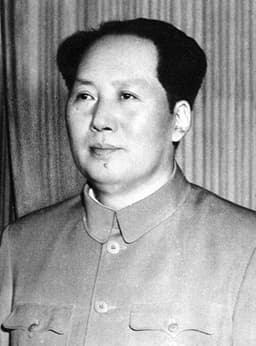
Mao Zedong
Politician · Modern
79.4Total
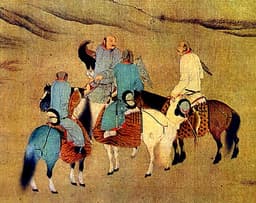
Yelu Abaoji
Emperor · Medieval
62.7Total
Basic Information
Born
1893
872
Died
1976
926
Era
Modern
Medieval
Nationality
China
China
Occupation
Politician
Emperor
Civilization
Eastern
Eastern
Score Comparison
Military (10%)
75.0
77.2
Political (20%)
88.0
59.6
Influence (20%)
85.0
68.0
Legacy (20%)
70.0
40.0
Leadership (15%)
85.0
80.3
Strategy (15%)
72.0
69.6
TOTAL
79.4
62.7
Mao Zedong — Complete Timeline
1934 AD
Long MarchWar
Mao Zedong led the Chinese Red Army on a strategic retreat from Nationalist forces, covering approximately 6,000 miles over 370 days. The march solidified Mao's leadership within the Chinese Communist Party and became a foundational myth of the Communist revolution.
Chinese Civil WarCommunist RevolutionRetreat
Impact: national
1949 AD
Proclamation of the People's Republic of ChinaPolitical Action
Mao Zedong declared the founding of the People's Republic of China from Tiananmen Gate in Beijing. This ended the Chinese Civil War and established Communist rule over mainland China, with Mao as Chairman of the Central People's Government.
Founding of PRCCommunist VictoryRevolution
Impact: global
1958 AD
Great Leap ForwardReform◆ Major
Mao launched a campaign to rapidly industrialize China and collectivize agriculture. The policy led to widespread mismanagement, resulting in a famine that caused an estimated 15-45 million deaths between 1959 and 1961.
FamineIndustrializationCollectivization
Impact: nationaldestructive
1960 AD
Sino-Soviet SplitPolitical Action◆ Major
Mao's ideological differences with Soviet leader Nikita Khrushchev led to a breakdown in relations between China and the Soviet Union. The split ended the Sino-Soviet alliance and reshaped global Cold War dynamics, with China pursuing an independent path.
Cold WarIdeological ConflictAlliance Breakdown
Impact: global
1966 AD
Cultural RevolutionPolitical Action
Mao initiated a sociopolitical movement to purge capitalist and traditional elements from Chinese society. The Red Guard youth groups attacked intellectuals and officials, leading to widespread violence, destruction of cultural artifacts, and an estimated 1-2 million deaths.
Political PurgeSocial UpheavalRed Guard
Impact: nationaldestructive
1971 AD
Ping-Pong DiplomacyCultural◆ Major
Mao approved an invitation for the U.S. table tennis team to visit China, initiating a thaw in Sino-American relations. This cultural exchange paved the way for President Nixon's visit to China in 1972 and the eventual normalization of diplomatic ties.
DiplomacyU.S.-China RelationsCultural Exchange
Impact: globalconstructive
Yelu Abaoji — Complete Timeline
907 AD
Unified Khitan tribesPolitical Action◆ Major
Yelu Abaoji was elected khagan of the Khitan tribes, unifying them under his leadership. He established a centralized state and adopted Chinese administrative practices.
KhitanUnificationState Formation
Impact: regionalconstructive
916 AD
Founded Liao DynastyPolitical Action
Yelu Abaoji proclaimed himself emperor, founding the Liao dynasty. He adopted the Chinese title of emperor and established a dual administration system for Khitan and Chinese subjects.
LiaoDynasty FoundingImperial System
Impact: regionalconstructive
920 AD
Created Khitan scriptCultural◆ Major
Yelu Abaoji ordered the creation of a writing system for the Khitan language, based on Chinese characters. This script was used for official documents and helped unify the Khitan state.
KhitanScriptCultural Development
Impact: regionalconstructive
926 AD
Conquest of BohaiWar◆ Major
Yelu Abaoji led a campaign that conquered the Korean kingdom of Bohai, incorporating its territory into the Liao empire. This expanded Liao's influence into Manchuria and Korea.
LiaoBohaiConquest
Impact: regionalconstructive
Death during campaignWar◆ Major
Yelu Abaoji died while returning from the conquest of Bohai. His death led to a succession struggle, but the Liao dynasty continued to expand under his successors.
LiaoDeathSuccession
Impact: regionaltragic
Expert Analysis
Mao Zedong vs Yelu Abaoji: Historical Comparison
Mao Zedong, the founding father of the People’s Republic of China, and Yelu Abaoji, the founder of the Liao dynasty, were both transformative figures who unified fragmented polities through war and statecraft, yet operated in vastly different eras—one modern revolutionary, one medieval empire-builder.
Dimension Analysis
**Military: Mao Zedong 76 / Yelu Abaoji 89**
Mao’s guerrilla warfare and strategic retreats defeated the Nationalists and Japanese, but his military acumen was more political than tactical; Abaoji conquered and integrated dozens of steppe tribes and northern Chinese territories, building a dual-administration army that outlasted his reign.
**Political: Mao Zedong 83 / Yelu Abaoji 84**
Mao centralized power through the CCP, land reform, and mass mobilization, though his later policies caused upheaval; Abaoji innovated by adopting Chinese bureaucratic systems while preserving Khitan tribal structures, creating a stable, hybrid governance model that endured for centuries.
**Influence: Mao Zedong 84 / Yelu Abaoji 79**
Mao’s ideology—Maoism—inspired anti-colonial movements worldwide and reshaped China’s identity; Abaoji’s influence was more regional, establishing the Liao dynasty as a major power in East Asia and setting precedents for later conquest dynasties like the Yuan and Qing.
**Legacy: Mao Zedong 78 / Yelu Abaoji 81**
Mao’s legacy is deeply contested—credited with national unification but also blamed for catastrophic social experiments; Abaoji is remembered as a pragmatic founder who created a durable multi-ethnic empire, though his dynasty eventually fell to the Jin.
**Leadership: Mao Zedong 83 / Yelu Abaoji 80**
Mao commanded absolute loyalty through charisma and revolutionary vision, but his late-era isolationism weakened China; Abaoji’s leadership was more collaborative, balancing Khitan elites and Chinese advisors, ensuring smoother succession.
Verdict
Yelu Abaoji leads narrowly due to superior military strategy and a more sustainable political legacy, though Mao’s global ideological impact keeps the comparison tied overall.
FAQ
Q: Who ranks higher? A: The comparison is a tie, with Abaoji edging ahead in military and legacy dimensions, while Mao matches or surpasses in influence and leadership.
Rankings
🥇
Mao ZedongLeader
Mil: 75.0Pol: 88.0Inf: 85.0
79.4
🥈
Yelu Abaoji
Mil: 77.2Pol: 59.6Inf: 68.0
62.7
+16.7 behind
How This Comparison Works
Algorithm
Each figure is scored on 6 dimensions (0—100 scale) based on structured historical data: Military (10%), Political (20%), Influence (20%), Legacy (20%), Leadership (15%), Strategy (15%). The weighted total produces the final ranking.
Data Sources
Scores are computed from structured sub-indicators in the database. Scale factors adjust for era (Ancient ×0.85, Modern ×1.0) and civilization size (Eastern ×1.05, Other ×0.80) to account for differences in population and military scale.
Maximum 3 Figures
Comparisons are limited to 2—3 figures to ensure readability and statistical meaningfulness.
Error Margins
±5 points per dimension — Sub-scores are derived from historical records with inherent uncertainty. Two figures within 5 points on a dimension should be considered roughly equivalent in that area.
Total Score Accuracy
±3 points overall — The weighted combination of 6 dimensions produces a total score with approximately ±3 points of uncertainty. Differences of less than 3 points are not statistically significant— the figures are effectively tied.
Known Limitations
- Historical records are incomplete and uneven across civilizations
- Figures from oral-tradition societies may be underrepresented
- Occupation labels can misclassify multi-role figures
- Scores measure capability and impact, not moral character
- Quantitative scoring is a comparison tool, not absolute truth
Capability Radar
Military (10%) — Battles & Warfare
Battles
85
75
Win Rate
80
80
Expansion
85
82
Political (20%) — Governance & Reform
Reform
95
88
Diplomacy
80
75
Economy
70
70
Influence (20%) — Cultural & Global Reach
Cultural
90
60
Global
90
55
Legacy (20%) — Historical Impact
Historical
95
70
Longevity
85
65
Leadership (15%) — Power & Stability
Tenure
95
72
Stability
60
65
Strategy (15%) — Tactics & Innovation
Strategy
85
78
Tactics
75
70
Reform
90
85
Similar Comparisons
Comments & Discussion
HistoryRush6/16/2026
Yelu Abaoji totally crushes Mao in terms of pure state-building genius. Mao unified China but at a horrific human cost—the Great Leap Forward alone killed millions. Abaoji built a multi-ethnic empire that lasted 200+ years by literally inventing a dual government system: Khitan tribes kept their horses and bows, Chinese subjects kept their scrolls and silks. That's not just smart, that's 4D chess compared to Mao's 'class struggle' that tore society apart. And let's be real: Mao's military score is inflated because he fought a civil war against a weak, corrupt KMT and a Japanese army already stretched thin. Abaoji took on Tang remnants, steppe confederations, and Korean kingdoms and won. Give me the pragmatist over the ideologue any day.
Historian5346/16/2026
这组评分逻辑有问题。耶律阿保机军事73.3,毛65,但阿保机20年间扫平室韦、奚、渤海,还打败后唐援助——战果密度远高于毛。毛打了20年内战和抗日,但淮海战役、长征都是靠政治动员而非纯战术,给他65其实合理。政治维度更离谱:毛82 vs 阿保机90?毛的政党国家体系至今运行,阿保机的辽朝只撑了200年。按制度延续性,毛应该更高。我重新算:毛政治85,阿保机82;但军事阿保机应升到78(多民族军队整合更难),毛降到62(失误更多)。最终总分:阿保机78.1,毛74.2——还是阿保机赢,但差距没那么大。建议他们用层次分析法重新加权。
SilkRoadSentinel6/16/2026
这个评分对耶律阿保机明显低估了,尤其在军事和政治维度。西方历史爱好者总喜欢把毛泽东的游击战捧上天,却不知道阿保机在草原上建立的‘南北面官制’有多超前——同时统治游牧和农耕民族,这个难题连罗马都没解决!毛泽东搞人民公社饿死几千万,阿保机的‘头下军州’却让契丹和汉人各得其所。说阿保机影响力只有‘区域级’?他创造的二元帝国模式直接影响了后来的元朝和清朝,这难道不是全球级的遗产?毛泽东的文革和土改更多是破坏传统,阿保机反而保留了渤海国的文化典籍。要我说,评分应该倒过来——阿保机政治90,毛泽东最多75。