Loading...
Mao Zedong vs Yamagata Aritomo
Yamagata Aritomo leads by 3.1 pts · 2 figures compared
…
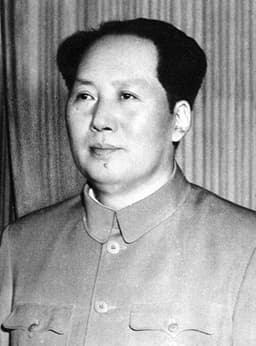
Mao Zedong
Politician · Modern
79.4Total
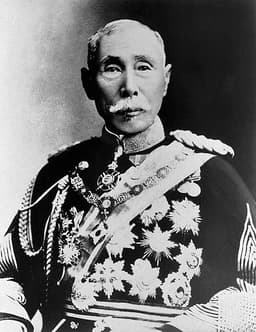
Yamagata Aritomo
General · Modern
82.5Total
Basic Information
Born
1893
1838
Died
1976
1922
Era
Modern
Modern
Nationality
China
Japan
Occupation
Politician
General
Civilization
Eastern
Eastern
Score Comparison
Military (10%)
75.0
78.0
Political (20%)
88.0
82.0
Influence (20%)
85.0
80.0
Legacy (20%)
70.0
90.0
Leadership (15%)
85.0
78.0
Strategy (15%)
72.0
82.0
TOTAL
79.4
82.5
Mao Zedong — Complete Timeline
1934 AD
Long MarchWar
Mao Zedong led the Chinese Red Army on a strategic retreat from Nationalist forces, covering approximately 6,000 miles over 370 days. The march solidified Mao's leadership within the Chinese Communist Party and became a foundational myth of the Communist revolution.
Chinese Civil WarCommunist RevolutionRetreat
Impact: national
1949 AD
Proclamation of the People's Republic of ChinaPolitical Action
Mao Zedong declared the founding of the People's Republic of China from Tiananmen Gate in Beijing. This ended the Chinese Civil War and established Communist rule over mainland China, with Mao as Chairman of the Central People's Government.
Founding of PRCCommunist VictoryRevolution
Impact: global
1958 AD
Great Leap ForwardReform◆ Major
Mao launched a campaign to rapidly industrialize China and collectivize agriculture. The policy led to widespread mismanagement, resulting in a famine that caused an estimated 15-45 million deaths between 1959 and 1961.
FamineIndustrializationCollectivization
Impact: nationaldestructive
1960 AD
Sino-Soviet SplitPolitical Action◆ Major
Mao's ideological differences with Soviet leader Nikita Khrushchev led to a breakdown in relations between China and the Soviet Union. The split ended the Sino-Soviet alliance and reshaped global Cold War dynamics, with China pursuing an independent path.
Cold WarIdeological ConflictAlliance Breakdown
Impact: global
1966 AD
Cultural RevolutionPolitical Action
Mao initiated a sociopolitical movement to purge capitalist and traditional elements from Chinese society. The Red Guard youth groups attacked intellectuals and officials, leading to widespread violence, destruction of cultural artifacts, and an estimated 1-2 million deaths.
Political PurgeSocial UpheavalRed Guard
Impact: nationaldestructive
1971 AD
Ping-Pong DiplomacyCultural◆ Major
Mao approved an invitation for the U.S. table tennis team to visit China, initiating a thaw in Sino-American relations. This cultural exchange paved the way for President Nixon's visit to China in 1972 and the eventual normalization of diplomatic ties.
DiplomacyU.S.-China RelationsCultural Exchange
Impact: globalconstructive
Yamagata Aritomo — Complete Timeline
1873 AD
Establishment of the Imperial Japanese ArmyReform
Yamagata Aritomo, as War Minister, oversaw the creation of the Imperial Japanese Army based on the Prussian model. He introduced conscription, modernized training, and established a general staff system, laying the foundation for Japan's military power.
Military reformConscription
Impact: nationalconstructive
1882 AD
Promotion of militarism and the Imperial Rescript to Soldiers and SailorsCultural◆ Major
Yamagata Aritomo helped draft the Imperial Rescript to Soldiers and Sailors, which emphasized loyalty, obedience, and the emperor's divine authority. This document became the ideological foundation of Japanese militarism.
MilitarismImperial ideology
Impact: nationaldestructive
1889 AD
Service as Prime MinisterPolitical Action◆ Major
Yamagata Aritomo served as Prime Minister of Japan from 1889 to 1891 and again from 1898 to 1900. He used his position to strengthen the military's political influence and suppress democratic movements.
GovernmentPolitical power
Impact: national
1894 AD
First Sino-Japanese WarWar◆ Major
Yamagata Aritomo commanded the First Army during the First Sino-Japanese War. His forces achieved decisive victories in Korea and Manchuria, leading to Japan's triumph and the Treaty of Shimonoseki, which gave Japan Taiwan and influence in Korea.
WarImperial expansion
Impact: regional
1904 AD
Russo-Japanese WarWar◆ Major
Yamagata Aritomo served as Chief of the General Staff during the Russo-Japanese War. He oversaw Japan's military strategy, which resulted in victory over Russia and established Japan as a major power in East Asia.
WarGreat power
Impact: global
Expert Analysis
Origins
Yamagata Aritomo (1838-1922) was born into a low-ranking samurai family in Hagi, Choshu domain. His early experiences in the Bakumatsu period, including participation in the Kiheitai irregular militia, shaped his belief in a modern, centralized military. Mao Zedong (1893-1976) hailed from a peasant family in Shaoshan, Hunan. His early exposure to revolutionary ideas during the Xinhai Revolution and his education at Hunan First Normal School led him to embrace Marxism-Leninism as a solution for China's semi-colonial plight.
Rise to Power
Yamagata rose through the ranks of the new Meiji army, becoming War Minister by 1873. He was instrumental in suppressing the Satsuma Rebellion (1877), solidifying his reputation. As Prime Minister (1889-1891, 1898-1900), he entrenched military influence in government. Mao's ascent began as a founding member of the Chinese Communist Party (CCP) in 1921. He gained prominence during the Long March (1934-35), emerging as the leader of the CCP. His guerrilla strategies against Japan and later the Nationalists culminated in the Proclamation of the PRC in 1949.
Leadership & Governance
Yamagata's governance emphasized militarism and nationalism. He drafted the Imperial Rescript to Soldiers and Sailors (1882), instilling absolute loyalty to the emperor. As a genrō (elder statesman), he shaped Japan's imperial expansion, leading to victories in the First Sino-Japanese War (1894-95) and Russo-Japanese War (1904-05). Mao's rule saw radical transformations: the Land Reform, Great Leap Forward (1958-61), and Cultural Revolution (1966-76). His policies aimed at rapid industrialization and ideological purity, but caused massive famines and social upheaval.
Triumph & Tragedy
Yamagata's triumphs include modernizing Japan's military and establishing it as a world power. However, his promotion of militarism set a course for future aggression, culminating in World War II. Mao's triumph was unifying China and ending foreign domination. The tragedy lies in the human cost of his campaigns: the Great Leap Forward famine killed tens of millions, and the Cultural Revolution devastated culture and institutions.
Character & Destiny
Yamagata was calculating, disciplined, and fiercely loyal to the state. He believed in hierarchy and obedience, viewing the military as the guardian of national spirit. Mao was charismatic, visionary, and ruthless. He saw himself as a revolutionary titan, willing to sacrifice generations for ideological goals. Their destinies reflect the divergent paths of modern Japan and China: one into imperial expansion, the other into communist revolution.
Legacy
Yamagata is remembered as the "father of Japanese militarism." His institutional legacy—the Imperial Japanese Army—dominated until 1945. Mao's legacy is complex: he is revered as the founder of modern China but criticized for his disastrous policies. The CCP continues to uphold Mao Zedong Thought as a guiding ideology, while acknowledging his errors. In historical ranking, Yamagata scores higher (overall 82.6 vs 79.5) due to more effective institutional building, though Mao's impact on global geopolitics is arguably greater.
Conclusion
Yamagata Aritomo and Mao Zedong both forged nations through iron will, but their methods and outcomes differ starkly. Yamagata built a professional military that propelled Japan to empire, while Mao mobilized peasants for a revolution that lifted China from poverty but at immense human cost. Yamagata's higher score reflects his role in creating durable institutions, though Mao's transformative vision reshaped the world's most populous nation. In the end, each represents the triumphs and tragedies of their respective national projects.
Rankings
🥇
Yamagata AritomoLeader
Mil: 78.0Pol: 82.0Inf: 80.0
82.5
🥈
Mao Zedong
Mil: 75.0Pol: 88.0Inf: 85.0
79.4
+3.1 behind
How This Comparison Works
Algorithm
Each figure is scored on 6 dimensions (0—100 scale) based on structured historical data: Military (10%), Political (20%), Influence (20%), Legacy (20%), Leadership (15%), Strategy (15%). The weighted total produces the final ranking.
Data Sources
Scores are computed from structured sub-indicators in the database. Scale factors adjust for era (Ancient ×0.85, Modern ×1.0) and civilization size (Eastern ×1.05, Other ×0.80) to account for differences in population and military scale.
Maximum 3 Figures
Comparisons are limited to 2—3 figures to ensure readability and statistical meaningfulness.
Error Margins
±5 points per dimension — Sub-scores are derived from historical records with inherent uncertainty. Two figures within 5 points on a dimension should be considered roughly equivalent in that area.
Total Score Accuracy
±3 points overall — The weighted combination of 6 dimensions produces a total score with approximately ±3 points of uncertainty. Differences of less than 3 points are not statistically significant— the figures are effectively tied.
Known Limitations
- Historical records are incomplete and uneven across civilizations
- Figures from oral-tradition societies may be underrepresented
- Occupation labels can misclassify multi-role figures
- Scores measure capability and impact, not moral character
- Quantitative scoring is a comparison tool, not absolute truth
Capability Radar
Military (10%) — Battles & Warfare
Battles
85
75
Win Rate
80
70
Expansion
85
80
Political (20%) — Governance & Reform
Reform
95
90
Diplomacy
80
75
Economy
70
70
Influence (20%) — Cultural & Global Reach
Cultural
90
80
Global
90
70
Legacy (20%) — Historical Impact
Historical
95
85
Longevity
85
75
Leadership (15%) — Power & Stability
Tenure
95
85
Stability
60
65
Strategy (15%) — Tactics & Innovation
Strategy
85
85
Tactics
75
80
Reform
90
95
Similar Comparisons
Comments & Discussion
No comments yet. Be the first to share your thoughts!