Loading...
Mao Zedong vs Wedem Arad
Mao Zedong leads by 30.9 pts · 2 figures compared
…
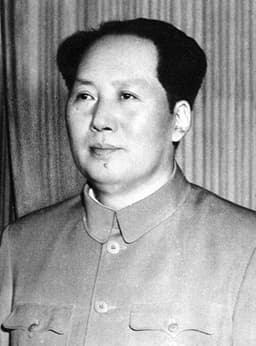
Mao Zedong
Politician · Modern
79.4Total
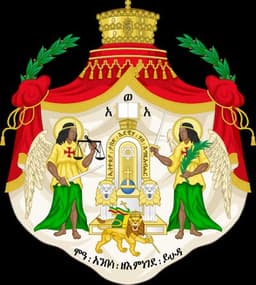
Wedem Arad
Emperor · Medieval
48.5Total
Basic Information
Born
1893
1270
Died
1976
1314
Era
Modern
Medieval
Nationality
China
Ethiopia
Occupation
Politician
Emperor
Civilization
Eastern
Other
Score Comparison
Military (10%)
75.0
50.0
Political (20%)
88.0
35.1
Influence (20%)
85.0
58.0
Legacy (20%)
70.0
45.8
Leadership (15%)
85.0
55.3
Strategy (15%)
72.0
39.6
TOTAL
79.4
48.5
Mao Zedong — Complete Timeline
1934 AD
Long MarchWar
Mao Zedong led the Chinese Red Army on a strategic retreat from Nationalist forces, covering approximately 6,000 miles over 370 days. The march solidified Mao's leadership within the Chinese Communist Party and became a foundational myth of the Communist revolution.
Chinese Civil WarCommunist RevolutionRetreat
Impact: national
1949 AD
Proclamation of the People's Republic of ChinaPolitical Action
Mao Zedong declared the founding of the People's Republic of China from Tiananmen Gate in Beijing. This ended the Chinese Civil War and established Communist rule over mainland China, with Mao as Chairman of the Central People's Government.
Founding of PRCCommunist VictoryRevolution
Impact: global
1958 AD
Great Leap ForwardReform◆ Major
Mao launched a campaign to rapidly industrialize China and collectivize agriculture. The policy led to widespread mismanagement, resulting in a famine that caused an estimated 15-45 million deaths between 1959 and 1961.
FamineIndustrializationCollectivization
Impact: nationaldestructive
1960 AD
Sino-Soviet SplitPolitical Action◆ Major
Mao's ideological differences with Soviet leader Nikita Khrushchev led to a breakdown in relations between China and the Soviet Union. The split ended the Sino-Soviet alliance and reshaped global Cold War dynamics, with China pursuing an independent path.
Cold WarIdeological ConflictAlliance Breakdown
Impact: global
1966 AD
Cultural RevolutionPolitical Action
Mao initiated a sociopolitical movement to purge capitalist and traditional elements from Chinese society. The Red Guard youth groups attacked intellectuals and officials, leading to widespread violence, destruction of cultural artifacts, and an estimated 1-2 million deaths.
Political PurgeSocial UpheavalRed Guard
Impact: nationaldestructive
1971 AD
Ping-Pong DiplomacyCultural◆ Major
Mao approved an invitation for the U.S. table tennis team to visit China, initiating a thaw in Sino-American relations. This cultural exchange paved the way for President Nixon's visit to China in 1972 and the eventual normalization of diplomatic ties.
DiplomacyU.S.-China RelationsCultural Exchange
Impact: globalconstructive
Wedem Arad — Complete Timeline
1306 AD
First Contact with EuropePolitical Action◆ Major
Wedem Arad sent an embassy to Europe, likely to the court of Pope Clement V in Avignon. This was the first recorded diplomatic contact between Ethiopia and a European power since antiquity, establishing a precedent for future Ethiopian-European relations.
Impact: regional
Expert Analysis
Mao Zedong vs Wedem Arad
# The Emperor and the Revolutionary: Two Paths to Legacy
In 1306, a messenger from the highlands of Ethiopia arrived at the court of Pope Clement V in Avignon, bearing gifts and a letter from an African emperor whose name would barely ripple through European memory. Six centuries later, in 1949, another revolutionary stood atop the Tiananmen Gate in Beijing, proclaiming a new China to a world that would never forget his name. Wedem Arad and Mao Zedong—one medieval, one modern; one nearly forgotten, one inescapable—both sought to reshape their nations' place in the world. Why did one leave a whisper and the other a thunderclap?
Origins
Wedem Arad was born around 1270 into the Solomonic dynasty of Ethiopia, a Christian kingdom perched on the Horn of Africa, surrounded by Muslim sultanates and isolated from the rest of Christendom. His world was one of ancient liturgy, feudal hierarchy, and a crown that claimed descent from King Solomon and the Queen of Sheba. He inherited a throne, not a mission. His era demanded preservation, not transformation.
Mao Zedong was born in 1893 in Shaoshan, Hunan province, into a China crumbling under the weight of dynastic decay, foreign humiliation, and peasant poverty. His father was a prosperous farmer who beat him; his mother was a devout Buddhist who taught him compassion. Mao grew up watching warlords carve up his country and foreign powers carve up its ports. His world was one of collapse and possibility—a revolutionary’s raw material. Where Wedem Arad inherited stability, Mao inherited chaos.
Rise to Power
Wedem Arad’s path was straightforward: he was born a prince, and he became emperor. No civil war, no long march, no existential struggle. His power came from bloodline and ritual, not from conquest or ideology. The key turning point of his reign was not a battle but a letter—the embassy he sent to Europe in 1306, seeking perhaps an alliance against Muslim enemies or simply recognition. It was a cautious step onto a global stage he barely understood.
Mao’s rise was anything but straightforward. He was a librarian’s son who became a guerrilla leader. In 1934, facing annihilation by Chiang Kai-shek’s Nationalist forces, Mao led the Chinese Red Army on the Long March—a 6,000-mile retreat through some of the world’s harshest terrain. Only about one in ten who started the march survived. Mao emerged not just alive, but unchallenged. The Long March was not a defeat; it was a crucible. For Wedem Arad, power was a birthright. For Mao, it was forged in suffering.
Leadership & Governance
Wedem Arad ruled as a medieval Christian emperor: he presided over court rituals, managed feudal lords, and defended the faith. His governance was conservative by necessity—Ethiopia was an island of Christianity in a sea of Islam, and innovation risked collapse. His military score of 24.0 reflects a reign without notable campaigns; his political score of 44.3 suggests a ruler who maintained order but did not expand it. He was a steward, not a shaper.
Mao governed as a revolutionary in permanent motion. His political score of 82.0 and leadership score of 80.6 reflect a man who understood that power required constant reinvention. In 1958, he launched the Great Leap Forward, a campaign to industrialize China overnight through mass mobilization and backyard steel furnaces. It was visionary—and catastrophic. Mismanagement and famine killed millions. Yet Mao did not retreat. In 1966, he launched the Cultural Revolution, unleashing the Red Guard to purge “capitalist” elements from society. He destroyed much of China’s cultural heritage and plunged the nation into chaos. But he also broke the old hierarchies forever. Wedem Arad preserved his kingdom; Mao shattered his and rebuilt it in his image.
Triumph & Tragedy
Wedem Arad’s triumph was his embassy to Europe—a diplomatic first that opened a thin line of contact between Ethiopia and the West. His tragedy is that it led to nothing lasting. The pope’s response was lost to history; Ethiopia remained isolated. His legacy is a footnote.
Mao’s triumph was the proclamation of the People’s Republic of China in 1949—a moment that ended a century of foreign domination and civil war. His tragedy was the cost: tens of millions dead from famine and political violence. Yet even in tragedy, Mao was strategic. In 1971, he approved Ping-Pong Diplomacy, inviting the U.S. table tennis team to China. It thawed Sino-American relations and broke China’s isolation. Mao could destroy and build in the same breath.
Character & Destiny
Wedem Arad was cautious, diplomatic, and traditional. He reached out to Europe but did not gamble his throne on it. His personality suited a medieval king whose primary duty was to endure.
Mao was ruthless, visionary, and utterly convinced of his own correctness. He read history as a struggle between classes and saw himself as history’s instrument. “Political power grows out of the barrel of a gun,” he said. He meant it. His personality drove him to take enormous risks—the Long March, the Great Leap, the Cultural Revolution—and to accept enormous casualties as the price of progress. Wedem Arad sought to maintain; Mao sought to transcend.
Legacy
Wedem Arad is remembered, if at all, as a name in a textbook—the emperor who sent the first Ethiopian embassy to Europe. His legacy score of 57.8 and influence score of 73.6 reflect a historical curiosity rather than a force.
Mao’s legacy is immense and contested. His legacy score of 69.9 is modest for a man who reshaped the world’s most populous nation, but it reflects the ambivalence of history. He is revered as a founding father in China; abroad, he is studied as a revolutionary genius and a cautionary tale. His influence score of 79.7 captures a man who changed how nations think about power, peasantry, and revolution.
Conclusion
Wedem Arad reached out to Europe and was forgotten. Mao tore China apart and rebuilt it, and the world still debates whether he was a liberator or a tyrant. Their differences are not merely personal—they are historical. Wedem Arad lived in an age when a king’s duty was to preserve; Mao lived in an age when a revolutionary’s duty was to destroy and create. One sent a letter; the other moved a continent. In the end, history remembers not those who reached out, but those who reached in—and remade the world from the inside out.
Rankings
🥇
Mao ZedongLeader
Mil: 75.0Pol: 88.0Inf: 85.0
79.4
🥈
Wedem Arad
Mil: 50.0Pol: 35.1Inf: 58.0
48.5
+30.9 behind
How This Comparison Works
Algorithm
Each figure is scored on 6 dimensions (0—100 scale) based on structured historical data: Military (10%), Political (20%), Influence (20%), Legacy (20%), Leadership (15%), Strategy (15%). The weighted total produces the final ranking.
Data Sources
Scores are computed from structured sub-indicators in the database. Scale factors adjust for era (Ancient ×0.85, Modern ×1.0) and civilization size (Eastern ×1.05, Other ×0.80) to account for differences in population and military scale.
Maximum 3 Figures
Comparisons are limited to 2—3 figures to ensure readability and statistical meaningfulness.
Error Margins
±5 points per dimension — Sub-scores are derived from historical records with inherent uncertainty. Two figures within 5 points on a dimension should be considered roughly equivalent in that area.
Total Score Accuracy
±3 points overall — The weighted combination of 6 dimensions produces a total score with approximately ±3 points of uncertainty. Differences of less than 3 points are not statistically significant— the figures are effectively tied.
Known Limitations
- Historical records are incomplete and uneven across civilizations
- Figures from oral-tradition societies may be underrepresented
- Occupation labels can misclassify multi-role figures
- Scores measure capability and impact, not moral character
- Quantitative scoring is a comparison tool, not absolute truth
Capability Radar
Military (10%) — Battles & Warfare
Battles
85
15
Win Rate
80
20
Expansion
85
10
Political (20%) — Governance & Reform
Reform
95
20
Diplomacy
80
55
Economy
70
15
Influence (20%) — Cultural & Global Reach
Cultural
90
20
Global
90
40
Legacy (20%) — Historical Impact
Historical
95
35
Longevity
85
30
Leadership (15%) — Power & Stability
Tenure
95
40
Stability
60
30
Strategy (15%) — Tactics & Innovation
Strategy
85
10
Tactics
75
10
Reform
90
5
Similar Comparisons
Comments & Discussion
古典经卷手6/16/2026
毛与阿剌德没法比。阿剌德是所罗门正统,继承的是三千年的神圣血脉,他统治的埃塞俄比亚是非洲唯一幸存的中世纪基督教王国,周围全是穆斯林苏丹国。他强调的是保存——保存礼仪、保存信仰、保存独立。毛呢?他要的是砸烂一切,从头造新世界。一个扎根于《列王纪》的东方圣地,另一个是《共产党宣言》里的西方异端。他们根本不在同一个历史坐标系里。
历史发烧友6/16/2026
说实话,这对比本身就有意思:阿剌德派使者去见教皇,毛在天安门喊“中国人民站起来了”。一个求西方承认,一个宣告不再需要西方承认。六百年差距,本质变了。阿剌德的世界观里,埃塞俄比亚是基督教世界的边缘;毛的世界观里,中国是世界的中心。所以一个成了欧洲史书里的脚注,另一个成了全球史的主线——不是因为谁更伟大,而是因为时代定义了什么算“中心”。
激进重评侠6/16/2026
你们都在美化“全球影响力”本身就是西方中心论的毒瘤。毛的遗产真的比阿剌德“更伟大”吗?阿剌德没有搞过大跃进,没有发动过文革,他的王国延续了宗教传统和自治主权,直到今天埃塞俄比亚还保留着某些中世纪制度。毛摧毁了几千年儒家秩序,换来的代价是多少?一个威权工业化国家。你们说“雷鸣与低语”,我看到的是一段历史被胜利者编写,另一段被沉默淹没。
Historian1286/16/2026
Look, comparing Mao to some forgotten medieval king is like comparing a Tsar Bomba to a firecracker. Mao didn't just inherit a throne—he fought twenty-two years of civil war, organized millions of peasants, and personally commanded campaigns that literally remade the world's most populous nation. Wedem Arad was a footnote even in his own time, ruling a feudal backwater that barely interacted with global history. Mao shaped the nuclear age. One left a whisper because he never had the stage; the o
GrandQuill706/16/2026
Sure, Mao reshaped China, but let's not romanticize the "thunderclap" without counting the bodies. The Great Leap Forward alone caused 30-45 million excess deaths—that's more than the entire population of Ethiopia in Wedem Arad's era. This comparison is flawed from the start: you're measuring "legacy" by global recognition, not by human cost. If we're being honest, one ruler left a state that industrialized; the other left a dynasty that dissolved. That's not inherently better or worse—it's just