Loading...
Mao Zedong vs Timur
Mao Zedong leads by 13.8 pts · 2 figures compared
…
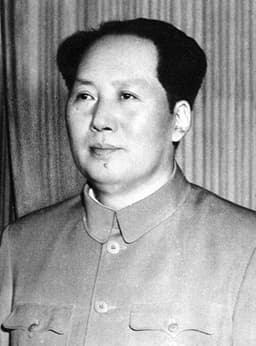
Mao Zedong
Politician · Modern
79.4Total
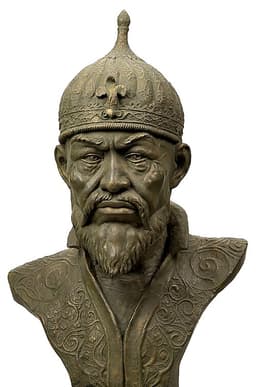
Timur
Emperor · Medieval
65.6Total
Basic Information
Born
1893
1336
Died
1976
1405
Era
Modern
Medieval
Nationality
China
Timurid Empire
Occupation
Politician
Emperor
Civilization
Eastern
Middle Eastern
Score Comparison
Military (10%)
75.0
79.0
Political (20%)
88.0
70.0
Influence (20%)
85.0
70.0
Legacy (20%)
70.0
40.0
Leadership (15%)
85.0
79.8
Strategy (15%)
72.0
77.6
TOTAL
79.4
65.6
Mao Zedong — Complete Timeline
1934 AD
Long MarchWar
Mao Zedong led the Chinese Red Army on a strategic retreat from Nationalist forces, covering approximately 6,000 miles over 370 days. The march solidified Mao's leadership within the Chinese Communist Party and became a foundational myth of the Communist revolution.
Chinese Civil WarCommunist RevolutionRetreat
Impact: national
1949 AD
Proclamation of the People's Republic of ChinaPolitical Action
Mao Zedong declared the founding of the People's Republic of China from Tiananmen Gate in Beijing. This ended the Chinese Civil War and established Communist rule over mainland China, with Mao as Chairman of the Central People's Government.
Founding of PRCCommunist VictoryRevolution
Impact: global
1958 AD
Great Leap ForwardReform◆ Major
Mao launched a campaign to rapidly industrialize China and collectivize agriculture. The policy led to widespread mismanagement, resulting in a famine that caused an estimated 15-45 million deaths between 1959 and 1961.
FamineIndustrializationCollectivization
Impact: nationaldestructive
1960 AD
Sino-Soviet SplitPolitical Action◆ Major
Mao's ideological differences with Soviet leader Nikita Khrushchev led to a breakdown in relations between China and the Soviet Union. The split ended the Sino-Soviet alliance and reshaped global Cold War dynamics, with China pursuing an independent path.
Cold WarIdeological ConflictAlliance Breakdown
Impact: global
1966 AD
Cultural RevolutionPolitical Action
Mao initiated a sociopolitical movement to purge capitalist and traditional elements from Chinese society. The Red Guard youth groups attacked intellectuals and officials, leading to widespread violence, destruction of cultural artifacts, and an estimated 1-2 million deaths.
Political PurgeSocial UpheavalRed Guard
Impact: nationaldestructive
1971 AD
Ping-Pong DiplomacyCultural◆ Major
Mao approved an invitation for the U.S. table tennis team to visit China, initiating a thaw in Sino-American relations. This cultural exchange paved the way for President Nixon's visit to China in 1972 and the eventual normalization of diplomatic ties.
DiplomacyU.S.-China RelationsCultural Exchange
Impact: globalconstructive
Timur — Complete Timeline
1362 AD
Battle of the Terek RiverWar
Timur defeated the Mongol ruler of the Chagatai Khanate, establishing his control over Transoxiana. This victory marked the beginning of his rise to power, as he captured Samarkand and declared himself emir.
Rise to PowerBattleCentral Asia
Impact: regional
1387 AD
Conquest of PersiaWar◆ Major
Timur launched a campaign into Persia, capturing Isfahan and Shiraz. He suppressed a revolt in Isfahan by massacring tens of thousands of inhabitants, establishing his reputation for extreme brutality and consolidating control over the region.
ConquestMassacrePersia
Impact: regionaldestructive
1395 AD
Campaign against the Golden HordeWar◆ Major
Timur defeated the Golden Horde under Tokhtamysh at the Battle of the Terek River. He sacked Sarai, the Horde's capital, and destroyed its trade networks, permanently weakening the Mongol state and securing his northern frontier.
ConquestGolden HordeBattle
Impact: regionaldestructive
1398 AD
Sack of DelhiWar◆ Major
Timur invaded the Delhi Sultanate, defeating Sultan Nasir-ud-Din Mahmud Shah Tughluq. His army sacked Delhi, massacring tens of thousands of civilians and destroying the city's infrastructure, then withdrew with immense plunder.
ConquestMassacreIndia
Impact: regionaldestructive
1402 AD
Battle of AnkaraWar
Timur defeated the Ottoman Sultan Bayezid I at Ankara, capturing him. The victory shattered Ottoman power, leading to a civil war among Bayezid's sons and delaying Ottoman expansion into Europe for a decade.
BattleOttoman EmpireDecisive Victory
Impact: global
1404 AD
Construction of SamarkandCultural◆ Major
Timur invested heavily in transforming Samarkand into a cultural and architectural center. He brought artisans from conquered lands to build mosques, madrasas, and the Bibi-Khanym Mosque, making the city a showcase of Timurid art and learning.
ArchitecturePatronageCultural Center
Impact: regionalconstructive
1405 AD
Death during campaign against Ming ChinaWar◆ Major
Timur died of illness while leading a massive army toward the Ming dynasty's borders. His death ended the planned invasion of China and led to the fragmentation of his empire among his sons and grandsons.
DeathCampaignMing Dynasty
Impact: regional
Expert Analysis
Mao Zedong vs Timur
# The Conqueror and the Revolutionary: Timur and Mao Zedong
On a cold February morning in 1405, a dying emperor lay in his tent at Otrar, near the Syr Darya River. Timur the Lame, conqueror of empires, was leading an army of 200,000 toward China. He never reached it. Five and a half centuries later, another revolutionary leader, Mao Zedong, would gaze from the Gate of Heavenly Peace in Beijing, having transformed China beyond recognition. Both men reshaped the world through violence and vision, but their paths diverged as dramatically as their eras—one a nomadic warlord who built a pyramid of skulls, the other a Marxist ideologue who sought to remake humanity itself.
Origins
Timur was born in 1336 near Kesh, in modern-day Uzbekistan, into a minor noble family of the Barlas tribe, a Mongol group that had adopted Turkic language and Islamic faith. His world was one of steppe warfare, clan loyalty, and the memory of Genghis Khan’s empire. A wound to his right leg in his youth earned him the name Timur-i-Leng—“Timur the Lame”—but it did not slow his ambition. He grew up amid the fragmenting Chagatai Khanate, a world where a man could rise through ruthlessness and cunning.
Mao Zedong was born in 1893 in Shaoshan, Hunan Province, into a prosperous peasant family. His father was a strict, ambitious farmer who beat his son and demanded obedience. China was then the sick man of Asia, humiliated by foreign powers and decaying under the Qing dynasty. Mao devoured Chinese classics and revolutionary pamphlets alike, from the Romance of the Three Kingdoms to Darwin and Marx. Where Timur inherited a tradition of conquest, Mao inherited a tradition of humiliation and revolt.
Rise to Power
Timur’s ascent began in the 1360s, when he allied with the Mongol ruler of the Chagatai Khanate, then betrayed him. At the Battle of the Terek River in 1362, he defeated his former master and established control over Transoxiana. He never claimed the title of khan—he was a military commander, a *beg*, who ruled through puppet khans and iron discipline. His legitimacy came from the sword, not the bloodline.
Mao’s rise was far more ideological. In 1934, he led the Chinese Red Army on the Long March, a 6,000-mile strategic retreat from Nationalist forces. This epic journey transformed Mao from a factional leader into a living symbol of revolutionary endurance. While Timur conquered cities, Mao conquered a party. He outmaneuvered rivals within the Chinese Communist Party, using land reform and peasant mobilization to build a base. By 1949, when he proclaimed the People’s Republic of China from Tiananmen Gate, he had won a civil war and defined a new nation.
Leadership and Governance
Timur ruled through terror and spectacle. After capturing Isfahan in 1387, he suppressed a revolt by massacring tens of thousands—reportedly building towers of severed heads. He sacked Delhi in 1398, slaughtering its inhabitants, and crushed the Golden Horde under Tokhtamysh at the Battle of the Terek River in 1395, sacking their capital Sarai. Yet he also built: in Samarkand, he brought artisans from conquered lands to construct mosques, madrasas, and gardens that rivaled anything in the Islamic world. His leadership was a paradox—a destroyer who loved poetry, a builder who killed without mercy.
Mao’s governance was no less brutal, but it was driven by ideology. The Great Leap Forward (1958–1961) aimed to industrialize China overnight through collectivization and backyard steel furnaces. It ended in famine, with tens of millions dead. The Cultural Revolution (1966–1976) purged “capitalist roaders” and traditional culture, unleashing Red Guards to destroy temples and humiliate intellectuals. Mao’s political genius lay in mobilizing mass movements, but his economic policies were catastrophic. Unlike Timur, who plundered to enrich his capital, Mao impoverished his country to remake its soul.
Triumph and Tragedy
Timur’s greatest triumph came in 1402 at the Battle of Ankara, where he defeated and captured Ottoman Sultan Bayezid I. The victory shattered Ottoman power for a decade, delaying their conquest of Constantinople. It was a masterpiece of strategy—Timur used feigned retreats and water deprivation to break the Ottoman army. Yet his greatest tragedy was his death in 1405, during a campaign against the Ming dynasty. His empire, held together by sheer force, fragmented within a generation.
Mao’s triumph was the 1949 proclamation itself—the end of a century of foreign domination and civil war. His tragedy was the human cost of his policies. The Great Leap Forward and Cultural Revolution left scars that persist today. Yet Mao also achieved lasting geopolitical shifts: the Sino-Soviet split in 1960 broke the monolithic communist bloc, and Ping-Pong Diplomacy in 1971 opened China to the world. His legacy is a nation unified and industrialized, but at a staggering price.
Character and Destiny
Timur was a pragmatist who used Islam to legitimize conquest, but never let faith limit his ambition. He was physically disabled, yet personally led charges. His decisions were shaped by a nomadic worldview—honor, revenge, and the inexorable logic of plunder. Mao was a philosopher-king who believed in remaking human nature. He was a poet who wrote of “ten thousand years is too long, seize the day, seize the hour.” Both were ruthless, but Timur’s cruelty was instrumental; Mao’s was ideological.
Legacy
Timur is remembered as a monster and a patron of arts—a figure who destroyed cities and built a cultural capital. His empire influenced the Mughals in India and the Safavids in Persia, but his name remains synonymous with terror. Mao is revered in China as the founding father of modern China, yet his policies are quietly criticized. His portrait still hangs in Tiananmen Square, but the country he shaped has embraced capitalism. Both men, in different ways, sought to create order through chaos.
Conclusion
Timur and Mao were forces of nature in different centuries. One conquered with cavalry and composite bows; the other with propaganda and political purges. One built a city; the other built a state. Their differences reflect the epochs they inhabited—the medieval world of nomadic empires and the modern world of mass mobilization. Yet both remind us that history’s most transformative figures often leave the deepest wounds. They are mirrors held up to their times, and to our own.
Rankings
🥇
Mao ZedongLeader
Mil: 75.0Pol: 88.0Inf: 85.0
79.4
🥈
Timur
Mil: 79.0Pol: 70.0Inf: 70.0
65.6
+13.8 behind
How This Comparison Works
Algorithm
Each figure is scored on 6 dimensions (0—100 scale) based on structured historical data: Military (10%), Political (20%), Influence (20%), Legacy (20%), Leadership (15%), Strategy (15%). The weighted total produces the final ranking.
Data Sources
Scores are computed from structured sub-indicators in the database. Scale factors adjust for era (Ancient ×0.85, Modern ×1.0) and civilization size (Eastern ×1.05, Other ×0.80) to account for differences in population and military scale.
Maximum 3 Figures
Comparisons are limited to 2—3 figures to ensure readability and statistical meaningfulness.
Error Margins
±5 points per dimension — Sub-scores are derived from historical records with inherent uncertainty. Two figures within 5 points on a dimension should be considered roughly equivalent in that area.
Total Score Accuracy
±3 points overall — The weighted combination of 6 dimensions produces a total score with approximately ±3 points of uncertainty. Differences of less than 3 points are not statistically significant— the figures are effectively tied.
Known Limitations
- Historical records are incomplete and uneven across civilizations
- Figures from oral-tradition societies may be underrepresented
- Occupation labels can misclassify multi-role figures
- Scores measure capability and impact, not moral character
- Quantitative scoring is a comparison tool, not absolute truth
Capability Radar
Military (10%) — Battles & Warfare
Battles
85
95
Win Rate
80
92
Expansion
85
96
Political (20%) — Governance & Reform
Reform
95
78
Diplomacy
80
70
Economy
70
82
Influence (20%) — Cultural & Global Reach
Cultural
90
88
Global
90
85
Legacy (20%) — Historical Impact
Historical
95
90
Longevity
85
75
Leadership (15%) — Power & Stability
Tenure
95
85
Stability
60
65
Strategy (15%) — Tactics & Innovation
Strategy
85
93
Tactics
75
94
Reform
90
80
Similar Comparisons
Comments & Discussion
GURU OF BLOODLINES6/16/2026
Calling Timur a "visionary" is like admiring Genghis for his postal system—the man stacked 70,000 skulls at Isfahan just to send a message. Mao at least had a theory of history beyond "make everything a mountain of dead." Timur's legacy is architecture and the occasional poached craftsman; Mao reshaped a billion lives, for better or worse. One built pyramids, the other tore them down.
血色数据控6/16/2026
数据不会说谎:Timur杀了当时世界约5%的人口,毛的数据争议更大但规模相当。差别在于Timur的屠杀是个人野心,毛的动机混杂着乌托邦狂热和现实斗争。拿死亡数字对比本身就是偷懒,该比的是他们留下的制度遗产——一个只有废墟和帖木儿复兴神话,另一个是完整但伤痕累累的现代国家。
SOCRATES WITH A MAP6/16/2026
Both men wielded violence like a brush, but on different canvases. Timur painted across Eurasia with the blood of cities—Delhi, Damascus, Baghdad. His violence was personal, tactile. Mao's was abstract, bureaucratic, and ideological. That Timur died marching on China and Mao died ruling it isn’t irony; it’s the difference between a warlord and a revolutionary. One wanted to conquer the world; the other, to change its soul.
史海钓者6/16/2026
帖木儿死前还在攻打明朝,毛则建立了中华人民共和国。这个细节本身就是最好的比较:一个始终是草原军阀,打仗只为掠夺和威望;另一个是战略家,把革命从农村推向全国。帖木儿的帝国在他死后十年内瓦解,毛的遗产至今争论不休。短跑冠军对马拉松选手,根本没有可比性。
RUBY IN THE RUBBLE6/16/2026
Let's stop romanticizing the "visionary" label. Timur's court in Samarkand was brilliant—astronomers, poets, the finest craftsmen. Mao's Great Leap Forward killed millions in the name of steel. Neither was a renaissance man; both were destroyers who happened to also build. The real difference? Timur's cruelty was honest, tribal, and focused. Mao's was systemic, ideological, and blind to its own costs. I'd rather face a frank tyrant than a delusional prophet.