Loading...
Mao Zedong vs Theodore I Laskaris
Mao Zedong leads by 17.6 pts · 2 figures compared
…
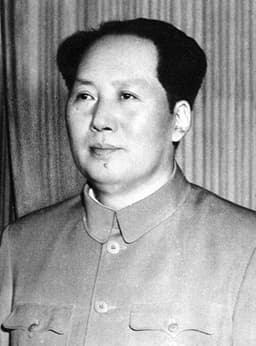
Mao Zedong
Politician · Modern
79.4Total
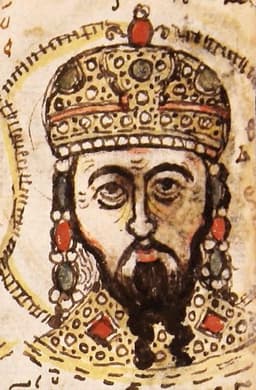
Theodore I Laskaris
Emperor · Medieval
61.8Total
Basic Information
Born
1893
1174
Died
1976
1222
Era
Modern
Medieval
Nationality
China
Nicaean Empire
Occupation
Politician
Emperor
Civilization
Eastern
Western
Score Comparison
Military (10%)
75.0
65.0
Political (20%)
88.0
60.0
Influence (20%)
85.0
61.0
Legacy (20%)
70.0
56.0
Leadership (15%)
85.0
77.2
Strategy (15%)
72.0
55.0
TOTAL
79.4
61.8
Mao Zedong — Complete Timeline
1934 AD
Long MarchWar
Mao Zedong led the Chinese Red Army on a strategic retreat from Nationalist forces, covering approximately 6,000 miles over 370 days. The march solidified Mao's leadership within the Chinese Communist Party and became a foundational myth of the Communist revolution.
Chinese Civil WarCommunist RevolutionRetreat
Impact: national
1949 AD
Proclamation of the People's Republic of ChinaPolitical Action
Mao Zedong declared the founding of the People's Republic of China from Tiananmen Gate in Beijing. This ended the Chinese Civil War and established Communist rule over mainland China, with Mao as Chairman of the Central People's Government.
Founding of PRCCommunist VictoryRevolution
Impact: global
1958 AD
Great Leap ForwardReform◆ Major
Mao launched a campaign to rapidly industrialize China and collectivize agriculture. The policy led to widespread mismanagement, resulting in a famine that caused an estimated 15-45 million deaths between 1959 and 1961.
FamineIndustrializationCollectivization
Impact: nationaldestructive
1960 AD
Sino-Soviet SplitPolitical Action◆ Major
Mao's ideological differences with Soviet leader Nikita Khrushchev led to a breakdown in relations between China and the Soviet Union. The split ended the Sino-Soviet alliance and reshaped global Cold War dynamics, with China pursuing an independent path.
Cold WarIdeological ConflictAlliance Breakdown
Impact: global
1966 AD
Cultural RevolutionPolitical Action
Mao initiated a sociopolitical movement to purge capitalist and traditional elements from Chinese society. The Red Guard youth groups attacked intellectuals and officials, leading to widespread violence, destruction of cultural artifacts, and an estimated 1-2 million deaths.
Political PurgeSocial UpheavalRed Guard
Impact: nationaldestructive
1971 AD
Ping-Pong DiplomacyCultural◆ Major
Mao approved an invitation for the U.S. table tennis team to visit China, initiating a thaw in Sino-American relations. This cultural exchange paved the way for President Nixon's visit to China in 1972 and the eventual normalization of diplomatic ties.
DiplomacyU.S.-China RelationsCultural Exchange
Impact: globalconstructive
Theodore I Laskaris — Complete Timeline
1204 AD
Foundation of the Empire of NicaeaPolitical Action
After the Fourth Crusade captured Constantinople, Theodore I Laskaris fled to Nicaea in Asia Minor and established a Byzantine government-in-exile. He organized resistance against the Latin Empire and the Seljuk Turks, laying the foundation for the Nicaean Empire as the primary successor state of Byzantium.
Fourth CrusadeSuccessor StateExile Government
Impact: regionalconstructive
1208 AD
Coronation as emperor by the Patriarch of ConstantinoplePolitical Action◆ Major
Theodore I Laskaris was formally crowned as emperor by the newly elected Patriarch of Constantinople-in-exile, Michael IV Autoreianos. This coronation legitimized the Nicaean Empire as the rightful continuation of the Byzantine Empire, with full ecclesiastical authority.
CoronationLegitimacyPatriarchate
Impact: regionalconstructive
1211 AD
Battle of Antioch on the MeanderWar◆ Major
Theodore I Laskaris defeated the Seljuk Sultanate of Rum at the Battle of Antioch on the Meander. The victory secured Nicaean control over western Anatolia and prevented Seljuk expansion into Byzantine territories, establishing Theodore as a major regional power.
Byzantine-Seljuk WarsMilitary VictoryAnatolian Campaign
Impact: regional
Defeat of the Latin Empire at the Battle of RhyndacusWar
Theodore I Laskaris led Nicaean forces to a victory over the Latin Empire at the Battle of Rhyndacus. The battle halted Latin expansion into Asia Minor and secured Nicaean control over the region, strengthening the Byzantine resistance against the crusader states.
Latin EmpireMilitary VictoryAsia Minor
Impact: regional
Expert Analysis
Mao Zedong vs Theodore I Laskaris
# The Revolutionary and the Restorer
In the winter of 1934, a gaunt man with piercing eyes led a broken army across the snow-choked mountains of western China, a desperate flight that would become legend. Eight hundred years earlier, another man in tattered imperial robes fled through the same Asian landscape, watching his world collapse behind him. Mao Zedong and Theodore I Laskaris never met, never could have met, yet their stories run in strange parallel—two men who built kingdoms from ashes, who turned defeat into founding myth, who reshaped civilizations in their own image. But one would leave a nation transformed, the other a seed preserved. Why?
Origins
Mao Zedong was born in 1893 into a peasant family in Hunan province, a son of the soil who would come to embody China's agrarian soul. His father beat him; his mother consoled him. He read Chinese classics and Western philosophy in equal measure, absorbing both Confucian order and Marxist revolution. The world he entered was one of collapse—the Qing Dynasty crumbling, foreign powers carving China like a feast, warlords feasting on the carcass.
Theodore I Laskaris emerged from a very different ruin. Born in 1174 into the Byzantine aristocracy, he was a product of Constantinople's thousand-year civilization, a world of Greek learning, Roman law, and Orthodox Christianity. When the Fourth Crusade's knights stormed his city in 1204—Christians sacking Christendom's greatest city—Laskaris watched his entire universe shatter. He was not a peasant's son but a prince without a throne.
The difference in their origins is not merely biographical. Mao came from the bottom, and he would always trust the bottom. Laskaris came from the center, and he would always dream of returning there.
Rise to Power
Mao's path to power was a long march in every sense. In 1934, encircled by Nationalist forces, he led the Red Army on a 6,000-mile retreat through China's harshest terrain. The Long March was a military catastrophe but a political masterstroke—it purified the Communist ranks, elevated Mao to absolute leadership, and created a founding myth that would sustain his revolution for decades. He did not seize power in a palace coup; he earned it through endurance.
Laskaris's rise was swifter but no less desperate. In 1204, as Constantinople burned, he gathered what remained of the Byzantine bureaucracy and military, crossed the Bosporus, and established a new capital at Nicaea in Asia Minor. By 1208, he had secured coronation from the Patriarch of Constantinople-in-exile, giving his rump state the legitimacy of empire. He did not march through mountains; he rebuilt a throne from fragments.
Both men understood that power requires a story. Mao's story was the Long March: the people's army, invincible through suffering. Laskaris's story was the restoration: the true emperor, preserving civilization in exile.
Leadership & Governance
Mao ruled China from 1949 until his death in 1976 with a vision both grand and catastrophic. The Great Leap Forward of 1958 sought to industrialize China overnight—backyard steel furnaces, forced collectivization, utopian promises. It produced famine. Between 15 and 45 million people died. Then came the Cultural Revolution in 1966, a decade-long purge of "bourgeois" elements that destroyed temples, books, and lives. Mao's political score of 82.0 reflects his genius for mobilization, but his legacy is haunted by the human cost.
Laskaris governed differently. His Empire of Nicaea was small, poor, and surrounded by enemies—the Latin Empire to the west, the Seljuk Turks to the east. He could not afford utopian experiments. Instead, he consolidated: rebuilding the Orthodox Church, minting coins, defending borders. In 1211, at the Battle of Antioch on the Meander, he crushed a Seljuk invasion. At the Battle of Rhyndacus, he halted the Latin advance. His military score of 55.2 is modest, but his political score of 72.0 reflects a different kind of wisdom: knowing that survival is sometimes victory enough.
Triumph & Tragedy
Mao's greatest triumph was the proclamation of the People's Republic of China on October 1, 1949, from Tiananmen Gate. After a century of humiliation, China was unified under a single, powerful state. His greatest tragedy was that he could not stop destroying what he built—the Great Leap Forward's famine, the Cultural Revolution's chaos, the Sino-Soviet Split of 1960 that isolated China.
Laskaris's triumph was more modest but more durable: he preserved Byzantine civilization. When he died in 1222, his empire was stable, his enemies checked, his legitimacy unchallenged. His tragedy was that he never saw Constantinople again. The city he fled in 1204 would not be retaken until 1261, by his successors.
Character & Destiny
Mao was a poet, a strategist, and a tyrant. He wrote verses about mountains and revolution, but he also ordered the deaths of millions. His leadership score of 80.6 and strategy score of 76.5 suggest a man of immense ability and immense ruthlessness. He believed history moved through conflict, and he was willing to be its instrument.
Laskaris was a survivor, not a visionary. His leadership score of 73.2 and strategy score of 72.0 reflect competence rather than genius. He did not seek to remake the world; he sought to save a piece of it. He was the custodian of a flame, not the arsonist who starts a new fire.
Legacy
Mao's legacy is a contradiction. His influence score of 79.7 and legacy score of 69.9 capture the tension: he transformed China into a global power, but his policies caused suffering on an almost incomprehensible scale. Today, he is both revered and condemned, his image on Tiananmen Gate and his name on a million textbooks, yet his economic and social experiments largely abandoned.
Laskaris's legacy is quieter. His influence score of 72.7 and legacy score of 69.1 reflect his role as a bridge—the man who kept Byzantium alive so that others could restore it. He is remembered by historians, not by crowds. But without him, there might be no Byzantine legacy at all.
Conclusion
Mao and Laskaris faced similar questions: How do you rebuild when everything falls apart? How do you lead when the old world is dead? Mao answered with revolution—total transformation, whatever the cost. Laskaris answered with restoration—preservation, patience, the long game.
One built a new world that still trembles. The other saved an old world that still whispers. Both were necessary. Both were tragic. And both remind us that history is not made by good men or bad men, but by men who see the abyss and choose, for better or worse, to step forward.
Rankings
🥇
Mao ZedongLeader
Mil: 75.0Pol: 88.0Inf: 85.0
79.4
🥈
Theodore I Laskaris
Mil: 65.0Pol: 60.0Inf: 61.0
61.8
+17.6 behind
How This Comparison Works
Algorithm
Each figure is scored on 6 dimensions (0—100 scale) based on structured historical data: Military (10%), Political (20%), Influence (20%), Legacy (20%), Leadership (15%), Strategy (15%). The weighted total produces the final ranking.
Data Sources
Scores are computed from structured sub-indicators in the database. Scale factors adjust for era (Ancient ×0.85, Modern ×1.0) and civilization size (Eastern ×1.05, Other ×0.80) to account for differences in population and military scale.
Maximum 3 Figures
Comparisons are limited to 2—3 figures to ensure readability and statistical meaningfulness.
Error Margins
±5 points per dimension — Sub-scores are derived from historical records with inherent uncertainty. Two figures within 5 points on a dimension should be considered roughly equivalent in that area.
Total Score Accuracy
±3 points overall — The weighted combination of 6 dimensions produces a total score with approximately ±3 points of uncertainty. Differences of less than 3 points are not statistically significant— the figures are effectively tied.
Known Limitations
- Historical records are incomplete and uneven across civilizations
- Figures from oral-tradition societies may be underrepresented
- Occupation labels can misclassify multi-role figures
- Scores measure capability and impact, not moral character
- Quantitative scoring is a comparison tool, not absolute truth
Capability Radar
Military (10%) — Battles & Warfare
Battles
85
65
Win Rate
80
70
Expansion
85
60
Political (20%) — Governance & Reform
Reform
95
65
Diplomacy
80
70
Economy
70
60
Influence (20%) — Cultural & Global Reach
Cultural
90
50
Global
90
45
Legacy (20%) — Historical Impact
Historical
95
65
Longevity
85
55
Leadership (15%) — Power & Stability
Tenure
95
70
Stability
60
65
Strategy (15%) — Tactics & Innovation
Strategy
85
75
Tactics
75
60
Reform
90
55
Similar Comparisons
Comments & Discussion
灯塔守望者6/16/2026
Laskaris是个被遗忘的悲剧英雄。他目睹君士坦丁堡陷落时,心里想的是"千年文明不能断",而毛泽东在长征路上想的却是"旧世界砸烂了重建"。一个在废墟里拾起法律的碎片,一个在废墟上烧掉历史的残卷。结果呢?拜占庭的法律至今活在希腊法典里,而毛泽东的文化革命差点让汉字断根。谁更值得尊重?
Data Scrutineer6/16/2026
The comparison is intellectually lazy. Mao's "peasant army" of 1934 was 86,000 strong; Laskaris fled Nicaea with maybe 2,000 loyalists. The scale is incomparable. Also, Mao's economic policies caused 45 million famine deaths; Laskaris's tax reforms actually stabilized Nicaea's currency. But hey, "two men who built kingdoms from ashes" sounds poetic, doesn't it? Let's ignore the body counts.
青竹书生6/16/2026
作为中国历史爱好者,我承认毛泽东的功绩,但别把他的长征和Laskaris的逃亡并列。Laskaris是个逃亡贵族,靠外交和血统拉拢残余势力;毛泽东是真正从底层爬起来,靠土地改革和群众路线赢得民心。Laskaris恢复的是旧制度,毛建设的是新国家。一个是皇帝的影子,一个是太阳本身。你们西方人总爱把失败者当成浪漫,却不懂革命者的血性。
Revisionist Lens6/16/2026
Laskaris is a convenient myth for Western historiography—a "noble exile" who preserved a corrupt, slave-owning empire. Mao's movement, for all its brutality, broke China's feudal chains. The comparison fails because Mao aimed to destroy the past; Laskaris wanted to restore it. Which is more admirable? Depends if you prefer museums to movements. But let's stop pretending Laskaris was some saint. He executed rivals and crushed peasant revolts too.
Chronicler31456/16/2026
Mao wasn't just a revolutionary; he was a master of cognitive dissonance—preaching peasant collectivism while personally hoarding political power like a paranoid emperor. Laskaris, by contrast, actually built a functional state in exile. Mao's Long March was a retreat, not a victory lap. The only thing they share is building cults from trauma, but Laskaris preserved Byzantine law; Mao erased China's legal tradition.