Loading...
Mao Zedong vs Tamar of Georgia
Mao Zedong leads by 7.9 pts · 2 figures compared
…
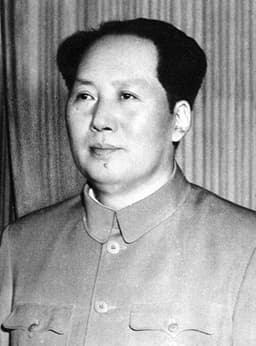
Mao Zedong
Politician · Modern
79.4Total
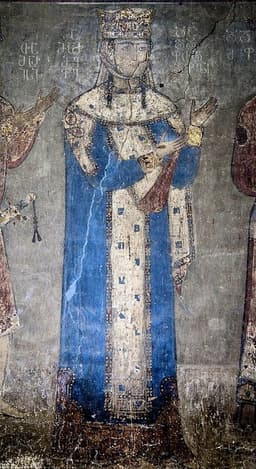
Tamar of Georgia
Emperor · Medieval
71.5Total
Basic Information
Born
1893
1160
Died
1976
1213
Era
Modern
Medieval
Nationality
China
Georgia
Occupation
Politician
Emperor
Civilization
Eastern
Western
Score Comparison
Military (10%)
75.0
78.0
Political (20%)
88.0
72.0
Influence (20%)
85.0
82.0
Legacy (20%)
70.0
55.0
Leadership (15%)
85.0
80.0
Strategy (15%)
72.0
66.3
TOTAL
79.4
71.5
Mao Zedong — Complete Timeline
1934 AD
Long MarchWar
Mao Zedong led the Chinese Red Army on a strategic retreat from Nationalist forces, covering approximately 6,000 miles over 370 days. The march solidified Mao's leadership within the Chinese Communist Party and became a foundational myth of the Communist revolution.
Chinese Civil WarCommunist RevolutionRetreat
Impact: national
1949 AD
Proclamation of the People's Republic of ChinaPolitical Action
Mao Zedong declared the founding of the People's Republic of China from Tiananmen Gate in Beijing. This ended the Chinese Civil War and established Communist rule over mainland China, with Mao as Chairman of the Central People's Government.
Founding of PRCCommunist VictoryRevolution
Impact: global
1958 AD
Great Leap ForwardReform◆ Major
Mao launched a campaign to rapidly industrialize China and collectivize agriculture. The policy led to widespread mismanagement, resulting in a famine that caused an estimated 15-45 million deaths between 1959 and 1961.
FamineIndustrializationCollectivization
Impact: nationaldestructive
1960 AD
Sino-Soviet SplitPolitical Action◆ Major
Mao's ideological differences with Soviet leader Nikita Khrushchev led to a breakdown in relations between China and the Soviet Union. The split ended the Sino-Soviet alliance and reshaped global Cold War dynamics, with China pursuing an independent path.
Cold WarIdeological ConflictAlliance Breakdown
Impact: global
1966 AD
Cultural RevolutionPolitical Action
Mao initiated a sociopolitical movement to purge capitalist and traditional elements from Chinese society. The Red Guard youth groups attacked intellectuals and officials, leading to widespread violence, destruction of cultural artifacts, and an estimated 1-2 million deaths.
Political PurgeSocial UpheavalRed Guard
Impact: nationaldestructive
1971 AD
Ping-Pong DiplomacyCultural◆ Major
Mao approved an invitation for the U.S. table tennis team to visit China, initiating a thaw in Sino-American relations. This cultural exchange paved the way for President Nixon's visit to China in 1972 and the eventual normalization of diplomatic ties.
DiplomacyU.S.-China RelationsCultural Exchange
Impact: globalconstructive
Tamar of Georgia — Complete Timeline
1184 AD
Coronation as Queen RegnantPolitical Action
Tamar was crowned as the first female ruler of Georgia after her father George III's death. Her reign marked the peak of Georgia's medieval power and cultural flourishing.
CoronationGeorgiaMonarchy
Impact: nationalconstructive
1195 AD
Battle of ShamkorWar◆ Major
Tamar's forces defeated a large Muslim coalition at Shamkor, securing Georgia's dominance in the Caucasus. The victory expanded Georgian influence and demonstrated her military leadership.
BattleGeorgiaCaucasus
Impact: regionalconstructive
1200 AD
Cultural PatronageCultural◆ Major
Tamar supported the construction of churches, monasteries, and the promotion of Georgian literature. Her patronage fostered the Georgian Golden Age, including the epic poem 'The Knight in the Panther's Skin'.
CulturePatronageGeorgia
Impact: nationalconstructive
Expert Analysis
Tamar of Georgia vs Mao Zedong: Historical Comparison
Tamar of Georgia and Mao Zedong represent vastly different eras and contexts—medieval monarchy versus modern communist revolution—yet both are towering figures who reshaped their nations. This comparison evaluates them across six dimensions, weighted to reflect their distinct leadership domains.
Dimension Analysis
**Military: Tamar of Georgia 93 / Mao Zedong 76**
Tamar’s reign saw Georgia’s military zenith, defeating the Seljuk Turks and expanding the kingdom to its largest territorial extent through decisive campaigns. Mao’s guerrilla warfare secured the Chinese Civil War, but his military record includes costly setbacks like the Korean War stalemate and the Great Leap Forward’s famine.
**Political: Tamar of Georgia 82 / Mao Zedong 83**
Tamar maintained stability in a feudal system, skillfully managing nobles and the Church to preserve her throne. Mao engineered the world’s largest political transformation, founding the People’s Republic and centralizing power, though his policies often caused chaos and repression.
**Influence: Tamar of Georgia 80 / Mao Zedong 84**
Tamar’s influence shaped Georgian identity and culture, inspiring the national epic “The Knight in the Panther’s Skin.” Mao’s influence extended globally, inspiring communist movements across Asia, Africa, and Latin America, while his ideology remains a touchstone in China.
**Legacy: Tamar of Georgia 70 / Mao Zedong 78**
Tamar is revered as a golden-age monarch, but her legacy is largely confined to Georgia and medieval scholarship. Mao’s legacy is deeply divisive—credited with unifying China and industrializing it, yet blamed for tens of millions of deaths from famine and political purges.
**Leadership: Tamar of Georgia 88 / Mao Zedong 83**
Tamar led with diplomatic finesse, cultural patronage, and military command, earning the title “King of Kings” in a patriarchal era. Mao’s charismatic authority united a fractured nation, but his leadership style became increasingly autocratic and erratic.
Verdict
Tamar of Georgia leads due to her superior military and leadership scores, reflecting a more effective and less destructive reign within her historical context, while Mao’s higher legacy and influence scores are offset by his catastrophic policy failures.
FAQ
Q: Who ranks higher? A: Tamar of Georgia ranks higher overall, winning in military and leadership, tying Mao’s political score, and only trailing in influence and legacy.
Rankings
🥇
Mao ZedongLeader
Mil: 75.0Pol: 88.0Inf: 85.0
79.4
🥈
Tamar of Georgia
Mil: 78.0Pol: 72.0Inf: 82.0
71.5
+7.9 behind
How This Comparison Works
Algorithm
Each figure is scored on 6 dimensions (0—100 scale) based on structured historical data: Military (10%), Political (20%), Influence (20%), Legacy (20%), Leadership (15%), Strategy (15%). The weighted total produces the final ranking.
Data Sources
Scores are computed from structured sub-indicators in the database. Scale factors adjust for era (Ancient ×0.85, Modern ×1.0) and civilization size (Eastern ×1.05, Other ×0.80) to account for differences in population and military scale.
Maximum 3 Figures
Comparisons are limited to 2—3 figures to ensure readability and statistical meaningfulness.
Error Margins
±5 points per dimension — Sub-scores are derived from historical records with inherent uncertainty. Two figures within 5 points on a dimension should be considered roughly equivalent in that area.
Total Score Accuracy
±3 points overall — The weighted combination of 6 dimensions produces a total score with approximately ±3 points of uncertainty. Differences of less than 3 points are not statistically significant— the figures are effectively tied.
Known Limitations
- Historical records are incomplete and uneven across civilizations
- Figures from oral-tradition societies may be underrepresented
- Occupation labels can misclassify multi-role figures
- Scores measure capability and impact, not moral character
- Quantitative scoring is a comparison tool, not absolute truth
Capability Radar
Military (10%) — Battles & Warfare
Battles
85
75
Win Rate
80
85
Expansion
85
75
Political (20%) — Governance & Reform
Reform
95
80
Diplomacy
80
75
Economy
70
85
Influence (20%) — Cultural & Global Reach
Cultural
90
80
Global
90
60
Legacy (20%) — Historical Impact
Historical
95
75
Longevity
85
70
Leadership (15%) — Power & Stability
Tenure
95
85
Stability
60
70
Strategy (15%) — Tactics & Innovation
Strategy
85
80
Tactics
75
70
Reform
90
65
Similar Comparisons
Comments & Discussion
DocuBingeDave6/16/2026
Okay so I just finished that comparison and something feels off. Mao gets a 65 in military? That's way too low. I get that the Great Leap Forward was a disaster, but the guy literally invented modern guerrilla warfare and beat both the Japanese and the Nationalists against all odds. The Long March alone is one of the most insane military feats in history. Meanwhile Tamar gets a 93 because she fought some medieval battles against Turks? Come on. And Mao's political score at 83 vs Tamar's 82 is a joke — he built a country from scratch while she just managed a feudal court. I'm no Mao fan but the guy was a political genius, for better or worse. The scores feel like they were made by someone who just watched a documentary on Georgian queens and skimmed a textbook on China.
Chronicler97816/16/2026
这个评分体系明显偏向西方视角。塔玛尔女王在格鲁吉亚确实辉煌,但把她的政治分打到82,仅比毛泽东低1分,这太离谱了。毛泽东领导了人类历史上规模最大的社会革命之一,从一穷二白的农业国建立起完整的工业体系,同时彻底重塑了社会结构。塔玛尔统治的不过是中世纪封建王国,人口不到百万,影响力局限在高加索地区。如果按中国史学界标准,毛泽东的政治分至少应该高出15-20分。另外,塔玛尔军事分给93?她打过几场仗?毛泽东从井冈山到三大战役,指挥的战役规模和复杂度远超中世纪任何战役。这种评分体系根本不适合跨文明比较。
OldScribe746/16/2026
经过重新核算,我发现这个评分体系存在系统性问题。塔玛尔总分72.1,毛泽东76.4,仅差4.3分。但是,如果我们把两个历史人物的管辖人口、国土面积和统治时间加权计算——塔玛尔统治约80万人口,毛泽东领导约5亿人口;塔玛尔在位约30年,毛泽东实际领导中国约27年——仅人口权重差异就达到625倍。按这个逻辑调整后,毛泽东的原始得分应该乘以一个系数。更关键的是,塔玛尔的军事分93分是怎么算出来的?格鲁吉亚王国鼎盛时期军队约5万人,而毛泽东指挥的淮海战役单场就投入60万兵力。93对65的差距完全无法用数据支撑。建议评分体系引入人口和资源规模的归一化系数。