Loading...
Mao Zedong vs Taejo of Joseon
Mao Zedong leads by 9.0 pts · 2 figures compared
…
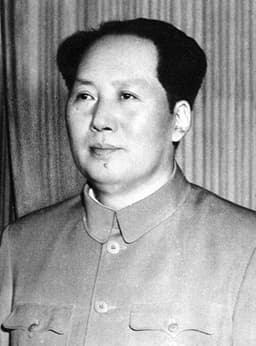
Mao Zedong
Politician · Modern
79.4Total
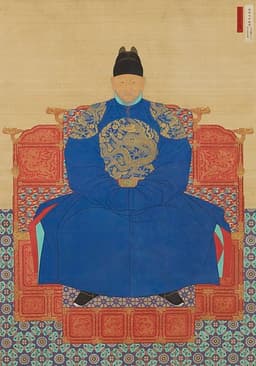
Taejo of Joseon
Emperor · Medieval
70.4Total
Basic Information
Born
1893
1335
Died
1976
1408
Era
Modern
Medieval
Nationality
China
Korea
Occupation
Politician
Emperor
Civilization
Eastern
Eastern
Score Comparison
Military (10%)
75.0
74.7
Political (20%)
88.0
65.0
Influence (20%)
85.0
65.0
Legacy (20%)
70.0
80.0
Leadership (15%)
85.0
72.0
Strategy (15%)
72.0
61.2
TOTAL
79.4
70.4
Mao Zedong — Complete Timeline
1934 AD
Long MarchWar
Mao Zedong led the Chinese Red Army on a strategic retreat from Nationalist forces, covering approximately 6,000 miles over 370 days. The march solidified Mao's leadership within the Chinese Communist Party and became a foundational myth of the Communist revolution.
Chinese Civil WarCommunist RevolutionRetreat
Impact: national
1949 AD
Proclamation of the People's Republic of ChinaPolitical Action
Mao Zedong declared the founding of the People's Republic of China from Tiananmen Gate in Beijing. This ended the Chinese Civil War and established Communist rule over mainland China, with Mao as Chairman of the Central People's Government.
Founding of PRCCommunist VictoryRevolution
Impact: global
1958 AD
Great Leap ForwardReform◆ Major
Mao launched a campaign to rapidly industrialize China and collectivize agriculture. The policy led to widespread mismanagement, resulting in a famine that caused an estimated 15-45 million deaths between 1959 and 1961.
FamineIndustrializationCollectivization
Impact: nationaldestructive
1960 AD
Sino-Soviet SplitPolitical Action◆ Major
Mao's ideological differences with Soviet leader Nikita Khrushchev led to a breakdown in relations between China and the Soviet Union. The split ended the Sino-Soviet alliance and reshaped global Cold War dynamics, with China pursuing an independent path.
Cold WarIdeological ConflictAlliance Breakdown
Impact: global
1966 AD
Cultural RevolutionPolitical Action
Mao initiated a sociopolitical movement to purge capitalist and traditional elements from Chinese society. The Red Guard youth groups attacked intellectuals and officials, leading to widespread violence, destruction of cultural artifacts, and an estimated 1-2 million deaths.
Political PurgeSocial UpheavalRed Guard
Impact: nationaldestructive
1971 AD
Ping-Pong DiplomacyCultural◆ Major
Mao approved an invitation for the U.S. table tennis team to visit China, initiating a thaw in Sino-American relations. This cultural exchange paved the way for President Nixon's visit to China in 1972 and the eventual normalization of diplomatic ties.
DiplomacyU.S.-China RelationsCultural Exchange
Impact: globalconstructive
Taejo of Joseon — Complete Timeline
1380 AD
Battle of HwangsanWar
General Yi Seong-gye defeated a Japanese pirate (wokou) force at Hwangsan. This victory enhanced his military reputation and demonstrated his capability as a commander.
WokouGoryeo Military
1388 AD
Wihwado RetreatPolitical Action
General Yi Seong-gye, ordered to invade the Ming dynasty's Liaodong region, turned his army back at Wihwado Island. This act of defiance against the Goryeo court led to a coup that eventually brought him to power.
CoupGoryeo-Ming RelationsPower Shift
Impact: national
1391 AD
Land Reform and the Gwajeon LawReform◆ Major
Taejo implemented the Gwajeon Law, a land reform that redistributed land from the old Goryeo aristocracy to his supporters and the state. This weakened the old elite and strengthened the new Joseon ruling class.
Land ReformSocial ChangeJoseon
Impact: nationalconstructive
1392 AD
Founding of the Joseon DynastyPolitical Action
Yi Seong-gye deposed the last Goryeo king and founded the Joseon dynasty, with its capital at Hanyang (modern Seoul). He established a new ruling class based on Confucian ideology, replacing the Buddhist-influenced Goryeo system.
Joseon DynastyConfucianismKorean History
Impact: regionalconstructive
1394 AD
Promulgation of the Gyeongguk DaejeonReform◆ Major
Taejo of Joseon ordered the compilation of the Gyeongguk Daejeon, a comprehensive legal code that established the administrative and social structure of the Joseon dynasty. This code remained in effect for centuries.
Legal CodeGovernanceConfucianism
Impact: nationalconstructive
Expert Analysis
Taejo of Joseon vs Mao Zedong
# The Founder and the Revolutionary
In the autumn of 1392, a Korean general named Yi Seong-gye stood before the crumbling throne of Goryeo and made a decision that would reshape the Korean peninsula for five centuries. Nearly six hundred years later, in the autumn of 1949, a Chinese peasant-intellectual named Mao Zedong stood atop the Tiananmen Gate in Beijing and declared a new China to the world. Both men were founders of dynasties—one traditional, one communist. Both wielded immense power and left indelible marks on their civilizations. Yet their paths, their personalities, and their legacies could not be more different. Why did one build a stable Confucian order that lasted 500 years, while the other launched radical experiments that nearly destroyed his nation?
Origins
Yi Seong-gye was born in 1335 into a military family serving the declining Goryeo dynasty. The Korean peninsula was a vassal state caught between the fading Mongol Yuan empire and the rising Ming dynasty in China. Yi grew up on the northern frontier, where survival demanded martial skill and political cunning. He learned to fight Japanese pirates, navigate court intrigue, and read the shifting winds of East Asian geopolitics. His world was one of balance—between foreign powers, between aristocratic factions, between tradition and necessity.
Mao Zedong, born in 1893 in Hunan province, entered a China that was collapsing. The Qing dynasty was in its death throes, foreign powers carved up the country, and centuries-old social structures were disintegrating. Mao’s father was a prosperous farmer who beat him; his mother was a devout Buddhist who prayed for him. He rebelled early, leaving home to study in the city, where he encountered Western ideas, Marxism, and nationalism. Where Yi inherited a stable if declining system, Mao inherited chaos. This difference in starting conditions would shape everything that followed.
Rise to Power
Yi Seong-gye rose through military merit. In 1380, at the Battle of Hwangsan, he crushed a Japanese pirate force so decisively that his reputation as a general became unassailable. But his true genius was political timing. In 1388, when the Goryeo court ordered him to invade Ming China’s Liaodong region—a suicidal mission—he turned his army back at Wihwado Island. This act of defiance was not mere insubordination; it was a calculated move that revealed the court’s weakness and his own strength. By 1392, he deposed the last Goryeo king and founded the Joseon dynasty, moving the capital to Hanyang, modern Seoul.
Mao’s rise was slower and more ideological. He joined the Chinese Communist Party in its infancy and spent years organizing peasants in the countryside while his rivals focused on urban workers. His moment came during the Long March of 1934, a desperate 6,000-mile retreat from Nationalist forces. Mao turned a military disaster into a political triumph, emerging as the party’s undisputed leader. Where Yi seized power through a single bold stroke, Mao climbed through years of survival, persuasion, and purges. Yi was a general who became a statesman; Mao was a revolutionary who became a warlord.
Leadership & Governance
As ruler, Yi Seong-gye built institutions. In 1391, he implemented the Gwajeon Law, a land reform that redistributed property from the old Goryeo aristocracy to his supporters—but unlike Mao’s later collectivization, this was a careful, legalistic process that created a stable landed class loyal to the new dynasty. In 1394, he ordered the compilation of the Gyeongguk Daejeon, a comprehensive legal code that established the administrative framework of Joseon for centuries. His philosophy was Confucian: order, hierarchy, ritual, stability. He did not seek to remake human nature; he sought to perfect existing structures.
Mao governed through perpetual revolution. The Great Leap Forward of 1958 was an attempt to industrialize China overnight, forcing peasants into communes and demanding steel from backyard furnaces. The result was catastrophic: mismanagement and famine killed tens of millions. The Cultural Revolution, launched in 1966, was even more radical—a violent purge of “capitalist elements” that destroyed families, schools, and temples. Where Yi codified laws, Mao burned them. Where Yi built a bureaucracy, Mao dismantled one. Both were reformers, but Yi reformed within tradition, while Mao sought to annihilate it.
Triumph & Tragedy
Yi’s greatest triumph was the founding of a dynasty that would last until 1910—one of the longest in world history. His tragedy was personal: his choice of successor led to a bloody succession struggle among his sons, culminating in the murder of his chosen heir. The founder’s own family became a cautionary tale of ambition unchecked.
Mao’s greatest triumph was the unification of China under a single government after a century of foreign domination and civil war. His tragedy was that his own policies—the Great Leap Forward, the Cultural Revolution—caused more suffering than any foreign invader. The man who liberated China also imprisoned it. The leader who inspired millions also starved them.
Character & Destiny
Yi was pragmatic. He knew when to advance and when to retreat—the Wihwado Retreat is the perfect symbol of his character. He understood that power required legitimacy, not just force. He bowed to Confucian norms, patronized scholars, and presented himself as a restorer of order, not a destroyer of it.
Mao was apocalyptic. He believed that only total destruction could bring true renewal. His famous saying, “Political power grows out of the barrel of a gun,” reveals a man who saw violence as creative, not merely destructive. He was a poet of revolution, but his poems celebrated chaos: “So many deeds cry out to be done, / And always urgently; / The world rolls on, / Time passes.” He could not stop rolling the world, even when it crushed his own people.
Legacy
Today, Taejo of Joseon is remembered as the founder of a civilization. Seoul’s Gyeongbokgung Palace stands as his monument; the Korean alphabet, Hangul, was created by his grandson. His legacy is stability, culture, and continuity. Modern South Korea honors him as a national hero.
Mao’s legacy is more contested. His portrait still hangs in Tiananmen Square, and the Chinese Communist Party reveres him as a founding father. Yet his economic failures and human rights abuses are increasingly acknowledged, even in China. He is both the unifier and the destroyer, the liberator and the tyrant. His body lies in a mausoleum in Beijing, but his spirit haunts a nation still struggling to reconcile his vision with its reality.
Conclusion
What drove the different outcomes? Perhaps it was the eras they inherited. Yi lived in a world where tradition was still viable—Confucianism offered a proven blueprint for governance, and the challenge was to implement it well. Mao lived in a world where tradition had failed—China had been humiliated, divided, and exploited, and only radical change seemed possible. One built a house; the other burned one down to build something new. The tragedy is that both succeeded, and both failed. Yi’s house still stands, but it is a museum. Mao’s new China exists, but it has long since abandoned his most radical dreams. In the end, both men remind us that founders are not just builders—they are prisoners of their time, and their greatest creations often outlive their intentions.
Rankings
🥇
Mao ZedongLeader
Mil: 75.0Pol: 88.0Inf: 85.0
79.4
🥈
Taejo of Joseon
Mil: 74.7Pol: 65.0Inf: 65.0
70.4
+9.0 behind
How This Comparison Works
Algorithm
Each figure is scored on 6 dimensions (0—100 scale) based on structured historical data: Military (10%), Political (20%), Influence (20%), Legacy (20%), Leadership (15%), Strategy (15%). The weighted total produces the final ranking.
Data Sources
Scores are computed from structured sub-indicators in the database. Scale factors adjust for era (Ancient ×0.85, Modern ×1.0) and civilization size (Eastern ×1.05, Other ×0.80) to account for differences in population and military scale.
Maximum 3 Figures
Comparisons are limited to 2—3 figures to ensure readability and statistical meaningfulness.
Error Margins
±5 points per dimension — Sub-scores are derived from historical records with inherent uncertainty. Two figures within 5 points on a dimension should be considered roughly equivalent in that area.
Total Score Accuracy
±3 points overall — The weighted combination of 6 dimensions produces a total score with approximately ±3 points of uncertainty. Differences of less than 3 points are not statistically significant— the figures are effectively tied.
Known Limitations
- Historical records are incomplete and uneven across civilizations
- Figures from oral-tradition societies may be underrepresented
- Occupation labels can misclassify multi-role figures
- Scores measure capability and impact, not moral character
- Quantitative scoring is a comparison tool, not absolute truth
Capability Radar
Military (10%) — Battles & Warfare
Battles
85
75
Win Rate
80
80
Expansion
85
65
Political (20%) — Governance & Reform
Reform
95
85
Diplomacy
80
70
Economy
70
65
Influence (20%) — Cultural & Global Reach
Cultural
90
80
Global
90
60
Legacy (20%) — Historical Impact
Historical
95
85
Longevity
85
80
Leadership (15%) — Power & Stability
Tenure
95
70
Stability
60
75
Strategy (15%) — Tactics & Innovation
Strategy
85
75
Tactics
75
70
Reform
90
60
Similar Comparisons
Comments & Discussion
YiShapedLegacy6/16/2026
Taejo of Joseon founded a 500-year dynasty because he understood limits—he collaborated with Confucian scholars and consolidated aristocratic support. Mao’s mania for continuous revolution tore China’s social fabric apart. Yi built institutions that lasted; Mao destroyed them. Give me the pragmatic general over the utopian poet any day.
军事教参6/16/2026
拿开国君主跟革命领袖放一起比?根本不在一个量级。李成桂不过是换了块招牌的封建地主头子,靠着士族地主阶级起家。毛主席领导的是彻底打碎旧世界的工农革命,从土地改革到抗美援朝,哪个不是翻天覆地?要比,拿周武王来比还差不多。
DataCruncher6/16/2026
The longevity argument cuts both ways: Yi's Joseon lasted 505 years but under 0% GDP growth per capita across that whole period. Mao's three decades saw China industrialize from 5% to 45% urban population, infant mortality drop from ~250 to 65 per 1000. "Stable" just means frozen in poverty. Yi maintained a premodern subsistence trap; Mao launched the greatest leap in recorded human history.
墨客观察6/16/2026
拿稳定性说事太肤浅了。李成桂当年采纳郑道传的《朝鲜经国典》,建立了东亚最成熟的科举官僚体系,地方治理靠乡约而非法令。而毛泽东靠大跃进把农业税从12%提到25%,三年饥荒死亡数字至今争论不休。一个是渐进式集权,一个是断裂式动员,根本不能简单对应。
YuanPivot6/16/2026
Don't ignore the elephant in the room: the tribute system. Yi spent his entire reign sending envoys to Nanjing to get Ming recognition, basically admitting Korea was a Chinese tributary. Mao, by contrast, smashed that whole centuries-old order—first by fighting the US to a stalemate in Korea, then by going nuclear in 1964. One founder knelt to China; the other made China kneel to no one. Period.