Loading...
Mao Zedong vs Suleiman I
Mao Zedong leads by 0.6 pts · 2 figures compared
…
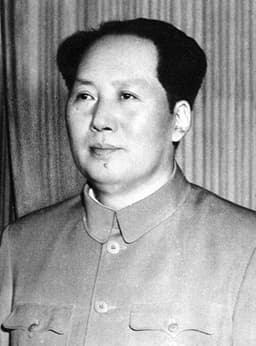
Mao Zedong
Politician · Modern
79.4Total
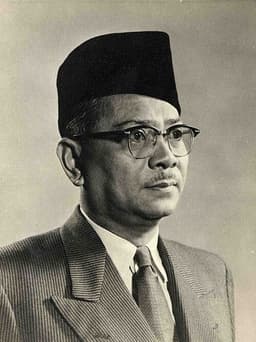
Suleiman I
Emperor · Medieval
78.8Total
Basic Information
Born
1893
1494
Died
1976
1566
Era
Modern
Medieval
Nationality
China
Ottoman Empire
Occupation
Politician
Emperor
Civilization
Eastern
Middle Eastern
Score Comparison
Military (10%)
75.0
78.5
Political (20%)
88.0
82.0
Influence (20%)
85.0
85.0
Legacy (20%)
70.0
70.8
Leadership (15%)
85.0
81.7
Strategy (15%)
72.0
74.4
TOTAL
79.4
78.8
Mao Zedong — Complete Timeline
1934 AD
Long MarchWar
Mao Zedong led the Chinese Red Army on a strategic retreat from Nationalist forces, covering approximately 6,000 miles over 370 days. The march solidified Mao's leadership within the Chinese Communist Party and became a foundational myth of the Communist revolution.
Chinese Civil WarCommunist RevolutionRetreat
Impact: national
1949 AD
Proclamation of the People's Republic of ChinaPolitical Action
Mao Zedong declared the founding of the People's Republic of China from Tiananmen Gate in Beijing. This ended the Chinese Civil War and established Communist rule over mainland China, with Mao as Chairman of the Central People's Government.
Founding of PRCCommunist VictoryRevolution
Impact: global
1958 AD
Great Leap ForwardReform◆ Major
Mao launched a campaign to rapidly industrialize China and collectivize agriculture. The policy led to widespread mismanagement, resulting in a famine that caused an estimated 15-45 million deaths between 1959 and 1961.
FamineIndustrializationCollectivization
Impact: nationaldestructive
1960 AD
Sino-Soviet SplitPolitical Action◆ Major
Mao's ideological differences with Soviet leader Nikita Khrushchev led to a breakdown in relations between China and the Soviet Union. The split ended the Sino-Soviet alliance and reshaped global Cold War dynamics, with China pursuing an independent path.
Cold WarIdeological ConflictAlliance Breakdown
Impact: global
1966 AD
Cultural RevolutionPolitical Action
Mao initiated a sociopolitical movement to purge capitalist and traditional elements from Chinese society. The Red Guard youth groups attacked intellectuals and officials, leading to widespread violence, destruction of cultural artifacts, and an estimated 1-2 million deaths.
Political PurgeSocial UpheavalRed Guard
Impact: nationaldestructive
1971 AD
Ping-Pong DiplomacyCultural◆ Major
Mao approved an invitation for the U.S. table tennis team to visit China, initiating a thaw in Sino-American relations. This cultural exchange paved the way for President Nixon's visit to China in 1972 and the eventual normalization of diplomatic ties.
DiplomacyU.S.-China RelationsCultural Exchange
Impact: globalconstructive
Suleiman I — Complete Timeline
1522 AD
Siege of RhodesWar◆ Major
Suleiman I led a massive Ottoman army and fleet to besiege the island of Rhodes, held by the Knights Hospitaller. After a six-month siege, the knights surrendered and were allowed to leave. This victory secured Ottoman control over the eastern Mediterranean.
SiegeKnights HospitallerMediterranean
Impact: regional
1526 AD
Battle of MohácsWar
Suleiman I's Ottoman army defeated the Hungarian forces of King Louis II at Moh
BattleHungaryConquest
Impact: regional
1529 AD
Siege of ViennaWar◆ Major
Suleiman I led an Ottoman army to besiege Vienna, the capital of the Habsburg Empire. The siege failed due to supply problems and the onset of winter. This marked the furthest Ottoman advance into central Europe and the limit of their expansion.
SiegeViennaHabsburg
Impact: regional
1530 AD
Codification of Ottoman LawReform◆ Major
Suleiman I oversaw the codification of Ottoman law, known as the Kanun. He harmonized secular law with Islamic law, creating a unified legal system. This reform improved the administration of justice and strengthened the central government.
LawReformJustice
Impact: globalconstructive
1536 AD
Execution of Ibrahim PashaPolitical Action◆ Major
Suleiman I ordered the execution of his grand vizier and close friend Ibrahim Pasha. Ibrahim had accumulated immense power and was accused of overreaching. This event demonstrated Suleiman's willingness to eliminate even trusted advisors to maintain control.
ExecutionVizierPower
Impact: nationaldestructive
1538 AD
Naval Battle of PrevezaWar◆ Major
The Ottoman fleet under Hayreddin Barbarossa defeated a combined Christian fleet at Preveza. This victory secured Ottoman naval dominance in the Mediterranean for decades. It allowed the Ottomans to control trade routes and raid coastal areas.
Naval BattleBarbarossaMediterranean
Impact: regional
Expert Analysis
Origins
Mao Zedong (1893–1976) was born into a peasant family in Shaoshan, Hunan, during the decline of the Qing dynasty. His early exposure to revolutionary ideas and the May Fourth Movement shaped his path as a Marxist-Leninist. Suleiman I (1494–1566) was born in Trabzon as the son of Sultan Selim I; he inherited a vast empire and was groomed for leadership from an early age, receiving an elite education in law, military strategy, and the arts.
Rise to Power
Mao's rise was marked by the Long March (1934–35), a strategic retreat that solidified his leadership within the Chinese Communist Party. He outmaneuvered rivals like Wang Ming and Zhang Guotao, emerging as the paramount leader by 1938. Suleiman ascended the throne in 1520 without opposition, following his father's death. His early campaigns, including the capture of Belgrade (1521) and Rhodes (1522), established his military reputation and expanded Ottoman influence.
Leadership & Governance
Mao implemented radical social and economic reforms: the Great Leap Forward (1958–62) aimed at rapid industrialization but caused a devastating famine (estimated 15–45 million deaths). The Cultural Revolution (1966–76) purged perceived enemies and destroyed cultural heritage. Suleiman codified Ottoman law (Kanun), harmonizing secular and religious codes, and oversaw a golden age in architecture (Süleymaniye Mosque) and the arts. His governance emphasized justice and stability, earning him the title "the Lawgiver."
Triumph & Tragedy
Mao's triumphs: founding the People's Republic in 1949, uniting China, and defeating the Kuomintang. Tragedies: the Great Leap Forward famine, Cultural Revolution chaos, and suppression of dissent. Suleiman's triumphs: victories at Mohács (1526) and consolidation of the empire from Hungary to Mesopotamia. Tragedies: the failed Siege of Vienna (1529), execution of his grand vizier Ibrahim Pasha (1536), and the execution of his son Mustafa (1553), leading to succession crises.
Character & Destiny
Mao was a visionary strategist and ruthless ideologue, driven by a desire to transform China. His charisma and writings (Little Red Book) mobilized millions, but his paranoia and dogmatism led to catastrophes. Suleiman was a just ruler and patron of culture, but his later years were marred by court intrigue and the influence of his wife, Hurrem Sultan. Both men left deep marks on their nations—Mao as a revolutionary deity, Suleiman as a wise lawgiver.
Legacy
Mao's legacy is deeply contested: he is revered for establishing modern China but condemned for human rights abuses and economic mismanagement. His policies laid groundwork for China's later rise but at immense cost. Suleiman is celebrated as the epitome of Ottoman greatness, with legal reforms and cultural achievements enduring. However, his execution of talented sons and viziers weakened the succession system. Score gap: 0.6 in Mao's favor (overall 79.1 vs 78.5), but Suleiman scores higher in Military (78 vs 75) and Governance (71 vs 70).
Conclusion
Mao edges Suleiman in overall score due to his profound impact on China's transformation, but Suleiman's legacy is less tainted by catastrophe. While Mao's scores reflect his revolutionary fervor (88 Political, 85 Ideology), Suleiman's balanced leadership (78 Military, 82 Political) suggests a more stable reign. History judges Mao as a transformative but tragic figure; Suleiman as a magnificent but flawed emperor. The margin is razor-thin, but Mao's world-historical influence gives him a slight edge.
Rankings
🥇
Mao ZedongLeader
Mil: 75.0Pol: 88.0Inf: 85.0
79.4
🥈
Suleiman I
Mil: 78.5Pol: 82.0Inf: 85.0
78.8
+0.6 behind
How This Comparison Works
Algorithm
Each figure is scored on 6 dimensions (0—100 scale) based on structured historical data: Military (10%), Political (20%), Influence (20%), Legacy (20%), Leadership (15%), Strategy (15%). The weighted total produces the final ranking.
Data Sources
Scores are computed from structured sub-indicators in the database. Scale factors adjust for era (Ancient ×0.85, Modern ×1.0) and civilization size (Eastern ×1.05, Other ×0.80) to account for differences in population and military scale.
Maximum 3 Figures
Comparisons are limited to 2—3 figures to ensure readability and statistical meaningfulness.
Error Margins
±5 points per dimension — Sub-scores are derived from historical records with inherent uncertainty. Two figures within 5 points on a dimension should be considered roughly equivalent in that area.
Total Score Accuracy
±3 points overall — The weighted combination of 6 dimensions produces a total score with approximately ±3 points of uncertainty. Differences of less than 3 points are not statistically significant— the figures are effectively tied.
Known Limitations
- Historical records are incomplete and uneven across civilizations
- Figures from oral-tradition societies may be underrepresented
- Occupation labels can misclassify multi-role figures
- Scores measure capability and impact, not moral character
- Quantitative scoring is a comparison tool, not absolute truth
Capability Radar
Military (10%) — Battles & Warfare
Battles
85
95
Win Rate
80
92
Expansion
85
95
Political (20%) — Governance & Reform
Reform
95
90
Diplomacy
80
88
Economy
70
85
Influence (20%) — Cultural & Global Reach
Cultural
90
85
Global
90
85
Legacy (20%) — Historical Impact
Historical
95
88
Longevity
85
80
Leadership (15%) — Power & Stability
Tenure
95
95
Stability
60
80
Strategy (15%) — Tactics & Innovation
Strategy
85
90
Tactics
75
88
Reform
90
85
Similar Comparisons
Comments & Discussion
No comments yet. Be the first to share your thoughts!