Loading...
Mao Zedong vs Philip the Good
Mao Zedong leads by 19.9 pts · 2 figures compared
…
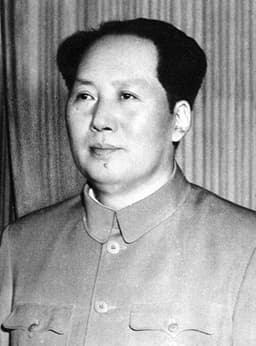
Mao Zedong
Politician · Modern
79.4Total
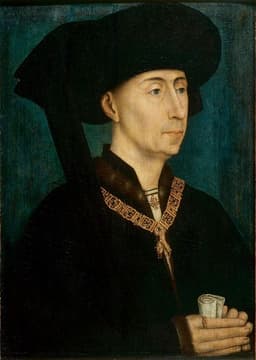
Philip the Good
Emperor · Medieval
59.5Total
Basic Information
Born
1893
1396
Died
1976
1467
Era
Modern
Medieval
Nationality
China
Burgundy
Occupation
Politician
Emperor
Civilization
Eastern
Western
Score Comparison
Military (10%)
75.0
47.5
Political (20%)
88.0
62.7
Influence (20%)
85.0
56.7
Legacy (20%)
70.0
54.0
Leadership (15%)
85.0
78.0
Strategy (15%)
72.0
60.0
TOTAL
79.4
59.5
Mao Zedong — Complete Timeline
1934 AD
Long MarchWar
Mao Zedong led the Chinese Red Army on a strategic retreat from Nationalist forces, covering approximately 6,000 miles over 370 days. The march solidified Mao's leadership within the Chinese Communist Party and became a foundational myth of the Communist revolution.
Chinese Civil WarCommunist RevolutionRetreat
Impact: national
1949 AD
Proclamation of the People's Republic of ChinaPolitical Action
Mao Zedong declared the founding of the People's Republic of China from Tiananmen Gate in Beijing. This ended the Chinese Civil War and established Communist rule over mainland China, with Mao as Chairman of the Central People's Government.
Founding of PRCCommunist VictoryRevolution
Impact: global
1958 AD
Great Leap ForwardReform◆ Major
Mao launched a campaign to rapidly industrialize China and collectivize agriculture. The policy led to widespread mismanagement, resulting in a famine that caused an estimated 15-45 million deaths between 1959 and 1961.
FamineIndustrializationCollectivization
Impact: nationaldestructive
1960 AD
Sino-Soviet SplitPolitical Action◆ Major
Mao's ideological differences with Soviet leader Nikita Khrushchev led to a breakdown in relations between China and the Soviet Union. The split ended the Sino-Soviet alliance and reshaped global Cold War dynamics, with China pursuing an independent path.
Cold WarIdeological ConflictAlliance Breakdown
Impact: global
1966 AD
Cultural RevolutionPolitical Action
Mao initiated a sociopolitical movement to purge capitalist and traditional elements from Chinese society. The Red Guard youth groups attacked intellectuals and officials, leading to widespread violence, destruction of cultural artifacts, and an estimated 1-2 million deaths.
Political PurgeSocial UpheavalRed Guard
Impact: nationaldestructive
1971 AD
Ping-Pong DiplomacyCultural◆ Major
Mao approved an invitation for the U.S. table tennis team to visit China, initiating a thaw in Sino-American relations. This cultural exchange paved the way for President Nixon's visit to China in 1972 and the eventual normalization of diplomatic ties.
DiplomacyU.S.-China RelationsCultural Exchange
Impact: globalconstructive
Philip the Good — Complete Timeline
1429 AD
Acquired the County of NamurPolitical Action◆ Major
Philip purchased the County of Namur from the impoverished Count John III, expanding Burgundian territory. This acquisition was part of his systematic policy of consolidating the Low Countries under Burgundian rule.
Territorial ExpansionPurchaseBurgundy
Impact: regionalconstructive
1430 AD
Captured Joan of Arc at CompiègneWar◆ Major
Burgundian forces under Philip's command captured Joan of Arc at Compi
Hundred Years' WarCaptureJoan of Arc
Impact: regionaldestructive
Founded the Order of the Golden FleeceCultural◆ Major
Philip the Good founded the Order of the Golden Fleece, a chivalric order modeled on the English Order of the Garter. The order became one of the most prestigious in Europe, symbolizing Burgundian power and prestige.
ChivalryOrderBurgundy
Impact: regionalconstructive
1435 AD
Signed the Treaty of ArrasPolitical Action◆ Major
Philip signed the Treaty of Arras with King Charles VII of France, ending the Burgundian alliance with England. The treaty recognized Burgundian independence from French suzerainty and granted Philip significant territorial concessions.
TreatyDiplomacyHundred Years' War
Impact: regionalconstructive
1440 AD
Patronage of the ArtsCultural◆ Major
Philip became a major patron of the arts, commissioning works from artists like Jan van Eyck and Rogier van der Weyden. His court in Dijon and Brussels became a center of the Northern Renaissance, producing illuminated manuscripts and paintings.
PatronageRenaissanceArt
Impact: regionalconstructive
Expert Analysis
Mao Zedong vs Philip the Good
# The Duke and the Chairman: Two Paths to Power in Different Worlds
In the spring of 1430, Philip the Good, Duke of Burgundy, sat in his tent outside Compiègne as his soldiers brought forward a teenage girl in armor. Joan of Arc, the peasant visionary who had turned the tide of the Hundred Years’ War, was now his prisoner. He would sell her to the English for 10,000 francs—a transaction that would lead to her death at the stake. Five centuries later, in 1949, Mao Zedong stood atop Tiananmen Gate in Beijing and declared the founding of the People’s Republic of China, the culmination of a revolution that had consumed the world’s most populous nation. One man bought a county; the other remade a civilization. What drove these two figures to such different outcomes?
Origins
Philip was born into privilege in 1396, the son of John the Fearless, Duke of Burgundy, and Margaret of Bavaria. His world was one of chivalric codes, courtly intrigue, and the delicate dance of feudal loyalties. Burgundy was not a kingdom but a patchwork of territories that stretched from the Low Countries to the French borderlands, and Philip inherited a realm that existed in the shadow of France and the Holy Roman Empire. He learned early that power came not through conquest but through marriage, purchase, and treaty—the currency of medieval diplomacy.
Mao Zedong was born in 1893 in Shaoshan, a village in Hunan province, to a prosperous peasant family. His China was collapsing—the Qing dynasty was in its death throes, foreign powers carved up the country, and centuries of imperial rule were giving way to chaos. Mao’s father beat him; his mother prayed to Buddhist gods. He read Chinese classics and Western translations, from the Romance of the Three Kingdoms to the works of Darwin and Rousseau. Where Philip inherited stability, Mao inherited upheaval. One was born to rule; the other was born to rebel.
Rise to Power
Philip’s path was prepared. His father was assassinated in 1419 by followers of the French dauphin, Charles VII, and the young duke inherited both the title and a blood feud. He allied with England against France, a decision that brought him the territories of his enemies and the enmity of his king. In 1429, he purchased the County of Namur from the impoverished Count John III—a transaction that expanded Burgundy without a single battle. His rise was a matter of acquisition, not revolution.
Mao’s rise was a matter of survival. He was a librarian at Peking University before becoming a founding member of the Chinese Communist Party in 1921. The Long March of 1934-1935 was his crucible: leading the Red Army on a 6,000-mile retreat through some of China’s most treacherous terrain, he emerged as the party’s undisputed leader. Where Philip bought his power, Mao earned his through endurance and ruthlessness. The difference is the difference between a banker and a guerrilla.
Leadership & Governance
Philip governed like a Renaissance prince before the Renaissance. He founded the Order of the Golden Fleece in 1430, a chivalric order modeled on the English Order of the Garter, binding his nobles to him through honor and ceremony. He signed the Treaty of Arras in 1435 with Charles VII, abandoning the English for territorial concessions and recognition of Burgundian independence. His rule was a masterpiece of balance—playing France against England, church against state, while his court at Dijon and Brussels became a center of art and culture. He commissioned Jan van Eyck to paint the Ghent Altarpiece and Rogier van der Weyden to capture the piety of his court. His military score of 36.1 reflects a man who preferred purchase to battle.
Mao governed with the fury of a revolutionary. He launched the Great Leap Forward in 1958 to industrialize China overnight, collectivizing farms and demanding backyard steel furnaces. The result was famine—estimates range from 15 to 45 million deaths. He initiated the Cultural Revolution in 1966, unleashing the Red Guard to purge “capitalist elements,” destroying temples, books, and lives. Yet he also achieved the Sino-Soviet Split in 1960, asserting Chinese independence from Moscow, and opened relations with the United States through Ping-Pong Diplomacy in 1971. His military score of 65.0 and strategy score of 76.5 reflect a man who saw war as a continuation of politics by other means.
Triumph & Tragedy
Philip’s greatest moment was the Treaty of Arras, which secured Burgundy’s place as a near-independent state. His greatest failure was perhaps the sale of Joan of Arc—a decision that stained his reputation and strengthened the French crown he sought to contain. He died in 1467 in his bed, his lands intact, his legacy secure.
Mao’s greatest moment was the proclamation of the People’s Republic in 1949, a triumph that ended a century of humiliation. His greatest tragedy was the Great Leap Forward, a catastrophe born of ideology and hubris. He died in 1976, leaving a nation transformed but traumatized.
Character & Destiny
Philip was cautious, calculating, and cultured. He built his power through alliances and acquisitions, not through bloodshed. Mao was audacious, ideological, and ruthless. He believed that “political power grows out of the barrel of a gun” and acted accordingly. Philip’s world was one of fixed hierarchies; Mao’s was one of revolutionary possibility. One sought to preserve order; the other sought to destroy and rebuild it.
Legacy
Philip left a Burgundy that would soon be absorbed into the Habsburg empire, but his patronage of the arts helped spark the Northern Renaissance. The Order of the Golden Fleece survives to this day. Mao left a China that is a global superpower, but his policies caused suffering on a scale that dwarfs Philip’s world. He is remembered as both founder and destroyer, a figure of reverence and regret.
Conclusion
Standing at the distance of history, these two men seem to inhabit different planets—one medieval, one modern; one European, one Asian; one a duke, one a revolutionary. Yet both understood that power is never given; it is taken, bought, or built. Philip bought his power with gold and marriage; Mao built his with blood and will. The difference is not just in their scores or their eras, but in the nature of the worlds they sought to shape. One wanted to expand a duchy; the other wanted to remake humanity. And that, perhaps, is the deepest difference of all.
Rankings
🥇
Mao ZedongLeader
Mil: 75.0Pol: 88.0Inf: 85.0
79.4
🥈
Philip the Good
Mil: 47.5Pol: 62.7Inf: 56.7
59.5
+19.9 behind
How This Comparison Works
Algorithm
Each figure is scored on 6 dimensions (0—100 scale) based on structured historical data: Military (10%), Political (20%), Influence (20%), Legacy (20%), Leadership (15%), Strategy (15%). The weighted total produces the final ranking.
Data Sources
Scores are computed from structured sub-indicators in the database. Scale factors adjust for era (Ancient ×0.85, Modern ×1.0) and civilization size (Eastern ×1.05, Other ×0.80) to account for differences in population and military scale.
Maximum 3 Figures
Comparisons are limited to 2—3 figures to ensure readability and statistical meaningfulness.
Error Margins
±5 points per dimension — Sub-scores are derived from historical records with inherent uncertainty. Two figures within 5 points on a dimension should be considered roughly equivalent in that area.
Total Score Accuracy
±3 points overall — The weighted combination of 6 dimensions produces a total score with approximately ±3 points of uncertainty. Differences of less than 3 points are not statistically significant— the figures are effectively tied.
Known Limitations
- Historical records are incomplete and uneven across civilizations
- Figures from oral-tradition societies may be underrepresented
- Occupation labels can misclassify multi-role figures
- Scores measure capability and impact, not moral character
- Quantitative scoring is a comparison tool, not absolute truth
Capability Radar
Military (10%) — Battles & Warfare
Battles
85
45
Win Rate
80
50
Expansion
85
60
Political (20%) — Governance & Reform
Reform
95
70
Diplomacy
80
80
Economy
70
85
Influence (20%) — Cultural & Global Reach
Cultural
90
65
Global
90
50
Legacy (20%) — Historical Impact
Historical
95
60
Longevity
85
55
Leadership (15%) — Power & Stability
Tenure
95
75
Stability
60
70
Strategy (15%) — Tactics & Innovation
Strategy
85
55
Tactics
75
40
Reform
90
30
Similar Comparisons
Comments & Discussion
RenegadeBurgher6/16/2026
Philip the Good was a master of dynastic acquisition, not state-building. Buying Joan of Arc for 10,000 francs and selling her to the English shows he treated human lives as liquid assets, no different from Flemish cloth or Burgundian wine. Mao, for all his flaws, mobilized millions of peasants to overthrow a feudal system—Philip just traded one overlord for another. Give me the chairman who burned the old world down over a duke who just expanded his real estate portfolio.
火焰观察员6/16/2026
比什么?菲利普花了一辈子娶寡妇、买地皮、贿赂英法两边,到头来勃艮第三个月就垮了。毛泽东从韶山走到天安门,带着长征战士吃草根翻雪山,硬是把一个被列强踩烂的泥潭变成核大国。说他是“暴君”可以,但至少他不会拿领袖去换金法郎——菲利普连贞德都敢论斤卖,这就是中世纪贵族的真相:自私到骨子里。
StalingradStrategist6/16/2026
You revisionists always romanticize dynastic 'savvy,' but here's the raw data: Philip ruled 48 years and never fought a decisive battle—he funded English armies to do his dirty work. Mao led four major campaigns from the Long March to Korea, where his forces bloody-nosed the US at Chosin Reservoir. One man bought time; another bought a seat at history's table through blood and fire. I trust the general who shares the foxhole over the duke who hides behind treaties.
辩证破壁机6/16/2026
军事历史学家吹毛泽东?我偏要说他“论持久战”是抄了《孙子》一半又夹带苏联私货。菲利普好赖是实打实地用外交、联姻、金币拴住低地各国造出一个中世纪经济奇迹。毛把中国农村搞得颗粒无收的“大跃进”才是真灾难——菲利普手下的佛兰德织工至少还能吃饱黑面包酿啤酒。谁更会治国?别被口号骗了,看结果说话。
ScholarOfSteel6/16/2026
As a classics scholar, I'd frame this as contrasting Aristotelian 'praxis': Philip embodied polis-like diplomacy through the Burgundian court orchestrating trade, art, and marriage alliances—a pragmatic network of power. Mao, by contrast, enacted a radical Platonic rupture, abolishing Confucian hierarchy for a tabula rasa. Joan's execution was Philip's 'realpolitik' tragedy; Mao's Cultural Revolution was ideology's tragedy. Neither is pure hero or villain—but Philip's tools were quills and coins