Loading...
Manuel Quezon vs Seretse Khama
Seretse Khama leads by 10.2 pts · 2 figures compared
…
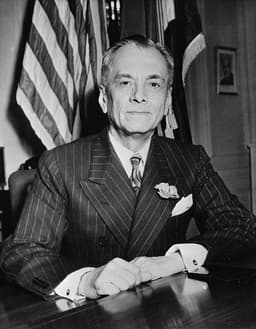
Manuel Quezon
Politician · Modern
52.3Total

Seretse Khama
Politician · Modern
62.5Total
Basic Information
Born
1878
1921
Died
1944
—
Era
Modern
Modern
Nationality
Philippines
Botswana
Occupation
Politician
Politician
Civilization
Eastern
Other
Score Comparison
Military (10%)
18.8
50.0
Political (20%)
55.0
82.0
Influence (20%)
55.0
58.3
Legacy (20%)
56.0
58.0
Leadership (15%)
72.0
80.0
Strategy (15%)
36.4
41.4
TOTAL
52.3
62.5
Manuel Quezon — Complete Timeline
1935 AD
Approved the National Defense Act of 1935Reform◆ Major
Quezon signed the National Defense Act, creating the Philippine Army under General Douglas MacArthur. The act established a system of military training and reserves to prepare the Philippines for self-defense after independence.
National DefenseMilitaryMacArthur
Impact: nationalconstructive
Elected President of the Philippine CommonwealthPolitical Action
Quezon was elected as the first president of the Philippine Commonwealth under the Tydings-McDuffie Act, which established a ten-year transition period to full independence from the United States. His administration focused on national defense, social justice, and economic development.
Philippine CommonwealthIndependenceElection
Impact: nationalconstructive
1936 AD
Implemented the Social Justice ProgramReform◆ Major
Quezon launched a social justice program that included land reform, minimum wage laws, and the creation of the Court of Industrial Relations. The program aimed to address rural poverty and labor exploitation but faced implementation challenges.
Social JusticeLand ReformLabor
Impact: nationalprogressive
1937 AD
Established the National Language InstituteCultural◆ Major
Quezon created the National Language Institute to develop a national language based on Tagalog. This decision promoted national unity but sparked debates over linguistic diversity and regional representation.
National LanguageTagalogCultural Policy
Impact: nationalconstructive
1942 AD
Fled to the United States during Japanese OccupationPolitical Action◆ Major
After the Japanese invasion of the Philippines, Quezon evacuated to the United States to lead the Philippine government-in-exile. He continued to advocate for Philippine independence and Allied support from Washington, D.C.
World War IIExileJapanese Occupation
Impact: nationaltragic
1944 AD
Signed the Philippine Rehabilitation Act (Tydings–McDuffie Act amendments)Political Action◆ Major
Quezon negotiated with the U.S. Congress for post-war rehabilitation funds, resulting in the Philippine Rehabilitation Act. The act provided financial aid for reconstruction after the war, though Quezon died before its full implementation.
RehabilitationU.S. RelationsPost-War
Impact: nationalconstructive
Seretse Khama — Complete Timeline
1951 AD
Exiled from BechuanalandPolitical Action◆ Major
Seretse Khama was exiled from Bechuanaland (now Botswana) by the British government after marrying a white British woman, Ruth Williams. The exile was imposed to appease apartheid South Africa and the tribal authorities, and it lasted for six years.
ExileInterracial MarriageBritish Colonialism
Impact: regionaltragic
1965 AD
Returned from Exile and Became Prime MinisterPolitical Action◆ Major
After being allowed to return, Khama founded the Bechuanaland Democratic Party and won the 1965 general election, becoming Prime Minister. He led the country to independence from Britain the following year.
IndependencePrime MinisterBDP
Impact: nationalconstructive
1966 AD
Became First President of BotswanaPolitical Action◆ Major
Upon independence on September 30, 1966, Khama became the first President of Botswana. He established a multi-party democracy, a constitution with strong protections for human rights, and a commitment to non-racialism and economic development.
IndependenceDemocracyConstitution
Impact: nationalconstructive
1971 AD
Implemented Diamond-Fueled DevelopmentReform◆ Major
Khama's government negotiated favorable terms with De Beers for diamond mining, leading to the discovery of the Orapa and Jwaneng mines. He used diamond revenues to fund infrastructure, education, and healthcare, transforming Botswana from one of the poorest countries into a middle-income nation.
DiamondsEconomic DevelopmentDe Beers
Impact: nationalconstructive
1980 AD
Maintained Stable Democracy and Non-RacialismPolitical Action◆ Major
Throughout his presidency, Khama maintained a stable, multi-party democracy and a policy of non-racialism, rejecting apartheid South Africa's influence. He also promoted regional cooperation through the Southern African Development Coordination Conference (SADCC).
DemocracyNon-RacialismSADCC
Impact: regionalconstructive
Expert Analysis
Origins
Manuel Quezon was born on August 19, 1878, in Baler, Tayabas (now Aurora), Philippines, to a Spanish mestizo family. His father, Lucio Quezon, was a primary school teacher, and his mother, Maria Dolores Molina, raised him in modest circumstances. He studied law at the University of Santo Tomas, graduating in 1903. Quezon's early career included serving as a fiscal (prosecutor) and later as a representative in the Philippine Assembly.
Seretse Khama was born on July 1, 1921, in Serowe, Bechuanaland (now Botswana), into the royal family of the Bamangwato tribe. His father, Sekgoma II, was the tribe's paramount chief. After his father's death in 1925, Seretse became the rightful heir. He was educated at Fort Hare University in South Africa and later studied law at the University of Oxford and the Inner Temple in London.
Rise to Power
Quezon rose to prominence as a nationalist leader. He was elected Resident Commissioner to the U.S. House of Representatives in 1909, where he lobbied for Philippine independence. In 1935, he was elected the first president of the Philippine Commonwealth under the Tydings-McDuffie Act, which established a ten-year transition to independence. Key allies included General Douglas MacArthur, whom Quezon appointed as Military Advisor.
Khama's rise was dramatic. In 1948, he married Ruth Williams, a white British woman, causing uproar among South African apartheid authorities and the British government. He was exiled from Bechuanaland in 1950, but after years of international pressure, he was allowed to return in 1956. He founded the Bechuanaland Democratic Party in 1962, won the 1965 general election, and became Prime Minister. On September 30, 1966, he became the first President of independent Botswana.
Leadership & Governance
Quezon's leadership style was charismatic and centralizing. He approved the National Defense Act of 1935, creating the Philippine Army under MacArthur. He implemented a Social Justice Program with land reform, minimum wage laws, and the Court of Industrial Relations. He also established the National Language Institute, promoting Tagalog as the national language. However, his governance faced criticism for cronyism and authoritarian tendencies, such as the suspension of habeas corpus in 1938.
Khama's leadership was democratic and inclusive. He built a multi-party democracy with a strong constitution protecting human rights. He negotiated favorable terms with De Beers for diamond mining, using revenues to fund education, healthcare, and infrastructure. Khama maintained a policy of non-racialism, rejecting apartheid South Africa's influence and hosting refugees. His governance scores 80.0 in leadership, significantly higher than Quezon's 72.0.
Triumph & Tragedy
Quezon's triumph was leading the Philippines through the Commonwealth period and securing a path to independence. His Social Justice Program improved labor conditions. However, his greatest failure was the inadequate preparation for World War II. Despite the National Defense Act, the Philippines fell quickly to Japanese invasion in 1942. Quezon fled to the United States, leaving his people under occupation. He died in exile in 1944, never seeing Philippine independence.
Khama's triumph was transforming Botswana from one of the poorest countries in Africa into a stable, growing democracy. His diamond policy created sustained economic growth, with Botswana achieving middle-income status. His failure was perhaps the slow diversification of the economy, leaving it dependent on diamonds. However, his overall legacy is overwhelmingly positive, with Botswana often cited as an African success story.
Character & Destiny
Quezon was ambitious, pragmatic, and sometimes ruthless. He was known for his charm and political acumen but also for his willingness to use power. His decision to cooperate with the U.S. during the Commonwealth was strategic, but his exile during war damaged his reputation. Historians note his score of 36.4 in strategy reflects his uneven military planning.
Khama was modest, principled, and determined. His exile over his marriage proved his commitment to personal values over political convenience. He consistently prioritized democracy and stability, earning respect across political divides. His leadership score of 80.0 reflects his steady hand.
Legacy
Quezon's legacy is mixed: he is remembered as the "Father of the Philippine Language" for promoting Tagalog, but his wartime record is controversial. His social justice programs laid groundwork for future reforms. His total score is 52.3.
Khama's legacy is stellar: he is revered as the "Father of Botswana" for establishing a stable democracy and using diamond wealth for development. Botswana remains a model of governance in Africa. His total score is 62.5, reflecting higher political skill and leadership.
Conclusion
Seretse Khama had a greater impact than Manuel Quezon. Khama's political score of 82.0 and leadership score of 80.0 exceed Quezon's 55.0 and 72.0. While Quezon faced the challenge of war, Khama's successful nation-building in a post-colonial context created enduring institutions. Khama's stable democracy and diamond-led development transformed Botswana, whereas Quezon's legacy is tarnished by exile and incomplete independence. The data supports Khama as the more effective leader.
Rankings
🥇
Seretse KhamaLeader
Mil: 50.0Pol: 82.0Inf: 58.3
62.5
🥈
Manuel Quezon
Mil: 18.8Pol: 55.0Inf: 55.0
52.3
+10.2 behind
How This Comparison Works
Algorithm
Each figure is scored on 6 dimensions (0—100 scale) based on structured historical data: Military (10%), Political (20%), Influence (20%), Legacy (20%), Leadership (15%), Strategy (15%). The weighted total produces the final ranking.
Data Sources
Scores are computed from structured sub-indicators in the database. Scale factors adjust for era (Ancient ×0.85, Modern ×1.0) and civilization size (Eastern ×1.05, Other ×0.80) to account for differences in population and military scale.
Maximum 3 Figures
Comparisons are limited to 2—3 figures to ensure readability and statistical meaningfulness.
Error Margins
±5 points per dimension — Sub-scores are derived from historical records with inherent uncertainty. Two figures within 5 points on a dimension should be considered roughly equivalent in that area.
Total Score Accuracy
±3 points overall — The weighted combination of 6 dimensions produces a total score with approximately ±3 points of uncertainty. Differences of less than 3 points are not statistically significant— the figures are effectively tied.
Known Limitations
- Historical records are incomplete and uneven across civilizations
- Figures from oral-tradition societies may be underrepresented
- Occupation labels can misclassify multi-role figures
- Scores measure capability and impact, not moral character
- Quantitative scoring is a comparison tool, not absolute truth
Capability Radar
Military (10%) — Battles & Warfare
Battles
13
23
Win Rate
16
27
Expansion
18
28
Political (20%) — Governance & Reform
Reform
70
85
Diplomacy
75
80
Economy
55
75
Influence (20%) — Cultural & Global Reach
Cultural
60
55
Global
55
55
Legacy (20%) — Historical Impact
Historical
65
65
Longevity
55
60
Leadership (15%) — Power & Stability
Tenure
65
70
Stability
60
90
Strategy (15%) — Tactics & Innovation
Strategy
23
31
Tactics
25
35
Reform
28
37
Similar Comparisons
Comments & Discussion
No comments yet. Be the first to share your thoughts!