Loading...
This comparison has not been analyzed yet.
One-time AI generation (~1 minute). Scores and timeline are already available below.
Manuel I Komnenos vs Yuri Dolgorukiy
Manuel I Komnenos leads by 12.2 pts · 2 figures compared
…

Manuel I Komnenos
Emperor · Medieval
62.5Total
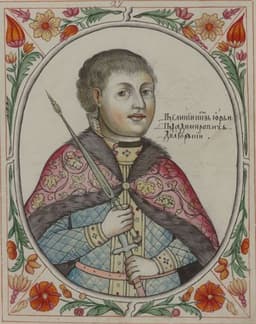
Yuri Dolgorukiy
Emperor · Medieval
50.3Total
Basic Information
Born
1118
1099
Died
1180
1157
Era
Medieval
Medieval
Nationality
Byzantine Empire
Kievan Rus
Occupation
Emperor
Emperor
Civilization
Western
Western
Score Comparison
Military (10%)
82.0
10.0
Political (20%)
60.0
37.9
Influence (20%)
60.0
61.0
Legacy (20%)
52.0
58.0
Leadership (15%)
72.0
58.8
Strategy (15%)
65.4
50.0
TOTAL
62.5
50.3
Manuel I Komnenos — Complete Timeline
1136 AD
Construction of the Church of the PantokratorCultural
Manuel I oversaw the completion of the Church of the Pantokrator in Constantinople, a major architectural and religious project. The complex included a monastery, hospital, and library, reflecting the Komnenian dynasty's patronage of Orthodox Christianity and learning.
ArchitectureReligious PatronageConstantinople
constructive
1150 AD
Reform of the Byzantine military and economyReform◆ Major
Manuel I implemented military and economic reforms, including the reorganization of the Byzantine army and the strengthening of the navy. He also increased state revenues through taxation and trade policies, enabling ambitious foreign campaigns and construction projects.
Military ReformEconomic PolicyAdministration
Impact: nationalconstructive
1167 AD
Battle of SirmiumWar◆ Major
Manuel I Komnenos led Byzantine forces to a decisive victory over the Kingdom of Hungary at Sirmium. The battle secured Byzantine control over the western Balkans and resulted in a peace treaty that recognized Byzantine suzerainty over Hungary and Croatia.
Byzantine-Hungarian WarsBalkan CampaignMilitary Victory
Impact: regional
1169 AD
Alliance with the Crusader States and the Kingdom of JerusalemPolitical Action
Manuel I negotiated a marriage alliance between his family and the Kingdom of Jerusalem, and led a joint Byzantine-Crusader expedition against Egypt. The alliance aimed to counter the growing power of Nur ad-Din and the Ayyubids, but the campaign failed to capture Damietta.
Crusader RelationsEgyptian CampaignDiplomacy
Impact: regional
1176 AD
Campaign against the Seljuk Turks at MyriokephalonWar◆ Major
Manuel I led a large Byzantine army against the Seljuk Sultanate of Rum at the Battle of Myriokephalon. The campaign ended in a Byzantine defeat, with Manuel forced to abandon his siege of Iconium and dismantle fortifications, marking the failure of his Anatolian ambitions.
Byzantine-Seljuk WarsAnatolian CampaignMilitary Defeat
Impact: regionaldestructive
Yuri Dolgorukiy — Complete Timeline
1147 AD
Founding of MoscowPolitical Action
Yuri Dolgorukiy invited Prince Sviatoslav Olgovich to a meeting at a place called 'Moscow' in the chronicles. This first written mention of Moscow is traditionally considered the founding date of the city.
FoundingCityMoscow
Impact: regionalconstructive
1149 AD
Struggle for the Throne of KievWar◆ Major
Yuri Dolgorukiy launched a campaign to seize the throne of Kiev from his nephew Iziaslav. He captured Kiev in 1149 and ruled briefly, but was expelled in 1151. He finally secured Kiev in 1155, ruling until his death.
Civil WarKievPower Struggle
Impact: national
1156 AD
Construction of the First Kremlin in MoscowCultural◆ Major
Yuri Dolgorukiy ordered the construction of a wooden fortress (kremlin) on Borovitsky Hill in Moscow. This fortification became the nucleus of the future Moscow Kremlin and the city's defensive core.
FortificationKremlinMoscow
Impact: regionalconstructive
1157 AD
Death by PoisoningPolitical Action
Yuri Dolgorukiy died suddenly after a feast in Kiev, suspected of being poisoned by the Kievan boyars. His death ended his rule and led to a revolt against his administration in Kiev.
AssassinationPoisoningBoyar Revolt
Impact: nationaltragic
This comparison has not been analyzed yet.
One-time AI generation (~1 minute). Scores and timeline are already available below.
Rankings
🥇
Manuel I KomnenosLeader
Mil: 82.0Pol: 60.0Inf: 60.0
62.5
🥈
Yuri Dolgorukiy
Mil: 10.0Pol: 37.9Inf: 61.0
50.3
+12.2 behind
How This Comparison Works
Algorithm
Each figure is scored on 6 dimensions (0—100 scale) based on structured historical data: Military (10%), Political (20%), Influence (20%), Legacy (20%), Leadership (15%), Strategy (15%). The weighted total produces the final ranking.
Data Sources
Scores are computed from structured sub-indicators in the database. Scale factors adjust for era (Ancient ×0.85, Modern ×1.0) and civilization size (Eastern ×1.05, Other ×0.80) to account for differences in population and military scale.
Maximum 3 Figures
Comparisons are limited to 2—3 figures to ensure readability and statistical meaningfulness.
Error Margins
±5 points per dimension — Sub-scores are derived from historical records with inherent uncertainty. Two figures within 5 points on a dimension should be considered roughly equivalent in that area.
Total Score Accuracy
±3 points overall — The weighted combination of 6 dimensions produces a total score with approximately ±3 points of uncertainty. Differences of less than 3 points are not statistically significant— the figures are effectively tied.
Known Limitations
- Historical records are incomplete and uneven across civilizations
- Figures from oral-tradition societies may be underrepresented
- Occupation labels can misclassify multi-role figures
- Scores measure capability and impact, not moral character
- Quantitative scoring is a comparison tool, not absolute truth
Capability Radar
Military (10%) — Battles & Warfare
Battles
75
35
Win Rate
80
40
Expansion
70
45
Political (20%) — Governance & Reform
Reform
70
30
Diplomacy
75
40
Economy
65
30
Influence (20%) — Cultural & Global Reach
Cultural
55
55
Global
45
50
Legacy (20%) — Historical Impact
Historical
60
60
Longevity
50
65
Leadership (15%) — Power & Stability
Tenure
80
50
Stability
60
25
Strategy (15%) — Tactics & Innovation
Strategy
75
35
Tactics
70
30
Reform
65
20
Similar Comparisons
Comments & Discussion
No comments yet. Be the first to share your thoughts!