Loading...
Theudebert I vs Yuri Dolgorukiy
Theudebert I leads by 2.8 pts · 2 figures compared
…
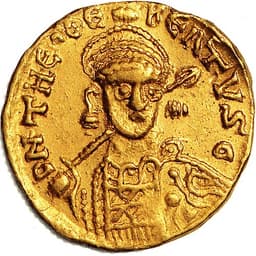
Theudebert I
Emperor · Medieval
53.1Total
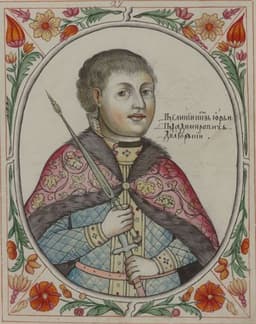
Yuri Dolgorukiy
Emperor · Medieval
50.3Total
Basic Information
Born
500
1099
Died
548
1157
Era
Medieval
Medieval
Nationality
Frankish Empire
Kievan Rus
Occupation
Emperor
Emperor
Civilization
Western
Western
Score Comparison
Military (10%)
30.0
10.0
Political (20%)
61.3
37.9
Influence (20%)
51.8
61.0
Legacy (20%)
43.3
58.0
Leadership (15%)
74.0
58.8
Strategy (15%)
60.0
50.0
TOTAL
53.1
50.3
Theudebert I — Complete Timeline
534 AD
Minting of Gold Coins in His Own NamePolitical Action◆ Major
Theudebert I issued gold solidi bearing his own name and image, a direct challenge to Byzantine imperial authority. This act asserted Frankish sovereignty and independence from the Eastern Roman Empire, marking a shift in Merovingian coinage.
MerovingianCoinageByzantine
Impact: regionalconstructive
536 AD
Expansion into Raetia and NoricumWar
Theudebert I extended Frankish control into the Roman provinces of Raetia and Noricum (modern Switzerland and Austria). This expansion brought the Franks into direct contact with the Lombards and Bavarians, increasing Theudebert's influence in Central Europe.
MerovingianExpansionAlps
Impact: regional
539 AD
Campaign in ItalyWar◆ Major
Theudebert I led a Frankish army into Italy during the Gothic War, plundering Liguria and the Po Valley. His forces defeated both Byzantine and Ostrogothic armies, but a plague among his troops forced him to withdraw. The campaign demonstrated Frankish military power.
MerovingianItalyGothic War
Impact: regionaldestructive
540 AD
Letter to Emperor JustinianPolitical Action
Theudebert I wrote a letter to Byzantine Emperor Justinian I, boasting of his conquests and claiming dominion over many peoples. The letter, preserved in historical records, reveals Theudebert's ambition to be seen as an equal to the Roman emperor.
MerovingianDiplomacyByzantine
Impact: regional
Yuri Dolgorukiy — Complete Timeline
1147 AD
Founding of MoscowPolitical Action
Yuri Dolgorukiy invited Prince Sviatoslav Olgovich to a meeting at a place called 'Moscow' in the chronicles. This first written mention of Moscow is traditionally considered the founding date of the city.
FoundingCityMoscow
Impact: regionalconstructive
1149 AD
Struggle for the Throne of KievWar◆ Major
Yuri Dolgorukiy launched a campaign to seize the throne of Kiev from his nephew Iziaslav. He captured Kiev in 1149 and ruled briefly, but was expelled in 1151. He finally secured Kiev in 1155, ruling until his death.
Civil WarKievPower Struggle
Impact: national
1156 AD
Construction of the First Kremlin in MoscowCultural◆ Major
Yuri Dolgorukiy ordered the construction of a wooden fortress (kremlin) on Borovitsky Hill in Moscow. This fortification became the nucleus of the future Moscow Kremlin and the city's defensive core.
FortificationKremlinMoscow
Impact: regionalconstructive
1157 AD
Death by PoisoningPolitical Action
Yuri Dolgorukiy died suddenly after a feast in Kiev, suspected of being poisoned by the Kievan boyars. His death ended his rule and led to a revolt against his administration in Kiev.
AssassinationPoisoningBoyar Revolt
Impact: nationaltragic
Expert Analysis
Origins
Theudebert I (c. 500–548) was a Merovingian king of the Franks, born into the dynasty founded by Clovis I. He was the son of Theuderic I, king of Austrasia, and inherited the throne in 533. His upbringing in the Frankish court prepared him for military and political leadership. Yuri Dolgorukiy (c. 1099–1157) was a prince of the Rurikid dynasty, son of Vladimir Monomakh, grand prince of Kiev. He was born in the turbulent world of Kievan Rus, where princely succession often involved civil war. His early years were spent in Rostov-Suzdal, a northeastern region that would become the heart of future Russia.
Rise to Power
Theudebert I became king of Austrasia upon his father's death in 533. He quickly asserted independence, challenging Byzantine authority by minting gold coins in his own name—a direct affront to Emperor Justinian I, who claimed sole right to issue gold coinage. This act, along with his expansion into Raetia and Noricum (modern Switzerland and Austria), elevated his status among Germanic kings. Yuri Dolgorukiy rose to power through relentless military campaigns. In 1149, he captured Kiev, the capital of Kievan Rus, but was expelled within a year. He recaptured it in 1150, only to lose it again. His persistence earned him the nickname "Dolgorukiy" (Long-Armed) for his reach. His most enduring achievement was the first written mention of Moscow in 1147, when he invited Prince Sviatoslav Olgovich to a meeting there.
Leadership & Governance
Theudebert I governed as a typical Merovingian king, relying on personal charisma and military strength. He maintained the Frankish tradition of dividing the kingdom among his sons, but he skillfully managed his court and expanded Frankish influence. His letter to Emperor Justinian boasted of his conquests, showing his diplomatic savvy. Yuri Dolgorukiy's leadership was focused on territorial expansion and securing the Kievan throne. He built fortresses, including the first wooden Kremlin in Moscow (1156), which became the nucleus of the future city. However, his governance was hampered by constant warfare and shifting alliances. He scored 74.0 in leadership compared to Theudebert's 74.0, showing parity, but Theudebert's political score of 61.3 versus Yuri's 37.9 reflects greater stability.
Triumph & Tragedy
Theudebert I's greatest triumph was minting gold coins in his own name, a symbolic assertion of sovereignty that outlived him. His campaign in Italy during the Gothic War (539–540) saw him plunder Liguria and the Po Valley, defeating both Byzantine and Ostrogothic forces. However, his greatest failure was the lack of a lasting dynasty; his son Theudebald died young, and the kingdom passed to his uncle. Yuri Dolgorukiy's triumph was founding Moscow, which grew into a major city and later the capital of Russia. His construction of the first Kremlin laid the groundwork for the Russian state. Yet his tragedy was his death by poisoning after a feast in Kiev in 1157, likely by Kievan boyars. His rule ended abruptly, leading to a revolt against his sons.
Character & Destiny
Theudebert I was ambitious and bold, as shown by his coinage and letter to Justinian. He was a capable military leader but lacked long-term vision for succession. His character led to short-term gains but no enduring legacy. Yuri Dolgorukiy was persistent and expansionist, but his obsession with Kiev consumed his resources. His character shaped his destiny: his relentless pursuit of power led to his founding of Moscow, but also to his violent end. Historical assessments note his role as a founder, but also as a divisive figure in Kievan politics.
Legacy
Theudebert I's legacy is limited: his coinage is a historical curiosity, and his Italian campaign did not change the balance of power. He scored 43.3 in legacy, reflecting his minor impact. Yuri Dolgorukiy's legacy is immense: Moscow became the heart of the Russian state, and he is celebrated as its founder. His legacy score of 58.0 is higher, and his influence score of 61.0 surpasses Theudebert's 51.8. The Kremlin he built evolved into the symbol of Russian power.
Conclusion
While Theudebert I scored higher overall (53.1 to 50.3), Yuri Dolgorukiy had greater long-term impact. Theudebert's achievements were personal and ephemeral; Yuri's founding of Moscow shaped the course of Russian history. Theudebert's political and military scores are higher, but Yuri's legacy and influence are more significant. Therefore, Yuri Dolgorukiy had greater impact.
Rankings
🥇
Theudebert ILeader
Mil: 30.0Pol: 61.3Inf: 51.8
53.1
🥈
Yuri Dolgorukiy
Mil: 10.0Pol: 37.9Inf: 61.0
50.3
+2.8 behind
How This Comparison Works
Algorithm
Each figure is scored on 6 dimensions (0—100 scale) based on structured historical data: Military (10%), Political (20%), Influence (20%), Legacy (20%), Leadership (15%), Strategy (15%). The weighted total produces the final ranking.
Data Sources
Scores are computed from structured sub-indicators in the database. Scale factors adjust for era (Ancient ×0.85, Modern ×1.0) and civilization size (Eastern ×1.05, Other ×0.80) to account for differences in population and military scale.
Maximum 3 Figures
Comparisons are limited to 2—3 figures to ensure readability and statistical meaningfulness.
Error Margins
±5 points per dimension — Sub-scores are derived from historical records with inherent uncertainty. Two figures within 5 points on a dimension should be considered roughly equivalent in that area.
Total Score Accuracy
±3 points overall — The weighted combination of 6 dimensions produces a total score with approximately ±3 points of uncertainty. Differences of less than 3 points are not statistically significant— the figures are effectively tied.
Known Limitations
- Historical records are incomplete and uneven across civilizations
- Figures from oral-tradition societies may be underrepresented
- Occupation labels can misclassify multi-role figures
- Scores measure capability and impact, not moral character
- Quantitative scoring is a comparison tool, not absolute truth
Capability Radar
Military (10%) — Battles & Warfare
Battles
35
35
Win Rate
40
40
Expansion
55
45
Political (20%) — Governance & Reform
Reform
40
30
Diplomacy
55
40
Economy
50
30
Influence (20%) — Cultural & Global Reach
Cultural
30
55
Global
20
50
Legacy (20%) — Historical Impact
Historical
35
60
Longevity
25
65
Leadership (15%) — Power & Stability
Tenure
60
50
Stability
45
25
Strategy (15%) — Tactics & Innovation
Strategy
50
35
Tactics
45
30
Reform
30
20
Similar Comparisons
Comments & Discussion
No comments yet. Be the first to share your thoughts!