Loading...
This comparison has not been analyzed yet.
One-time AI generation (~1 minute). Scores and timeline are already available below.
Manuel Azana vs Zwelinzima Vavi
Manuel Azana leads by 4.4 pts · 2 figures compared
…
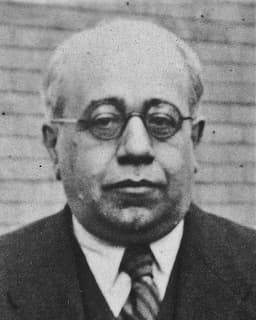
Manuel Azana
Politician · Modern
49.7Total

Zwelinzima Vavi
Politician · Modern
45.3Total
Basic Information
Born
1880
1962
Died
1940
—
Era
Modern
Modern
Nationality
Spain
South Africa
Occupation
Politician
Politician
Civilization
Western
Other
Score Comparison
Military (10%)
10.0
30.7
Political (20%)
68.0
42.3
Influence (20%)
53.3
51.0
Legacy (20%)
45.0
40.8
Leadership (15%)
67.0
55.3
Strategy (15%)
38.3
46.0
TOTAL
49.7
45.3
Manuel Azana — Complete Timeline
1931 AD
Prime Minister and Azaña ReformsReform◆ Major
As Prime Minister from 1931 to 1933, Azana implemented major reforms including military reduction, land redistribution, and secularization of education. These reforms aimed to modernize Spain but faced opposition from conservatives and the military.
ReformsModernizationSecond Republic
Impact: nationalprogressive
1933 AD
Casas Viejas IncidentPolitical Action
During Azana's premiership, the Guardia Civil violently suppressed an anarchist uprising in Casas Viejas, killing 24 villagers. The incident caused a political scandal, damaged Azana's reputation, and contributed to his government's fall.
RepressionAnarchismScandal
Impact: nationaldestructive
1936 AD
President of the Second Spanish RepublicPolitical Action◆ Major
Azana was elected President of the Second Spanish Republic in May 1936, succeeding Niceto Alcala-Zamora. His presidency coincided with increasing political polarization and the outbreak of the Spanish Civil War in July 1936.
PresidencySpanish RepublicCivil War
Impact: national
1939 AD
Exile and Death in FrancePolitical Action◆ Major
After the Republican defeat in the Spanish Civil War, Azana fled to France in February 1939. He resigned as President in March 1939 and died in exile in Montauban in November 1940, never returning to Spain.
ExileSpanish Civil WarDeath
Impact: nationaltragic
Zwelinzima Vavi — Complete Timeline
1999 AD
Elected General Secretary of COSATUPolitical Action◆ Major
Zwelinzima Vavi was elected General Secretary of the Congress of South African Trade Unions (COSATU), the largest trade union federation in South Africa. He led the organization in advocating for workers' rights and opposing neoliberal economic policies.
COSATUTrade UnionsLabor Rights
Impact: nationalconstructive
2000 AD
Led COSATU's Opposition to ANC Economic PoliciesPolitical Action◆ Major
Vavi led COSATU in opposing the ANC government's Growth, Employment and Redistribution (GEAR) policy, which he argued favored privatization and austerity. The conflict strained the ANC-COSATU alliance.
Economic PolicyGEARAlliance
Impact: nationalconstructive
2017 AD
Resigned from COSATU and Founded SAFTUPolitical Action◆ Major
Vavi resigned as COSATU General Secretary after a split within the federation. He then co-founded the South African Federation of Trade Unions (SAFTU), a new union federation that aimed to be more independent of political parties.
SAFTUTrade UnionsSplit
Impact: nationalconstructive
This comparison has not been analyzed yet.
One-time AI generation (~1 minute). Scores and timeline are already available below.
Rankings
🥇
Manuel AzanaLeader
Mil: 10.0Pol: 68.0Inf: 53.3
49.7
🥈
Zwelinzima Vavi
Mil: 30.7Pol: 42.3Inf: 51.0
45.3
+4.4 behind
How This Comparison Works
Algorithm
Each figure is scored on 6 dimensions (0—100 scale) based on structured historical data: Military (10%), Political (20%), Influence (20%), Legacy (20%), Leadership (15%), Strategy (15%). The weighted total produces the final ranking.
Data Sources
Scores are computed from structured sub-indicators in the database. Scale factors adjust for era (Ancient ×0.85, Modern ×1.0) and civilization size (Eastern ×1.05, Other ×0.80) to account for differences in population and military scale.
Maximum 3 Figures
Comparisons are limited to 2—3 figures to ensure readability and statistical meaningfulness.
Error Margins
±5 points per dimension — Sub-scores are derived from historical records with inherent uncertainty. Two figures within 5 points on a dimension should be considered roughly equivalent in that area.
Total Score Accuracy
±3 points overall — The weighted combination of 6 dimensions produces a total score with approximately ±3 points of uncertainty. Differences of less than 3 points are not statistically significant— the figures are effectively tied.
Known Limitations
- Historical records are incomplete and uneven across civilizations
- Figures from oral-tradition societies may be underrepresented
- Occupation labels can misclassify multi-role figures
- Scores measure capability and impact, not moral character
- Quantitative scoring is a comparison tool, not absolute truth
Capability Radar
Military (10%) — Battles & Warfare
Battles
0
20
Win Rate
0
24
Expansion
0
28
Political (20%) — Governance & Reform
Reform
60
40
Diplomacy
30
35
Economy
20
25
Influence (20%) — Cultural & Global Reach
Cultural
30
25
Global
20
20
Legacy (20%) — Historical Impact
Historical
40
25
Longevity
20
20
Leadership (15%) — Power & Stability
Tenure
40
30
Stability
10
20
Strategy (15%) — Tactics & Innovation
Strategy
0
30
Tactics
0
31
Reform
10
38
Similar Comparisons
Comments & Discussion
No comments yet. Be the first to share your thoughts!