Loading...
Maha Chakkraphat vs Ulrika Eleonora
Maha Chakkraphat leads by 1.8 pts · 2 figures compared
…

Maha Chakkraphat
Emperor · Modern
40.4Total
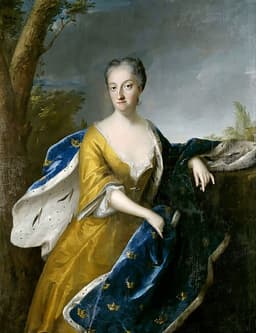
Ulrika Eleonora
Emperor · Modern
38.6Total
Basic Information
Born
1509
1688
Died
1569
1741
Era
Modern
Modern
Nationality
Thailand
Sweden
Occupation
Emperor
Emperor
Civilization
Eastern
Western
Score Comparison
Military (10%)
22.6
45.7
Political (20%)
29.3
30.7
Influence (20%)
47.1
45.5
Legacy (20%)
36.7
33.3
Leadership (15%)
55.3
31.2
Strategy (15%)
45.0
50.7
TOTAL
40.4
38.6
Maha Chakkraphat — Complete Timeline
1563 AD
Battle of PeguWar◆ Major
Maha Chakkraphat led an Ayutthayan army to attack the Burmese capital of Pegu, but the campaign failed due to logistical problems and Burmese counterattacks. The defeat weakened Ayutthaya's military position and encouraged further Burmese aggression, ultimately contributing to the fall of the kingdom.
Military CampaignBurmaPegu
Impact: regionaldestructive
Loss of the White ElephantPolitical Action
Maha Chakkraphat refused to give two white elephants to King Bayinnaung of Burma, an act that Bayinnaung used as a casus belli for invasion. The subsequent war resulted in Ayutthaya's defeat and the loss of the elephants, which became a symbol of the kingdom's subjugation.
Diplomatic IncidentWhite ElephantCasus Belli
Impact: nationaltragic
1569 AD
First Fall of AyutthayaWar
Maha Chakkraphat's forces were defeated by the Burmese army under King Bayinnaung, leading to the capture and sack of Ayutthaya. The kingdom became a vassal of the Toungoo Empire, and Maha Chakkraphat was taken prisoner. This event marked the first time Ayutthaya fell to a foreign power.
Military DefeatBurmese InvasionFall of Ayutthaya
Impact: regionaltragic
Ulrika Eleonora — Complete Timeline
1719 AD
Coronation of Ulrika EleonoraPolitical Action◆ Major
Ulrika Eleonora was crowned Queen of Sweden after the death of her brother Charles XII. Her coronation was conditional on accepting a new constitution that limited royal power, marking the start of the Age of Liberty.
CoronationConstitutionAge of Liberty
Impact: national
1720 AD
Abdication of Ulrika EleonoraPolitical Action◆ Major
Ulrika Eleonora abdicated the throne in favor of her husband, Frederick I, after only one year as queen. She did so to allow him to become king, as she had no children and the Riksdag preferred a male monarch.
AbdicationSuccessionFrederick I
Impact: national
1721 AD
Signing of the Treaty of NystadPolitical Action◆ Major
As queen, Ulrika Eleonora oversaw the conclusion of the Great Northern War with the Treaty of Nystad. Sweden ceded Livonia, Estonia, and Ingria to Russia, ending its status as a major European power.
TreatyGreat Northern WarTerritorial Loss
Impact: regionaldestructive
1741 AD
Death of Ulrika EleonoraOther
Ulrika Eleonora died in Stockholm at age 53. Her death ended the life of Sweden's only reigning queen regnant, who had abdicated after a brief reign.
Death
Impact: national
Expert Analysis
Origins
Maha Chakkraphat was born in 1509 in the Ayutthaya Kingdom (modern Thailand) as a prince of the Suphannaphum dynasty. Little is known of his early life, but he likely received a traditional education in Buddhist and military arts. He ascended to the throne in 1548 after the death of his predecessor, King Yot Fa. In contrast, Ulrika Eleonora was born on January 23, 1688, in Stockholm, Sweden, as the youngest child of King Charles XI and Queen Ulrika Eleonora the Elder. She grew up in the shadow of her brother, Charles XII, and received a limited education typical for a princess of the era, focusing on religion and courtly manners. Her family background was deeply involved in the Great Northern War.
Rise to Power
Maha Chakkraphat became king in 1548 after a period of instability, including the execution of his predecessor. His early reign focused on consolidating power and rebuilding the army. A key turning point was his refusal to gift two white elephants to King Bayinnaung of Burma in 1560, which Bayinnaung used as a casus belli. This led to the Burmese invasion in 1563. Ulrika Eleonora rose to power unexpectedly after her brother Charles XII died without an heir in November 1718. She claimed the throne despite opposition, and her coronation on March 17, 1719, was conditional on accepting a new constitution that limited royal power, shifting Sweden towards parliamentary rule. She reigned for only one year before abdicating.
Leadership & Governance
Maha Chakkraphat's governance was traditional and centralized. He relied on a feudal system with provincial lords, but his military leadership was weak. He scored 22.6 in military and 29.3 in political scores, reflecting his inability to defend the kingdom. He attempted to negotiate with the Burmese but ultimately failed. Ulrika Eleonora, by contrast, scored 45.7 in military and 30.7 in political. She oversaw the signing of the Treaty of Nystad in 1721, ending the Great Northern War and ceding territories to Russia. Her leadership was constrained by the new constitution, and she chose to abdicate in 1720 to allow her husband Frederick I to become king, a decision that showed her lack of political ambition.
Triumph & Tragedy
Maha Chakkraphat's greatest success was his early consolidation of power and initial resistance against Burma. However, his greatest tragedy was the fall of Ayutthaya in 1564 after a siege by Bayinnaung. He was captured and forced to become a vassal, and the city was sacked. His refusal to surrender the white elephants led to catastrophic defeat. Ulrika Eleonora's triumph was her role in ending the Great Northern War, though the treaty was unfavorable. Her tragedy was her brief and abdicated reign; she scored low on leadership (31.2) and legacy (33.3). She failed to maintain power and effectively ended the Swedish absolute monarchy by accepting the constitution. Her abdication made her Sweden's only reigning queen regnant to voluntarily step down.
Character & Destiny
Maha Chakkraphat was stubborn and proud, as shown by his refusal to yield the white elephants, which directly caused the invasion. His decision-making was poor militarily, leading to a total score of 40.4. He was more a ceremonial king than a strategist. Ulrika Eleonora was cautious and compliant. She accepted the constitutional limitations without resistance and abdicated to please her husband. Her character lacked the drive to rule, and she placed personal relationships above political power. Historians view her as a passive figure who failed to leverage her position.
Legacy
Maha Chakkraphat's legacy is that of a king who lost Ayutthaya to Burma, marking a low point in Thai history. However, his story is remembered as a cautionary tale about pride. His score of 36.7 in legacy reflects this negative memory. Ulrika Eleonora's legacy is more complex: she is remembered for ending the Great Northern War and for her abdication, which cemented Sweden's shift to parliamentary rule. Her legacy score of 33.3 is slightly lower, as her reign was too short to leave a lasting mark. Neither figure is considered great, but Maha Chakkraphat's actions had a more direct impact on his kingdom's fate.
Conclusion
While Maha Chakkraphat scored slightly higher overall (40.4 vs 38.6), his impact was more negative than positive. Ulrika Eleonora's reign, though brief, helped transition Sweden to a more modern governance structure. However, taking a stance, Maha Chakkraphat had a greater impact because his decisions led to the fall of a major kingdom, affecting millions. Ulrika Eleonora's abdication, while significant, was a personal choice with less widespread consequence. Thus, Maha Chakkraphat's influence, though disastrous, was more substantial.
Rankings
🥇
Maha ChakkraphatLeader
Mil: 22.6Pol: 29.3Inf: 47.1
40.4
🥈
Ulrika Eleonora
Mil: 45.7Pol: 30.7Inf: 45.5
38.6
+1.8 behind
How This Comparison Works
Algorithm
Each figure is scored on 6 dimensions (0—100 scale) based on structured historical data: Military (10%), Political (20%), Influence (20%), Legacy (20%), Leadership (15%), Strategy (15%). The weighted total produces the final ranking.
Data Sources
Scores are computed from structured sub-indicators in the database. Scale factors adjust for era (Ancient ×0.85, Modern ×1.0) and civilization size (Eastern ×1.05, Other ×0.80) to account for differences in population and military scale.
Maximum 3 Figures
Comparisons are limited to 2—3 figures to ensure readability and statistical meaningfulness.
Error Margins
±5 points per dimension — Sub-scores are derived from historical records with inherent uncertainty. Two figures within 5 points on a dimension should be considered roughly equivalent in that area.
Total Score Accuracy
±3 points overall — The weighted combination of 6 dimensions produces a total score with approximately ±3 points of uncertainty. Differences of less than 3 points are not statistically significant— the figures are effectively tied.
Known Limitations
- Historical records are incomplete and uneven across civilizations
- Figures from oral-tradition societies may be underrepresented
- Occupation labels can misclassify multi-role figures
- Scores measure capability and impact, not moral character
- Quantitative scoring is a comparison tool, not absolute truth
Capability Radar
Military (10%) — Battles & Warfare
Battles
20
25
Win Rate
10
28
Expansion
5
31
Political (20%) — Governance & Reform
Reform
20
5
Diplomacy
15
10
Economy
20
5
Influence (20%) — Cultural & Global Reach
Cultural
15
5
Global
5
5
Legacy (20%) — Historical Impact
Historical
20
5
Longevity
10
5
Leadership (15%) — Power & Stability
Tenure
40
10
Stability
10
5
Strategy (15%) — Tactics & Innovation
Strategy
10
34
Tactics
15
36
Reform
5
37
Similar Comparisons
Comments & Discussion
No comments yet. Be the first to share your thoughts!