Loading...
Ma Sui vs Saito Dosan
Saito Dosan leads by 6.3 pts · 2 figures compared
…

Ma Sui
General · Medieval
50.0Total
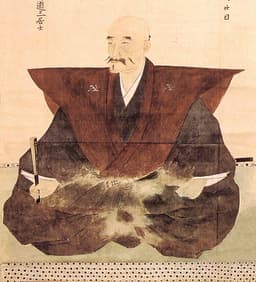
Saito Dosan
General · Medieval
56.3Total
Basic Information
Born
726
1494
Died
795
1556
Era
Medieval
Medieval
Nationality
China
Japan
Occupation
General
General
Civilization
Eastern
Eastern
Score Comparison
Military (10%)
61.7
50.0
Political (20%)
36.5
68.0
Influence (20%)
47.1
53.3
Legacy (20%)
40.8
47.5
Leadership (15%)
65.0
71.0
Strategy (15%)
66.3
52.5
TOTAL
50.0
56.3
Ma Sui — Complete Timeline
780 AD
Appointed Military GovernorPolitical Action
Ma Sui was appointed as military governor of a circuit, giving him command over regional forces. This position allowed him to play a central role in Tang military affairs during a period of frequent rebellions.
Tang DynastyMilitary GovernorshipAppointment
Impact: regional
784 AD
Suppressed Zhu Ci RebellionWar◆ Major
Ma Sui played a key role in suppressing the Zhu Ci Rebellion, leading forces against the rebel regime in Chang'an. His military actions helped restore Tang control over the capital region.
Zhu Ci RebellionTang DynastyMilitary Campaign
Impact: nationalconstructive
785 AD
Suppressed Li Huaiguang RebellionWar◆ Major
Ma Sui led Tang forces against the rebel general Li Huaiguang. His campaign contributed to the defeat of the rebellion, leading to Li Huaiguang's suicide and the restoration of order.
Li Huaiguang RebellionTang DynastyMilitary Campaign
Impact: nationalconstructive
Saito Dosan — Complete Timeline
1542 AD
Seizure of Mino ProvincePolitical Action◆ Major
Dosan overthrew the Toki clan, the legitimate rulers of Mino Province, and declared himself daimyo. This coup, achieved through a combination of military force and political maneuvering, marked his rise from a commoner to a powerful lord.
CoupMinoSengoku Period
Impact: regional
1548 AD
Alliance with Oda NobuhidePolitical Action◆ Major
Dosan formed an alliance with Oda Nobuhide, sealed by the marriage of his daughter Nohime to Nobuhide's son Nobunaga. This alliance secured Dosan's eastern flank and strengthened both clans against the Imagawa.
AllianceMarriageSengoku Period
Impact: regionalconstructive
1556 AD
Battle of Nagara-gawaWar◆ Major
Dosan was killed in battle against his son Saito Yoshitatsu at Nagara-gawa. Yoshitatsu, who had rebelled against his father, defeated Dosan's forces, ending Dosan's rule over Mino and his life.
BattleRebellionSengoku Period
Impact: regionaltragic
Expert Analysis
Origins
Ma Sui was born into a military family in 726 during the Tang dynasty. His father served as a general, and Ma Sui followed this path, receiving a traditional Confucian education alongside martial training. He began his career as a low-ranking officer in the Tang army, gradually rising through the ranks by demonstrating competence in border defense and internal security.
Saito Dosan, born around 1494, started life as a lowly oil merchant named Munehisa. He was of humble origins in Mino Province, Japan, during the chaotic Sengoku period. Through shrewd business dealings and strategic marriages, he amassed wealth and influence. His early life lacked formal military training; instead, he learned the arts of deception and manipulation in the marketplace.
Rise to Power
Ma Sui rose to prominence during the An Lushan Rebellion (755-763), where he served under the Tang loyalist general Li Guangbi. His performance earned him recognition, and he was appointed as a regional military governor. His major turning point came during the Zhu Ci Rebellion (783-784), when he led forces to suppress the rebel regime in Chang'an. He successfully coordinated with other Tang generals, including Li Sheng, to recapture the capital. Later, he crushed the Li Huaiguang Rebellion (784-785), leading to Li Huaiguang's suicide. These victories solidified his reputation as a reliable imperial commander.
Saito Dosan's rise was more cunning. He began as a merchant, then became a samurai through marriage to a daughter of a minor lord. He entered the service of the Toki clan, the ruling family of Mino Province. Through a series of political maneuvers and assassinations, he gained control of the clan. In 1538, he overthrew Toki Yorinari and declared himself daimyo of Mino. He secured his position by forming an alliance with Oda Nobuhide, marrying his daughter Nohime to Nobuhide's son Nobunaga in 1549. This alliance gave him external support against rivals.
Leadership & Governance
Ma Sui governed as a military governor, focusing on maintaining order and loyalty to the Tang emperor. He was known for strict discipline among his troops and efficient administration of his circuit. His leadership style was conventional, relying on established Tang military doctrine and hierarchical command. He did not introduce major reforms but effectively managed resources and personnel. His political score of 36.5 reflects his limited influence beyond military affairs.
Saito Dosan governed Mino with a blend of ruthlessness and pragmatism. He reduced taxes on merchants to boost trade, reformed local administration to increase efficiency, and built castles like Inabayama Castle (later Gifu Castle) as power centers. He was known for his cunning, earning the nickname "Viper of Mino." His leadership score of 71.0 indicates his ability to command loyalty and fear. He promoted capable retainers regardless of birth, which was progressive for the time. His political acumen (68.0) allowed him to navigate the complex daimyo alliances of the Sengoku period.
Triumph & Tragedy
Ma Sui's greatest triumph was suppressing the Zhu Ci Rebellion and restoring Tang authority in Chang'an. He also successfully defeated Li Huaiguang, preventing a major rebellion from spreading. His military score of 61.7 reflects his competence in conventional warfare. His tragedy was that his achievements were soon overshadowed by the continued decline of the Tang dynasty. He died in 798, having failed to halt the erosion of central power. His political influence was limited, and he did not leave a lasting institutional legacy.
Saito Dosan's greatest triumph was seizing Mino Province and establishing himself as a daimyo against all odds. His alliance with Oda Nobuhide set the stage for his grandson Oda Nobunaga's unification of Japan. His tragedy was his death: in 1556, his own son Saito Yoshitatsu rebelled against him. At the Battle of Nagara-gawa, Dosan was defeated and killed. His betrayal by his son marked a dramatic fall. His legacy is mixed: he is remembered as a ruthless usurper but also as a capable ruler.
Character & Destiny
Ma Sui was a loyal and competent military commander, but he lacked the political ambition or cunning to shape events beyond his immediate command. He followed orders and executed them efficiently, but he did not seek power for himself. His destiny was to be a tool of the Tang state, used and discarded as the dynasty declined. His character was that of a soldier, not a strategist. His strategy score of 66.3 is decent but not exceptional.
Saito Dosan was ambitious, cunning, and ruthless. He was a master of deception and political maneuvering. His character was shaped by his rise from a lowly merchant, making him pragmatic and distrustful. His destiny was to succeed through treachery but ultimately be undone by the same. His betrayal by his son was a poetic justice. His personality made him effective in the short term but created enemies and instability.
Legacy
Ma Sui's legacy is minor. He is remembered as one of the Tang generals who suppressed rebellions, but his name is not widely known outside of specialized historical circles. His impact was ephemeral; the rebellions he crushed were symptoms of deeper problems that continued after his death. He scored 40.8 in legacy.
Saito Dosan's legacy is more significant. He is a key figure in the Sengoku period, representing the rise of commoners to power. His daughter Nohime married Oda Nobunaga, and his grandson became the unifier of Japan. Dosan's methods influenced later daimyo. He is often referenced in Japanese popular culture. His legacy score is 47.5, slightly higher than Ma Sui's.
Conclusion
Saito Dosan had greater impact than Ma Sui. While Ma Sui was a competent general in a declining empire, his actions did not alter the course of Chinese history. Dosan, by contrast, was a pivotal figure in the Sengoku period, enabling the rise of the Oda clan and indirectly contributing to Japan's unification. His political and leadership scores (68.0 and 71.0) far exceed Ma Sui's (36.5 and 65.0), and his total score of 56.3 versus 50.0 reflects his broader influence. Dosan's story is also more historically resonant, embodying the social mobility of the era. Thus, Saito Dosan is the more significant figure in terms of lasting impact.
Rankings
🥇
Saito DosanLeader
Mil: 50.0Pol: 68.0Inf: 53.3
56.3
🥈
Ma Sui
Mil: 61.7Pol: 36.5Inf: 47.1
50.0
+6.3 behind
How This Comparison Works
Algorithm
Each figure is scored on 6 dimensions (0—100 scale) based on structured historical data: Military (10%), Political (20%), Influence (20%), Legacy (20%), Leadership (15%), Strategy (15%). The weighted total produces the final ranking.
Data Sources
Scores are computed from structured sub-indicators in the database. Scale factors adjust for era (Ancient ×0.85, Modern ×1.0) and civilization size (Eastern ×1.05, Other ×0.80) to account for differences in population and military scale.
Maximum 3 Figures
Comparisons are limited to 2—3 figures to ensure readability and statistical meaningfulness.
Error Margins
±5 points per dimension — Sub-scores are derived from historical records with inherent uncertainty. Two figures within 5 points on a dimension should be considered roughly equivalent in that area.
Total Score Accuracy
±3 points overall — The weighted combination of 6 dimensions produces a total score with approximately ±3 points of uncertainty. Differences of less than 3 points are not statistically significant— the figures are effectively tied.
Known Limitations
- Historical records are incomplete and uneven across civilizations
- Figures from oral-tradition societies may be underrepresented
- Occupation labels can misclassify multi-role figures
- Scores measure capability and impact, not moral character
- Quantitative scoring is a comparison tool, not absolute truth
Capability Radar
Military (10%) — Battles & Warfare
Battles
65
45
Win Rate
70
50
Expansion
40
55
Political (20%) — Governance & Reform
Reform
30
45
Diplomacy
45
55
Economy
35
50
Influence (20%) — Cultural & Global Reach
Cultural
30
30
Global
20
20
Legacy (20%) — Historical Impact
Historical
40
40
Longevity
35
35
Leadership (15%) — Power & Stability
Tenure
50
50
Stability
50
40
Strategy (15%) — Tactics & Innovation
Strategy
55
55
Tactics
60
60
Reform
30
40
Similar Comparisons
Comments & Discussion
No comments yet. Be the first to share your thoughts!