Loading...
Hun Jian vs Saito Dosan
Saito Dosan leads by 10.9 pts · 2 figures compared
…

Hun Jian
General · Medieval
45.4Total
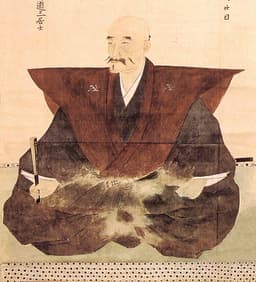
Saito Dosan
General · Medieval
56.3Total
Basic Information
Born
736
1494
Died
799
1556
Era
Medieval
Medieval
Nationality
China
Japan
Occupation
General
General
Civilization
Eastern
Eastern
Score Comparison
Military (10%)
70.0
50.0
Political (20%)
26.4
68.0
Influence (20%)
46.3
53.3
Legacy (20%)
40.0
47.5
Leadership (15%)
50.7
71.0
Strategy (15%)
52.5
52.5
TOTAL
45.4
56.3
Hun Jian — Complete Timeline
763 AD
Suppressed An Lushan RebellionWar
Hun Jian participated in the suppression of the An Lushan Rebellion, fighting against rebel forces in northern China. His service during this conflict established his military reputation.
An Lushan RebellionTang DynastyMilitary Campaign
Impact: national
784 AD
Helped Recapture Chang'an from Zhu CiWar◆ Major
Hun Jian, a general of Tiele descent, fought alongside Li Sheng to recapture Chang'an from the rebel Zhu Ci. His cavalry forces were instrumental in the victory, restoring the Tang emperor to power.
Zhu Ci RebellionChang'an RecaptureTang Dynasty
Impact: nationalconstructive
785 AD
Appointed to High Military OfficePolitical Action
After his role in recapturing Chang'an, Hun Jian was appointed to a high military office in the Tang court. This appointment reflected his importance as a loyal general of non-Han origin.
Tang DynastyMilitary AppointmentTiele Descent
Impact: nationalconstructive
Saito Dosan — Complete Timeline
1542 AD
Seizure of Mino ProvincePolitical Action◆ Major
Dosan overthrew the Toki clan, the legitimate rulers of Mino Province, and declared himself daimyo. This coup, achieved through a combination of military force and political maneuvering, marked his rise from a commoner to a powerful lord.
CoupMinoSengoku Period
Impact: regional
1548 AD
Alliance with Oda NobuhidePolitical Action◆ Major
Dosan formed an alliance with Oda Nobuhide, sealed by the marriage of his daughter Nohime to Nobuhide's son Nobunaga. This alliance secured Dosan's eastern flank and strengthened both clans against the Imagawa.
AllianceMarriageSengoku Period
Impact: regionalconstructive
1556 AD
Battle of Nagara-gawaWar◆ Major
Dosan was killed in battle against his son Saito Yoshitatsu at Nagara-gawa. Yoshitatsu, who had rebelled against his father, defeated Dosan's forces, ending Dosan's rule over Mino and his life.
BattleRebellionSengoku Period
Impact: regionaltragic
Expert Analysis
Origins
Hun Jian was born around 736 AD into the Tiele, a Turkic pastoral confederation in the steppes north of Tang China. His father was a chieftain who submitted to the Tang, and Hun Jian grew up within the multi-ethnic Tang military system, learning cavalry tactics and Chinese administrative practices. He entered service as a frontier officer, gaining experience in campaigns against the Tibetans and Uyghurs.
Saito Dosan was born around 1494 in Yamashiro Province, Japan, as the son of an oil merchant. His original surname was Matsunami, and he started as a peddler of oil. He later adopted the name Saito and through shrewd business dealings and military acumen, he accumulated wealth and followers. His humble origins contrasted sharply with the aristocratic norms of the time.
Rise to Power
Hun Jian’s rise came during the An Lushan Rebellion (755-763). He fought in the northern theater, earning recognition for his cavalry leadership. His major breakthrough was in 783 when the rebel Zhu Ci seized Chang'an. Hun Jian, alongside Li Sheng, led a counterattack. Hun Jian’s Tiele cavalry was decisive in the recapture of the capital in 784. For this, he was appointed to high military office, becoming a trusted general of Emperor Dezong. His political score of 26.4 reflects his limited maneuvering in court; he remained a military specialist.
Saito Dosan’s rise was more political. He served the Toki clan, the shugo of Mino Province, but in 1542 he orchestrated a coup, overthrowing Toki Yorinari and declaring himself daimyo. He used a mix of military force and political alliances. In 1544, he allied with Oda Nobuhide, marrying his daughter Nohime to Nobuhide’s son Nobunaga. This alliance secured his eastern flank. By 1550, he had consolidated control over Mino, earning the nickname "Viper of Mino" for his cunning. His political score of 68.0 underscores his skill in statecraft.
Leadership & Governance
Hun Jian led through personal valor and tactical competence. He commanded mixed forces of Tang infantry and Tiele cavalry, emphasizing mobility. He was a loyal executor of imperial orders, not a reformer. His governance role was limited; he served as a military governor but did not implement lasting administrative changes. His leadership score of 50.7 reflects his effectiveness in battle but lack of broader vision.
Saito Dosan was a transformative ruler. He reformed Mino’s administration, centralizing power and reducing the influence of local samurai. He implemented land surveys and tax reforms, increasing revenue and military capacity. He also built castles and fostered trade. His leadership score of 71.0 indicates his ability to govern and build institutions. He was ruthless but effective, eliminating rivals through assassination and warfare.
Triumph & Tragedy
Hun Jian’s greatest triumph was the recapture of Chang'an, a critical victory that restored Tang authority. He also suppressed several rebellions, stabilizing the dynasty. His tragedy was that his ethnic background limited his political influence; he never attained the highest ranks despite his service. His legacy score of 40.0 reflects his relative obscurity outside specialist circles.
Saito Dosan’s triumph was his rise from merchant to daimyo, a feat of social mobility rare in feudal Japan. He built a strong domain that his son inherited. His tragedy was his death in 1556 at the Battle of Nagara-gawa, killed by his own son Saito Yoshitatsu, who rebelled. This patricide ended his line and plunged Mino into chaos, eventually leading to its conquest by Oda Nobunaga. His legacy score of 47.5 is moderate, as his achievements were overshadowed by his son’s betrayal.
Character & Destiny
Hun Jian was pragmatic and loyal, a soldier who followed orders. His Tiele heritage gave him a unique perspective but also a glass ceiling. He did not seek power beyond his military role, which limited his impact. His destiny was to be a tool of the Tang, not a shaper of history.
Saito Dosan was ambitious, cunning, and ruthless. His nickname "Viper" suits his character: he was a master of deception and political maneuvering. His destiny was a classic tragedy of ambition; he achieved power but could not secure his succession. His son’s rebellion was a direct result of his own methods—he taught his son to be as ruthless as himself.
Legacy
Hun Jian is remembered as a capable general who helped save the Tang dynasty. However, his specific contributions are often overshadowed by Li Sheng. He is a footnote in Tang history, with no enduring institutions or cultural impact. His military score of 70.0 is respectable but not exceptional.
Saito Dosan’s legacy is more complex. He is a symbol of the "gekokujo" (the low overthrowing the high) in Japanese history. His reforms in Mino laid groundwork for Nobunaga’s later unification. His daughter Nohime became Nobunaga’s wife, linking him to the unifier of Japan. His political and leadership scores (68.0 and 71.0) reflect his lasting impact on governance. He is a popular figure in Japanese media, often portrayed as a cunning strategist.
Conclusion
Saito Dosan had greater impact than Hun Jian. While Hun Jian was a competent general who played a role in a single campaign, Dosan transformed a province, influenced the unification of Japan through his alliance with Nobunaga, and left a legacy of social mobility. Dosan’s total score of 56.3 exceeds Hun Jian’s 45.4 by 10.9 points. Hun Jian’s military score (70.0) is higher than Dosan’s (50.0), but Dosan’s political and leadership scores far surpass Hun Jian’s. In terms of lasting influence, Dosan wins decisively.
Rankings
🥇
Saito DosanLeader
Mil: 50.0Pol: 68.0Inf: 53.3
56.3
🥈
Hun Jian
Mil: 70.0Pol: 26.4Inf: 46.3
45.4
+10.9 behind
How This Comparison Works
Algorithm
Each figure is scored on 6 dimensions (0—100 scale) based on structured historical data: Military (10%), Political (20%), Influence (20%), Legacy (20%), Leadership (15%), Strategy (15%). The weighted total produces the final ranking.
Data Sources
Scores are computed from structured sub-indicators in the database. Scale factors adjust for era (Ancient ×0.85, Modern ×1.0) and civilization size (Eastern ×1.05, Other ×0.80) to account for differences in population and military scale.
Maximum 3 Figures
Comparisons are limited to 2—3 figures to ensure readability and statistical meaningfulness.
Error Margins
±5 points per dimension — Sub-scores are derived from historical records with inherent uncertainty. Two figures within 5 points on a dimension should be considered roughly equivalent in that area.
Total Score Accuracy
±3 points overall — The weighted combination of 6 dimensions produces a total score with approximately ±3 points of uncertainty. Differences of less than 3 points are not statistically significant— the figures are effectively tied.
Known Limitations
- Historical records are incomplete and uneven across civilizations
- Figures from oral-tradition societies may be underrepresented
- Occupation labels can misclassify multi-role figures
- Scores measure capability and impact, not moral character
- Quantitative scoring is a comparison tool, not absolute truth
Capability Radar
Military (10%) — Battles & Warfare
Battles
55
45
Win Rate
60
50
Expansion
30
55
Political (20%) — Governance & Reform
Reform
20
45
Diplomacy
35
55
Economy
20
50
Influence (20%) — Cultural & Global Reach
Cultural
25
30
Global
20
20
Legacy (20%) — Historical Impact
Historical
40
40
Longevity
30
35
Leadership (15%) — Power & Stability
Tenure
40
50
Stability
30
40
Strategy (15%) — Tactics & Innovation
Strategy
55
55
Tactics
50
60
Reform
20
40
Similar Comparisons
Comments & Discussion
No comments yet. Be the first to share your thoughts!