Loading...
Carlos Antonio Lopez vs Louis XIII
Louis XIII leads by 3.9 pts · 2 figures compared
…
Carlos Antonio Lopez
Emperor · Modern
56.4Total
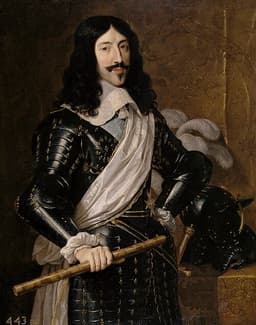
Louis XIII
Emperor · Modern
60.3Total
Basic Information
Born
1792
1601
Died
1862
1643
Era
Modern
Modern
Nationality
Paraguay
France
Occupation
Emperor
Emperor
Civilization
Western
Western
Score Comparison
Military (10%)
50.0
55.0
Political (20%)
78.0
55.0
Influence (20%)
50.2
61.0
Legacy (20%)
42.5
58.0
Leadership (15%)
80.0
72.0
Strategy (15%)
45.0
60.0
TOTAL
56.4
60.3
Carlos Antonio Lopez — Complete Timeline
1841 AD
Became Consul of ParaguayPolitical Action◆ Major
After Francia's death, L
SuccessionPresidencyReform
Impact: nationalconstructive
1842 AD
Abolished slavery in ParaguayReform◆ Major
López issued a decree abolishing slavery in Paraguay, freeing all slaves without compensation to owners. This was one of the earliest abolition acts in the Americas, though it was partly motivated by the need for labor and military conscription.
AbolitionHuman RightsSocial Reform
Impact: nationalprogressive
1845 AD
Opened Paraguay to foreign tradeReform◆ Major
López ended Francia's isolationist policies by opening Paraguay's ports to foreign trade, signing commercial treaties with Britain, France, and the United States. This stimulated economic growth and modernization but increased foreign influence.
Trade LiberalizationEconomic ReformModernization
Impact: nationalprogressive
1850 AD
Modernized Paraguayan militaryReform◆ Major
López imported European weapons, hired foreign military advisors, and expanded the army to over 30,000 men. He also built a shipyard and arsenal, making Paraguay the most militarized state in the region.
Military Build-upModernizationNational Defense
Impact: regional
1862 AD
Died in officeOther◆ Major
López died of natural causes on September 10, 1862, after 21 years in power. He was succeeded by his son Francisco Solano López. His modernization policies left Paraguay economically developed but heavily armed and diplomatically isolated.
DeathSuccessionLegacy
Impact: national
Louis XIII — Complete Timeline
1624 AD
Appointed Cardinal Richelieu as Chief MinisterPolitical Action
Louis XIII appointed Cardinal Richelieu as his chief minister, beginning a partnership that centralized royal power. Richelieu's policies strengthened the monarchy, suppressed noble rebellions, and expanded French influence in Europe.
AppointmentRichelieuCentralization
Impact: national
1627 AD
Siege of La RochelleWar◆ Major
Louis XIII and Richelieu besieged the Huguenot stronghold of La Rochelle for 14 months, forcing its surrender. This victory ended Huguenot political and military power in France, enforcing Catholic unity.
SiegeHuguenotsReligious Conflict
Impact: nationaldestructive
1630 AD
Day of the DupesPolitical Action◆ Major
Louis XIII faced a crisis when his mother Marie de' Medici and other nobles demanded Richelieu's dismissal. Louis chose to support Richelieu, exiling his mother and solidifying the cardinal's power, marking a turning point in French absolutism.
Political CrisisRichelieuRoyal Favor
Impact: national
1635 AD
Entry into the Thirty Years' WarWar◆ Major
Louis XIII declared war on Spain, entering the Thirty Years' War on the Protestant side. This intervention aimed to weaken Habsburg power and expand French influence, leading to significant military campaigns in Germany and the Low Countries.
Thirty Years' WarHabsburgFrench Intervention
Impact: regional
1638 AD
Birth of Louis XIVPolitical Action
The birth of Louis XIV, after 23 years of marriage, secured the Bourbon succession. This event was celebrated as a divine gift and ensured the continuity of the dynasty, later leading to the Sun King's long reign.
SuccessionBourbon DynastyHeir
Impact: nationalconstructive
Expert Analysis
Origins
Carlos Antonio López was born in 1792 in Asunción, Paraguay, to a family of modest means. His father was a carpenter, and his mother a homemaker. López received a basic education at the Colegio de San Carlos, where he studied law and theology. He later worked as a secretary for the dictator José Gaspar Rodríguez de Francia, learning the intricacies of governance. This experience shaped his understanding of power but also left him with a pragmatic, authoritarian streak.
Louis XIII was born in 1601 at Fontainebleau, France, to King Henry IV and Marie de' Medici. He was raised in a court torn by religious conflict and political intrigue. His father's assassination in 1610 left him king at age nine, with his mother as regent. Louis received a rigorous education in military arts, politics, and religion, but his childhood was marked by isolation and manipulation by nobles. He grew into a reserved, devout, and determined ruler.
Rise to Power
Carlos Antonio López rose after Francia's death in 1840. He was appointed Consul alongside Mariano Roque Alonso but quickly sidelined his co-consul. In 1844, a new constitution made him President with near-dictatorial powers. He consolidated control through patronage and repression, eliminating rivals and centralizing authority. His rise was swift and ruthless, leveraging his experience under Francia.
Louis XIII's rise was more gradual. He assumed full power in 1617 after a coup against his mother's regency, but his early reign was chaotic. In 1624, he appointed Cardinal Richelieu as chief minister, a turning point. Richelieu's policies strengthened the monarchy, but faced opposition from nobles and the king's own family. The Day of the Dupes in 1630 tested Louis's resolve; he chose Richelieu over his mother, exiling her and securing his authority. This decision defined his reign.
Leadership & Governance
López governed as a modernizing autocrat. He opened Paraguay to foreign trade, signing treaties with Britain, France, and the United States, ending decades of isolation. He abolished slavery in 1842, one of the earliest such acts in the Americas, freeing all slaves without compensation. He modernized the military, importing European weapons and expanding the army to 30,000 men, and built a shipyard and arsenal. However, his rule was repressive; he suppressed dissent and controlled the press. His leadership score is 80.0, reflecting effective but authoritarian governance.
Louis XIII ruled through Richelieu, focusing on centralizing royal power. They besieged La Rochelle in 1627-1628, crushing Huguenot political autonomy. Louis entered the Thirty Years' War in 1635 against Spain, aiming to weaken Habsburg dominance. His governance strengthened the French monarchy, laying groundwork for absolutism. His political score is 55.0, lower due to reliance on Richelieu, but his leadership score is 72.0.
Triumph & Tragedy
López's greatest triumph was modernizing Paraguay: abolishing slavery, boosting trade, and building infrastructure. His military reforms made Paraguay a regional power. However, his legacy is overshadowed by his son Francisco Solano López, who led Paraguay into the catastrophic War of the Triple Alliance (1864-1870), which decimated the country. Carlos Antonio's policies of militarization and isolationist tendencies contributed to this disaster. His legacy score of 42.5 reflects this mixed outcome.
Louis XIII's triumphs include the defeat of the Huguenots, the strengthening of the monarchy, and France's emergence as a major European power. His support for Richelieu ensured stability. Tragically, his reign was marked by constant plots and personal struggles; he died in 1643 at age 41, leaving a young son. His influence score of 61.0 acknowledges his role in shaping French absolutism, but his personal unhappiness was notable.
Character & Destiny
López was pragmatic, calculating, and ambitious. He learned from Francia but rejected isolation, seeking modernization. His character led to economic growth but also to a militarized state that his son would misuse. His destiny was to build a strong Paraguay that would later be destroyed.
Louis XIII was reserved, pious, and stubborn. He valued duty over personal desire, famously supporting Richelieu despite personal dislike. His character enabled the consolidation of royal power, but his constant illnesses and emotional distance shaped a lonely life. His destiny was to create the foundation for Louis XIV's absolutism.
Legacy
López's legacy is mixed. He modernized Paraguay and abolished slavery, but his policies set the stage for national disaster. He is remembered as a reformer who failed to secure long-term stability. His influence score is 50.2, reflecting limited global impact.
Louis XIII's legacy is more enduring. He consolidated French absolutism, expanded French influence, and set the stage for the Sun King. His reign is often overshadowed by Richelieu and Louis XIV, but his decisions were crucial. His legacy score of 58.0 reflects this.
Conclusion
While Carlos Antonio López achieved notable reforms in a small nation, Louis XIII's impact on European history was greater. Louis's centralization of power and entry into the Thirty Years' War reshaped the continent, whereas López's reforms were undone by his son's war. Louis XIII's total score of 60.3 vs López's 56.4 reflects this. The French king's decisions had wider and more lasting consequences, making him the more significant historical figure.
Rankings
🥇
Louis XIIILeader
Mil: 55.0Pol: 55.0Inf: 61.0
60.3
🥈
Carlos Antonio Lopez
Mil: 50.0Pol: 78.0Inf: 50.2
56.4
+3.9 behind
How This Comparison Works
Algorithm
Each figure is scored on 6 dimensions (0—100 scale) based on structured historical data: Military (10%), Political (20%), Influence (20%), Legacy (20%), Leadership (15%), Strategy (15%). The weighted total produces the final ranking.
Data Sources
Scores are computed from structured sub-indicators in the database. Scale factors adjust for era (Ancient ×0.85, Modern ×1.0) and civilization size (Eastern ×1.05, Other ×0.80) to account for differences in population and military scale.
Maximum 3 Figures
Comparisons are limited to 2—3 figures to ensure readability and statistical meaningfulness.
Error Margins
±5 points per dimension — Sub-scores are derived from historical records with inherent uncertainty. Two figures within 5 points on a dimension should be considered roughly equivalent in that area.
Total Score Accuracy
±3 points overall — The weighted combination of 6 dimensions produces a total score with approximately ±3 points of uncertainty. Differences of less than 3 points are not statistically significant— the figures are effectively tied.
Known Limitations
- Historical records are incomplete and uneven across civilizations
- Figures from oral-tradition societies may be underrepresented
- Occupation labels can misclassify multi-role figures
- Scores measure capability and impact, not moral character
- Quantitative scoring is a comparison tool, not absolute truth
Capability Radar
Military (10%) — Battles & Warfare
Battles
15
45
Win Rate
20
55
Expansion
20
55
Political (20%) — Governance & Reform
Reform
75
65
Diplomacy
60
75
Economy
80
60
Influence (20%) — Cultural & Global Reach
Cultural
30
50
Global
20
55
Legacy (20%) — Historical Impact
Historical
40
65
Longevity
25
60
Leadership (15%) — Power & Stability
Tenure
70
70
Stability
65
55
Strategy (15%) — Tactics & Innovation
Strategy
30
50
Tactics
25
40
Reform
45
60
Similar Comparisons
Comments & Discussion
No comments yet. Be the first to share your thoughts!