Loading...
Louis X of France vs Wanyan Liang
Wanyan Liang leads by 9.5 pts · 2 figures compared
…

Louis X of France
Emperor · Medieval
39.6Total
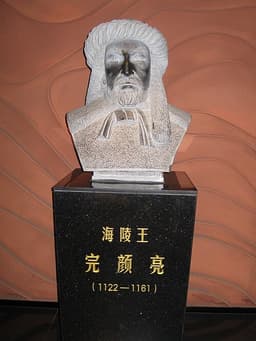
Wanyan Liang
Emperor · Medieval
49.1Total
Basic Information
Born
1289
1122
Died
1316
1161
Era
Medieval
Medieval
Nationality
France
Jin dynasty
Occupation
Emperor
Emperor
Civilization
Western
Eastern
Score Comparison
Military (10%)
20.0
67.5
Political (20%)
32.2
40.8
Influence (20%)
49.4
51.8
Legacy (20%)
40.8
44.2
Leadership (15%)
38.1
48.4
Strategy (15%)
45.0
50.0
TOTAL
39.6
49.1
Louis X of France — Complete Timeline
1315 AD
Abolition of Serfdom in the Royal DomainReform◆ Major
Louis X issued an edict abolishing serfdom in the royal domain, declaring that all men should be free. This was motivated by financial need to raise funds for war with Flanders, as serfs had to pay for their freedom. It was a limited reform.
SerfdomReformCapetian
Impact: nationalprogressive
1316 AD
Short Reign and DeathOther◆ Major
Louis X reigned for only 18 months before dying suddenly, possibly from illness or poisoning. His death left a pregnant queen and a succession crisis, as his posthumous son John I lived only five days, leading to the accession of his brother Philip V.
Succession CrisisCapetian
Impact: nationaltragic
Wanyan Liang — Complete Timeline
1150 AD
Usurped the thronePolitical Action◆ Major
Wanyan Liang assassinated his cousin Emperor Wanyan Dan and declared himself emperor. He purged many members of the imperial clan and their supporters to consolidate his rule, establishing a reign of terror.
UsurpationAssassinationPurge
Impact: nationaldestructive
1153 AD
Moved the capital to ZhongduPolitical Action◆ Major
Wanyan Liang ordered the relocation of the Jin capital from Shangjing (Harbin) to Zhongdu (Beijing). He constructed a new palace complex and moved the imperial court south to better control the conquered Chinese territories.
Capital moveZhongduBeijing
Impact: nationalconstructive
1161 AD
Invasion of the Southern SongWar◆ Major
Wanyan Liang launched a massive invasion of the Southern Song dynasty with a large army and navy. The campaign failed after the Jin fleet was defeated at the Battle of Caishi on the Yangtze River.
InvasionSong-Jin warBattle of Caishi
Impact: regionaldestructive
Killed by his own officersWar◆ Major
After the failure of the Southern Song invasion, Wanyan Liang's own generals mutinied and assassinated him at his camp. His death ended the war and led to a reversal of his policies by his successor Wanyan Yong.
AssassinationMutinyEnd of reign
Impact: nationaltragic
Expert Analysis
Origins
Louis X of France, born October 4, 1289, in Paris, was the eldest son of Philip IV the Fair and Joan I of Navarre. He inherited the throne after his father's death in 1314, but his upbringing was marked by the political machinations of the Capetian court. His education focused on knightly training and administrative basics, but he lacked the shrewdness of his father.
Wanyan Liang, born in 1122, was a prince of the Jin dynasty in northern China. His early life was steeped in Jurchen tribal culture and military tradition. He was a grandson of Emperor Taizu, the founder of the Jin dynasty. His family background provided him with access to power but also exposed him to the violent succession struggles of the Jin court.
Rise to Power
Louis X ascended the throne without major opposition in 1314, as the eldest surviving son of Philip IV. However, his reign began with a crisis: the Tour de Nesle affair, which revealed the adultery of his wife, Margaret of Burgundy, and his sisters-in-law. This scandal weakened his authority and led to Margaret's imprisonment. Louis's rise was more inheritance than conquest, but he faced immediate challenges from rebellious nobles and financial strain.
Wanyan Liang rose through assassination. In 1149, he killed his cousin Emperor Wanyan Dan and seized the throne. He systematically purged rivals, executing many imperial clan members and their supporters. His rise was brutal and swift, relying on military support and ruthlessness. He consolidated power by rewarding his allies and eliminating any threats.
Leadership & Governance
Louis X's governance was marked by his 1315 edict abolishing serfdom in the royal domain, declaring that 'all men should be free.' This was motivated partly by financial need—he required funds for a proposed crusade and to secure the loyalty of free men. However, his reign was too short to implement lasting reforms. He struggled with the nobility, who forced him to issue charters granting them privileges. His leadership score of 38.1 reflects his limited effectiveness.
Wanyan Liang centralized the Jin state. In 1153, he ordered the capital moved from Shangjing (modern Harbin) to Zhongdu (Beijing), constructing a grand palace complex. This shift aimed to Sinicize the Jurchen elite and better control the conquered Chinese territories. He also reformed the civil service and promoted Chinese-style governance. However, his leadership was autocratic and paranoid, leading to purges. His leadership score is 48.4, higher than Louis's.
Triumph & Tragedy
Louis X's greatest success was the abolition of serfdom, a progressive move for medieval Europe. It freed thousands of serfs in the royal domain and set a precedent. However, his tragedy was his short reign (18 months) and sudden death in 1316, likely from illness or poisoning. His death left a pregnant queen (Clementia of Hungary) and triggered a succession crisis that led to the end of the Capetian line. His military score of 20.0 reflects no major campaigns.
Wanyan Liang's triumph was the successful relocation of the capital and the strengthening of central authority. He also launched a massive invasion of the Southern Song in 1161, mobilizing a large army and navy. However, the campaign ended in disaster: his fleet was defeated at the Battle of Caishi, and his own generals mutinied and assassinated him. His death ended the war and left the Jin dynasty weakened. His military score of 67.5 reflects his ambition but poor execution.
Character & Destiny
Louis X was known as 'the Quarrelsome' (le Hutin), indicating a contentious nature. He was indecisive and easily swayed by advisors, such as his uncle Charles of Valois. His character contributed to his inability to maintain royal authority. His fate—a short reign and mysterious death—was partly due to his lack of political acumen. Historians assess him as a weak king.
Wanyan Liang was ambitious, cruel, and strategic. He was a capable administrator but paranoid and ruthless, ordering the deaths of many relatives. His decision to invade the Southern Song was overconfident and poorly planned, leading to his downfall. His character—arrogant and brutal—alienated his generals, who ultimately killed him. His fate was a direct result of his own actions.
Legacy
Louis X's legacy is the abolition of serfdom, which, though limited in scope, was a landmark in French legal history. It influenced later reforms and is cited as an early step toward human rights. His reign also exposed the fragility of the Capetian succession. His legacy score of 40.8 reflects his symbolic importance.
Wanyan Liang's legacy includes the permanent establishment of Beijing as a capital, which later became the center of Chinese power. His Sinicization policies accelerated the assimilation of the Jurchen into Chinese culture. However, his usurpation and failed invasion weakened the Jin dynasty, contributing to its eventual fall. His legacy score of 44.2 is slightly higher than Louis's.
Conclusion
Wanyan Liang had a greater overall impact than Louis X, as reflected in his total score of 49.1 versus 39.6. His decisions—moving the capital, centralizing power, and attempting the Southern Song conquest—shaped the course of Chinese history. Louis X's abolition of serfdom was a noble idea but had limited practical effect. While both reigned briefly, Wanyan Liang's actions had broader geopolitical consequences. Thus, Wanyan Liang emerges as the more significant historical figure.
Rankings
🥇
Wanyan LiangLeader
Mil: 67.5Pol: 40.8Inf: 51.8
49.1
🥈
Louis X of France
Mil: 20.0Pol: 32.2Inf: 49.4
39.6
+9.5 behind
How This Comparison Works
Algorithm
Each figure is scored on 6 dimensions (0—100 scale) based on structured historical data: Military (10%), Political (20%), Influence (20%), Legacy (20%), Leadership (15%), Strategy (15%). The weighted total produces the final ranking.
Data Sources
Scores are computed from structured sub-indicators in the database. Scale factors adjust for era (Ancient ×0.85, Modern ×1.0) and civilization size (Eastern ×1.05, Other ×0.80) to account for differences in population and military scale.
Maximum 3 Figures
Comparisons are limited to 2—3 figures to ensure readability and statistical meaningfulness.
Error Margins
±5 points per dimension — Sub-scores are derived from historical records with inherent uncertainty. Two figures within 5 points on a dimension should be considered roughly equivalent in that area.
Total Score Accuracy
±3 points overall — The weighted combination of 6 dimensions produces a total score with approximately ±3 points of uncertainty. Differences of less than 3 points are not statistically significant— the figures are effectively tied.
Known Limitations
- Historical records are incomplete and uneven across civilizations
- Figures from oral-tradition societies may be underrepresented
- Occupation labels can misclassify multi-role figures
- Scores measure capability and impact, not moral character
- Quantitative scoring is a comparison tool, not absolute truth
Capability Radar
Military (10%) — Battles & Warfare
Battles
5
65
Win Rate
5
55
Expansion
5
70
Political (20%) — Governance & Reform
Reform
40
45
Diplomacy
20
30
Economy
20
35
Influence (20%) — Cultural & Global Reach
Cultural
15
30
Global
10
20
Legacy (20%) — Historical Impact
Historical
25
40
Longevity
20
25
Leadership (15%) — Power & Stability
Tenure
30
40
Stability
15
20
Strategy (15%) — Tactics & Innovation
Strategy
5
55
Tactics
5
60
Reform
5
50
Similar Comparisons
Comments & Discussion
No comments yet. Be the first to share your thoughts!