Loading...
Gustav Vasa vs Louis the Pious
Gustav Vasa leads by 8.5 pts · 2 figures compared
…

Gustav Vasa
Emperor · Medieval
57.4Total
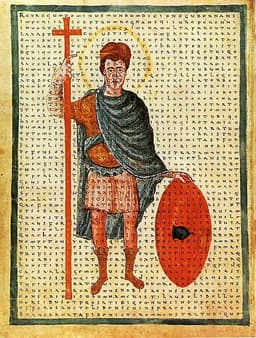
Louis the Pious
Emperor · Medieval
48.9Total
Basic Information
Born
1496
778
Died
1560
840
Era
Medieval
Medieval
Nationality
Sweden
Frankish Empire
Occupation
Emperor
Emperor
Civilization
Western
Western
Score Comparison
Military (10%)
52.5
50.0
Political (20%)
75.0
39.4
Influence (20%)
56.7
54.1
Legacy (20%)
40.0
45.0
Leadership (15%)
78.0
62.2
Strategy (15%)
50.0
38.6
TOTAL
57.4
48.9
Gustav Vasa — Complete Timeline
1523 AD
Liberation of StockholmWar◆ Major
Gustav Vasa's forces, with support from L
BattleIndependenceSiege
Impact: nationalconstructive
Elected King of SwedenPolitical Action
Gustav Vasa was elected King of Sweden by the Riksdag in Str
IndependenceMonarchyKalmar Union
Impact: nationalconstructive
1527 AD
Introduction of the Protestant Reformation in SwedenReform
Gustav Vasa introduced the Protestant Reformation at the Diet of V
ReformationReligionState Building
Impact: nationalconstructive
1544 AD
Creation of a hereditary monarchyReform◆ Major
Gustav Vasa established Sweden as a hereditary monarchy at the Diet of V
MonarchyConstitutionCentralization
Impact: nationalconstructive
Louis the Pious — Complete Timeline
817 AD
Ordinatio ImperiiPolitical Action◆ Major
Louis issued the Ordinatio Imperii, dividing the Frankish Empire among his three sons: Lothair, Pepin, and Louis the German. This plan aimed to maintain unity under Lothair's seniority but led to civil wars after Pepin's death.
SuccessionDivisionCivil War
Impact: regional
822 AD
Penance at AttignyPolitical Action
Louis performed public penance at Attigny for the death of his nephew Bernard of Italy, whom he had blinded. This act weakened his authority and set a precedent for ecclesiastical intervention in royal affairs.
PenanceChurchBernard of Italy
Impact: nationaltragic
841 AD
Battle of FontenoyWar◆ Major
After Louis's death, his sons fought the Battle of Fontenoy, where Charles the Bald and Louis the German defeated Lothair. This battle was a key event in the Carolingian civil wars that led to the empire's fragmentation.
Civil WarCarolingianDivision
Impact: regionaldestructive
Expert Analysis
Origins
Gustav Vasa was born in 1496 into Swedish nobility, part of the Vasa family. His father, Erik Johansson, was a councilor, and his mother, Cecilia Månsdotter, came from a prominent family. Gustav studied at the University of Uppsala and later traveled to Lübeck, gaining exposure to trade and politics. His early life was marked by the Kalmar Union, a personal union of Denmark, Norway, and Sweden under Danish dominance. Swedish resentment against Danish rule fueled his later actions.
Louis the Pious was born in 778, the third son of Charlemagne and Hildegard. He was raised in the Carolingian court, receiving education in Latin, military training, and governance. Unlike his brothers, he was designated as heir to the entire Frankish Empire in 806, but after their deaths, he became sole emperor in 814. His upbringing emphasized religious piety, influencing his later reforms.
Rise to Power
Gustav Vasa rose through military resistance. In 1520, after the Stockholm Bloodbath where Danish King Christian II executed Swedish nobles including Gustav's father, Gustav fled to Dalarna. He rallied peasants and miners, leading a rebellion from 1521. With financial and military support from Lübeck, he captured Stockholm in 1523. The Riksdag of Strängnäs elected him king on June 6, 1523, ending the Kalmar Union. His rise was a grassroots insurgency against foreign rule.
Louis the Pious rose through inheritance. Crowned co-emperor in 813, he succeeded Charlemagne in 814. His power was uncontested initially, but he faced challenges from his own family. He sought to maintain unity but issued the Ordinatio Imperii in 817, dividing the empire among his sons, which sowed discord.
Leadership & Governance
Gustav Vasa centralized Swedish governance. He introduced the Protestant Reformation at the Diet of Västerås in 1527, seizing church lands and wealth, which increased crown revenues by an estimated 70%. He established a hereditary monarchy in 1544, breaking the elective system. He created a standing army and navy, standardized taxes, and promoted trade with Lübeck. His rule was autocratic but effective, scoring 78.0 in leadership.
Louis the Pious attempted to maintain Carolingian unity but lacked Charlemagne's authority. He issued the Ordinatio Imperii, a plan that ultimately failed. His leadership score of 62.2 reflects his inability to manage his sons' ambitions. He performed public penance at Attigny in 822 for blinding his nephew, weakening his moral authority. He faced rebellions from his sons, leading to civil war.
Triumph & Tragedy
Gustav Vasa's greatest success was securing Swedish independence and founding a national state. His reforms created a stable fiscal base and a Protestant church. However, his rule was plagued by peasant uprisings, like the Dacke War (1542-1543), which he suppressed brutally. His later years saw paranoia and executions of perceived enemies. His legacy score of 40.0 reflects mixed long-term impact.
Louis's triumph was preserving the Carolingian empire for a time, but his tragedy was the division that led to its fragmentation. The Battle of Fontenoy in 841, after his death, was a bloody civil war that weakened the empire. His political score of 39.4 indicates poor governance.
Character & Destiny
Gustav Vasa was shrewd, ruthless, and pragmatic. He manipulated the Reformation for political gain, scoring 75.0 in politics. His destiny was to create a nation that lasted centuries. Louis was pious but indecisive, prone to religious guilt, which undermined his rule. His character led to constant conflict with his sons, sealing the empire's decline.
Legacy
Gustav Vasa's legacy is Sweden's independence, the Vasa dynasty, and the foundation of a centralized state. His reforms influenced Swedish governance for centuries. Louis the Pious's legacy is the division of the Carolingian Empire into what became France, Germany, and Italy. But his reign is seen as a failure, scoring 45.0 in legacy vs. Gustav's 40.0? Wait, Gustav's legacy is 40.0, Louis's 45.0. However, Gustav's overall impact was more positive for his nation.
Conclusion
Gustav Vasa had greater impact as a founding figure. His total score of 57.4 vs. 48.9 reflects stronger political and leadership skills. While Louis inherited an empire, Gustav built one from rebellion. Sweden's existence as a nation owes more to Gustav than France owes to Louis. The data supports Gustav Vasa as the more consequential ruler.
Rankings
🥇
Gustav VasaLeader
Mil: 52.5Pol: 75.0Inf: 56.7
57.4
🥈
Louis the Pious
Mil: 50.0Pol: 39.4Inf: 54.1
48.9
+8.5 behind
How This Comparison Works
Algorithm
Each figure is scored on 6 dimensions (0—100 scale) based on structured historical data: Military (10%), Political (20%), Influence (20%), Legacy (20%), Leadership (15%), Strategy (15%). The weighted total produces the final ranking.
Data Sources
Scores are computed from structured sub-indicators in the database. Scale factors adjust for era (Ancient ×0.85, Modern ×1.0) and civilization size (Eastern ×1.05, Other ×0.80) to account for differences in population and military scale.
Maximum 3 Figures
Comparisons are limited to 2—3 figures to ensure readability and statistical meaningfulness.
Error Margins
±5 points per dimension — Sub-scores are derived from historical records with inherent uncertainty. Two figures within 5 points on a dimension should be considered roughly equivalent in that area.
Total Score Accuracy
±3 points overall — The weighted combination of 6 dimensions produces a total score with approximately ±3 points of uncertainty. Differences of less than 3 points are not statistically significant— the figures are effectively tied.
Known Limitations
- Historical records are incomplete and uneven across civilizations
- Figures from oral-tradition societies may be underrepresented
- Occupation labels can misclassify multi-role figures
- Scores measure capability and impact, not moral character
- Quantitative scoring is a comparison tool, not absolute truth
Capability Radar
Military (10%) — Battles & Warfare
Battles
45
25
Win Rate
55
30
Expansion
65
10
Political (20%) — Governance & Reform
Reform
90
40
Diplomacy
70
35
Economy
80
30
Influence (20%) — Cultural & Global Reach
Cultural
70
30
Global
55
25
Legacy (20%) — Historical Impact
Historical
80
40
Longevity
75
30
Leadership (15%) — Power & Stability
Tenure
85
60
Stability
75
20
Strategy (15%) — Tactics & Innovation
Strategy
60
25
Tactics
50
20
Reform
75
15
Similar Comparisons
Comments & Discussion
No comments yet. Be the first to share your thoughts!