Loading...
Louis IV vs Louis the German
Louis the German leads by 2.1 pts · 2 figures compared
…

Louis IV
Emperor · Medieval
46.5Total
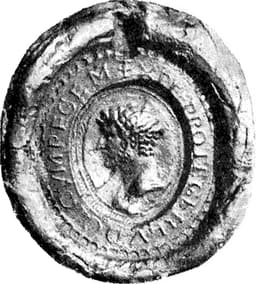
Louis the German
Emperor · Medieval
48.6Total
Basic Information
Born
1282
806
Died
1347
876
Era
Medieval
Medieval
Nationality
Holy Roman Empire
East Francia
Occupation
Emperor
Emperor
Civilization
Western
Western
Score Comparison
Military (10%)
10.0
30.0
Political (20%)
45.1
54.7
Influence (20%)
52.5
54.1
Legacy (20%)
45.8
47.5
Leadership (15%)
65.7
40.0
Strategy (15%)
43.3
60.0
TOTAL
46.5
48.6
Louis IV — Complete Timeline
1314 AD
Elected King of GermanyPolitical Action◆ Major
Louis IV of Bavaria was elected King of Germany by a faction of prince-electors, opposing Frederick the Fair. This election was part of a double election that led to a civil war between the Wittelsbach and Habsburg dynasties.
ElectionWittelsbachDouble Election
Impact: regional
1322 AD
Defeated Frederick the Fair at the Battle of MühldorfWar◆ Major
Louis IV of Bavaria defeated Frederick the Fair at the Battle of M
BattleWittelsbachVictory
Impact: regional
1328 AD
Crowned Holy Roman Emperor by the Roman PeoplePolitical Action
Louis IV of Bavaria was crowned Holy Roman Emperor in Rome by the Roman people, defying Pope John XXII who had excommunicated him. This act asserted imperial authority over the Papacy and led to a prolonged conflict with the Avignon Papacy.
CoronationPapal ConflictImperial Authority
Impact: global
1338 AD
Issued the Declaration of RhensePolitical Action◆ Major
Louis IV of Bavaria issued the Declaration of Rhense, which stated that the German king's election by the prince-electors alone conferred imperial authority without papal approval. This declaration strengthened the independence of the Holy Roman Empire from the Papacy.
DeclarationImperial IndependencePapacy
Impact: regionalconstructive
Louis the German — Complete Timeline
841 AD
Battle of Fontenoy (841)War◆ Major
Louis the German allied with Charles the Bald to defeat their brother Lothair I at the Battle of Fontenoy. This battle was a decisive conflict in the Carolingian civil war that followed the death of Louis the Pious. The victory led to the Treaty of Verdun.
Civil WarBattleCarolingian
Impact: regional
842 AD
Oaths of Strasbourg (842)Political Action◆ Major
Louis the German and Charles the Bald swore mutual allegiance against Lothair I at Strasbourg. The oaths were recorded in both Old High German and Old French, providing early evidence of the linguistic divergence between German and French. This alliance solidified their partnership.
AllianceOathLinguistic Record
Impact: regionalconstructive
843 AD
Treaty of Verdun (843)Political Action
Louis the German, along with his brothers Lothair I and Charles the Bald, signed the Treaty of Verdun, dividing the Carolingian Empire into three kingdoms. Louis received East Francia, comprising roughly modern Germany, laying the foundation for a distinct German kingdom.
TreatyDivision of EmpireEast Francia
Impact: global
844 AD
Campaigns against the SlavsWar◆ Major
Louis the German led multiple campaigns against Slavic tribes along his eastern borders, including the Obotrites, Sorbs, and Bohemians. These campaigns expanded East Frankish influence and secured the frontier, but faced mixed success and frequent rebellions.
ExpansionSlavic WarsFrontier
Impact: regional
876 AD
Death of Louis the GermanOther
Louis the German died on August 28, 876, at Frankfurt. His kingdom of East Francia was divided among his three sons: Carloman, Louis the Younger, and Charles the Fat. His death led to further fragmentation of the Carolingian realm.
DeathSuccessionDivision
Impact: regional
Expert Analysis
Origins
Louis IV of Bavaria, born in 1282, was a member of the Wittelsbach dynasty. His early life was shaped by the ongoing conflict between the Holy Roman Empire and the Papacy. He was educated in the chivalric and administrative traditions of the German nobility. Louis the German, born around 806, was the grandson of Charlemagne and third son of Louis the Pious. He grew up in the Carolingian court, receiving a classical education and early exposure to governance. His father appointed him as King of Bavaria in 817, setting the stage for his future rule.
Rise to Power
Louis IV rose to power amid a disputed election in 1314, when he was elected King of Germany by a faction of prince-electors opposing Frederick the Fair of Austria. This led to a civil war that culminated in the Battle of Mühldorf in 1322, where Louis IV decisively defeated Frederick. His claim was further solidified by his coronation as Holy Roman Emperor in Rome in 1328, an act that defied Pope John XXII, who had excommunicated him. Louis the German gained prominence through the Treaty of Verdun in 843, which divided the Carolingian Empire among Charlemagne's grandsons. He allied with his brother Charles the Bald against their elder brother Lothair I, winning the Battle of Fontenoy in 841 and sealing their alliance with the Oaths of Strasbourg in 842. These events secured Louis the German's control over East Francia.
Leadership & Governance
Louis IV's leadership was characterized by a confrontational stance toward papal authority. He issued the Declaration of Rhense in 1338, asserting that the German king's election by the prince-electors alone conferred imperial authority, bypassing papal approval. This was a significant assertion of secular power. However, his political score of 45.1 reflects limited effectiveness in consolidating imperial control. Louis the German, with a political score of 54.7, focused on consolidating his realm in East Francia. He managed the delicate balance of power among his brothers and defended his borders against Slavic incursions, leading campaigns against the Obotrites, Sorbs, and Bohemians. His governance was pragmatic, relying on alliances and military force to maintain stability.
Triumph & Tragedy
Louis IV's greatest triumph was his defiance of the Pope and his coronation as emperor by the Roman people, a symbolic victory for secular authority. However, his failure to secure lasting dynastic power—his sons divided his territories after his death—diminished his legacy. His military score of 10.0 highlights his lack of martial success beyond Mühldorf. Louis the German's triumph was the establishment of East Francia as a viable kingdom, laying the foundation for later Germany. His campaigns against the Slavs secured eastern borders. Yet, his inability to prevent the division of his kingdom among his three sons after his death in 876 weakened his legacy. His military score of 30.0 reflects competent but not outstanding battlefield performance.
Character & Destiny
Louis IV was a determined and defiant ruler, willing to challenge the papacy despite excommunication. His character drove him to assert imperial independence, but his confrontational style alienated many German princes. Louis the German was more pragmatic, prioritizing stability and expansion. His strategy score of 60.0 indicates a calculated approach, though his leadership score of 40.0 suggests he was less inspiring than his rivals. Both men faced the challenge of succession, and their decisions to divide their realms contributed to fragmentation.
Legacy
Louis IV's legacy is tied to the conflict between empire and papacy, influencing later debates on secular authority. His Declaration of Rhense was a precursor to the Golden Bull of 1356. However, his overall influence score of 52.5 is moderate. Louis the German's legacy is more foundational: he established East Francia, which evolved into the Kingdom of Germany and later the Holy Roman Empire. His legacy score of 47.5 reflects his role as a builder of a kingdom, but he is less remembered than his father or brothers. The Treaty of Verdun remains a landmark in European history.
Conclusion
Louis the German had a greater impact on European history. His total score of 48.6 edges out Louis IV's 46.5, but more importantly, his creation of East Francia provided the territorial and political basis for medieval Germany. Louis IV's defiance of the Pope was significant but ultimately less consequential for the long-term structure of Europe. Louis the German's strategic consolidation and border defense shaped a kingdom that endured for centuries, while Louis IV's achievements were more symbolic than structural. Thus, Louis the German stands as the more influential figure.
Rankings
🥇
Louis the GermanLeader
Mil: 30.0Pol: 54.7Inf: 54.1
48.6
🥈
Louis IV
Mil: 10.0Pol: 45.1Inf: 52.5
46.5
+2.1 behind
How This Comparison Works
Algorithm
Each figure is scored on 6 dimensions (0—100 scale) based on structured historical data: Military (10%), Political (20%), Influence (20%), Legacy (20%), Leadership (15%), Strategy (15%). The weighted total produces the final ranking.
Data Sources
Scores are computed from structured sub-indicators in the database. Scale factors adjust for era (Ancient ×0.85, Modern ×1.0) and civilization size (Eastern ×1.05, Other ×0.80) to account for differences in population and military scale.
Maximum 3 Figures
Comparisons are limited to 2—3 figures to ensure readability and statistical meaningfulness.
Error Margins
±5 points per dimension — Sub-scores are derived from historical records with inherent uncertainty. Two figures within 5 points on a dimension should be considered roughly equivalent in that area.
Total Score Accuracy
±3 points overall — The weighted combination of 6 dimensions produces a total score with approximately ±3 points of uncertainty. Differences of less than 3 points are not statistically significant— the figures are effectively tied.
Known Limitations
- Historical records are incomplete and uneven across civilizations
- Figures from oral-tradition societies may be underrepresented
- Occupation labels can misclassify multi-role figures
- Scores measure capability and impact, not moral character
- Quantitative scoring is a comparison tool, not absolute truth
Capability Radar
Military (10%) — Battles & Warfare
Battles
45
45
Win Rate
40
50
Expansion
35
35
Political (20%) — Governance & Reform
Reform
40
40
Diplomacy
50
55
Economy
35
45
Influence (20%) — Cultural & Global Reach
Cultural
30
35
Global
25
30
Legacy (20%) — Historical Impact
Historical
45
45
Longevity
30
40
Leadership (15%) — Power & Stability
Tenure
55
65
Stability
30
50
Strategy (15%) — Tactics & Innovation
Strategy
40
45
Tactics
35
40
Reform
30
30
Similar Comparisons
Comments & Discussion
No comments yet. Be the first to share your thoughts!