Loading...
Louis IV the Bavarian vs Philip I of Castile
Louis IV the Bavarian leads by 20.3 pts · 2 figures compared
…
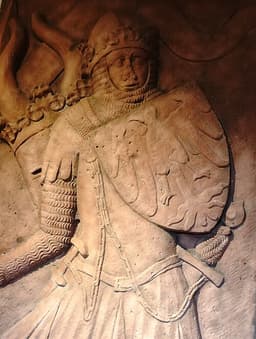
Louis IV the Bavarian
Emperor · Medieval
58.3Total
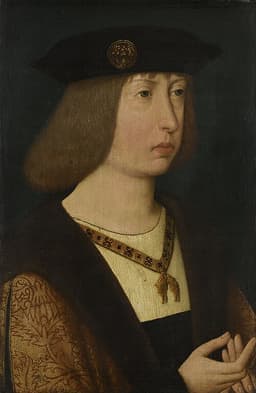
Philip I of Castile
Emperor · Medieval
38.0Total
Basic Information
Born
1282
1478
Died
1347
1506
Era
Medieval
Medieval
Nationality
Holy Roman Empire
Spain
Occupation
Emperor
Emperor
Civilization
Western
Western
Score Comparison
Military (10%)
47.5
20.0
Political (20%)
68.0
30.8
Influence (20%)
55.7
47.1
Legacy (20%)
49.2
35.8
Leadership (15%)
74.0
34.6
Strategy (15%)
60.0
54.3
TOTAL
58.3
38.0
Louis IV the Bavarian — Complete Timeline
1314 AD
Election as King of GermanyPolitical Action◆ Major
Louis, Duke of Bavaria, was elected King of Germany by a faction of electors, while Frederick the Fair of Habsburg was elected by another faction. This led to a double election and civil war.
Double ElectionCivil War
Impact: national
1322 AD
Battle of MühldorfWar
Louis IV decisively defeated his rival Frederick the Fair at the Battle of M
BattleCivil War Victory
Impact: national
1324 AD
Conflict with the PapacyPolitical Action◆ Major
Pope John XXII excommunicated Louis IV for exercising imperial authority without papal approval. Louis responded by declaring the pope a heretic and invading Italy, leading to a prolonged conflict between empire and papacy.
ExcommunicationImperial-Papal Conflict
Impact: globaldestructive
1338 AD
Promulgation of the Declaration of RhensePolitical Action
Louis IV issued the Declaration of Rhense, asserting that the German king's authority derived from election by the prince-electors, not papal approval. This strengthened the independence of the German monarchy.
DeclarationElectoral Independence
Impact: nationalconstructive
Philip I of Castile — Complete Timeline
1496 AD
Marriage to Joanna of CastilePolitical Action◆ Major
Philip I of Castile married Joanna of Castile, the daughter of Ferdinand II of Aragon and Isabella I of Castile. This marriage was part of a double alliance between Spain and the Habsburgs, strengthening ties between the two dynasties and eventually bringing the Spanish throne to the Habsburg family.
Habsburg allianceDynastic marriage
Impact: globalconstructive
1504 AD
Death of Isabella I of CastilePolitical Action◆ Major
Upon the death of Isabella I of Castile, Philip I and Joanna became the nominal rulers of Castile. However, Ferdinand II of Aragon disputed their claim, leading to a power struggle. Philip traveled to Castile to assert his authority, but his reign was brief.
SuccessionPower struggle
Impact: national
1506 AD
Treaty of VillafáfilaPolitical Action◆ Major
Philip I of Castile and Ferdinand II of Aragon signed the Treaty of Villaf
TreatySuccession
Impact: nationalconstructive
Death of Philip IOther
Philip I of Castile died suddenly at the age of 28 in Burgos, possibly from typhoid fever or poisoning. His death left Joanna as the sole ruler of Castile, but her mental instability led to her confinement and the eventual assumption of power by her father Ferdinand II.
DeathSuccession crisis
Impact: nationaltragic
Expert Analysis
Origins
Louis IV, born in 1282 in Munich, was the son of Duke Louis II of Upper Bavaria. As a member of the Wittelsbach dynasty, he grew up in a fragmented Holy Roman Empire where electoral politics often overshadowed hereditary claims. His early education emphasized governance and military strategy, preparing him for the complex imperial politics of the 14th century.
Philip I of Castile, born in 1478 in Bruges, was the son of Holy Roman Emperor Maximilian I and Mary of Burgundy. Raised in the Burgundian court, he was groomed for Habsburg expansion. His marriage to Joanna of Castile in 1496 was a strategic move to unite Habsburg and Spanish interests, but his upbringing in the Low Countries left him disconnected from Spanish culture.
Rise to Power
Louis IV was elected King of Germany in 1314 by a faction of electors, while Frederick the Fair of Habsburg was chosen by another. This dual election plunged the empire into civil war. Louis's decisive victory at the Battle of Mühldorf in 1322, where Frederick was captured, ended the conflict and secured his rule. The battle showcased his military capability, scoring 47.5 in military metrics, though his political acumen (68.0) proved more significant.
Philip I became king of Castile through his marriage to Joanna, daughter of Ferdinand II of Aragon and Isabella I of Castile. Upon Isabella's death in 1504, Philip and Joanna claimed the throne, but Ferdinand contested their right. The Treaty of Villafáfila in 1506 recognized Philip and Joanna as legitimate rulers, but Philip's reign lasted only a few months before his sudden death at age 28.
Leadership & Governance
Louis IV governed with a focus on asserting imperial authority against papal interference. His 1338 Declaration of Rhense asserted that the German king's authority derived from election by prince-electors, not papal approval. This bold political move scored 68.0 in political influence, challenging the papacy's temporal power. However, his excommunication by Pope John XXII in 1324 limited his ability to secure the imperial title until 1328, when he was crowned by the antipope Nicholas V.
Philip I's leadership was cut short. He attempted to centralize power in Castile, but his reliance on Burgundian advisors alienated local nobles. His political score of 30.8 reflects his inability to establish effective governance. He lacked the strategic depth (54.3) to navigate the complex Spanish politics, and his sudden death left a power vacuum that led to Joanna's confinement and Charles V's eventual rise.
Triumph & Tragedy
Louis IV's greatest triumph was the Battle of Mühldorf (1322), which secured his kingship and demonstrated his military capability (47.5). His Declaration of Rhense (1338) was a landmark assertion of secular power. However, his conflict with the papacy resulted in excommunication and a schismatic coronation, weakening his legitimacy. His failure to secure a lasting dynasty—his sons died young—limited his legacy (49.2).
Philip I's triumph was the Treaty of Villafáfila (1506), which recognized his claim to Castile. His marriage to Joanna brought the Habsburgs into the Spanish succession. Yet his tragedy was his untimely death at 28, possibly from typhoid or poisoning, which prevented him from consolidating power. His brief reign (less than a year) left no significant reforms, and his legacy (35.8) is overshadowed by his son Charles V.
Character & Destiny
Louis IV was determined and politically astute, willing to defy the pope to assert imperial authority. His decision to crown himself emperor in 1328 reflected his audacity. However, his stubbornness prolonged conflicts, and his excommunication isolated him. His character scored 74.0 in leadership, but his strategic decisions (60.0) were sometimes reactive rather than proactive.
Philip I, known as "Philip the Handsome," was charming but politically naive. He relied heavily on Burgundian advisors, underestimating Castilian resistance. His sudden death suggests a lack of foresight in securing his health or succession. His leadership score of 34.6 indicates a ruler unprepared for the challenges of Castile.
Legacy
Louis IV's legacy lies in his assertion of imperial independence from the papacy. The Declaration of Rhense influenced later constitutional developments in the Holy Roman Empire, including the Golden Bull of 1356. However, his failure to establish a stable dynasty meant the Wittelsbachs lost the imperial throne after his death. His overall influence score of 55.7 reflects a moderate but lasting impact on imperial theory.
Philip I's legacy is primarily dynastic: his marriage to Joanna produced Charles V, who inherited a vast empire. But his personal rule was too brief to leave a mark. His death triggered Joanna's mental decline and Ferdinand's regency. His influence score of 47.1 is inflated by his offspring rather than his own achievements.
Conclusion
Louis IV had a greater impact than Philip I. Despite a lower military score (47.5 vs 20.0), Louis's political score of 68.0 and leadership of 74.0 far exceed Philip's 30.8 and 34.6. Louis's defiance of the papacy and the Declaration of Rhense shaped imperial politics for centuries, while Philip's reign was a footnote. The total score gap of 20.3 points reflects this disparity. Louis IV's actions had enduring consequences; Philip I's promise was cut short.
Rankings
🥇
Louis IV the BavarianLeader
Mil: 47.5Pol: 68.0Inf: 55.7
58.3
🥈
Philip I of Castile
Mil: 20.0Pol: 30.8Inf: 47.1
38.0
+20.3 behind
How This Comparison Works
Algorithm
Each figure is scored on 6 dimensions (0—100 scale) based on structured historical data: Military (10%), Political (20%), Influence (20%), Legacy (20%), Leadership (15%), Strategy (15%). The weighted total produces the final ranking.
Data Sources
Scores are computed from structured sub-indicators in the database. Scale factors adjust for era (Ancient ×0.85, Modern ×1.0) and civilization size (Eastern ×1.05, Other ×0.80) to account for differences in population and military scale.
Maximum 3 Figures
Comparisons are limited to 2—3 figures to ensure readability and statistical meaningfulness.
Error Margins
±5 points per dimension — Sub-scores are derived from historical records with inherent uncertainty. Two figures within 5 points on a dimension should be considered roughly equivalent in that area.
Total Score Accuracy
±3 points overall — The weighted combination of 6 dimensions produces a total score with approximately ±3 points of uncertainty. Differences of less than 3 points are not statistically significant— the figures are effectively tied.
Known Limitations
- Historical records are incomplete and uneven across civilizations
- Figures from oral-tradition societies may be underrepresented
- Occupation labels can misclassify multi-role figures
- Scores measure capability and impact, not moral character
- Quantitative scoring is a comparison tool, not absolute truth
Capability Radar
Military (10%) — Battles & Warfare
Battles
55
5
Win Rate
50
5
Expansion
50
5
Political (20%) — Governance & Reform
Reform
50
5
Diplomacy
60
30
Economy
40
10
Influence (20%) — Cultural & Global Reach
Cultural
40
10
Global
35
10
Legacy (20%) — Historical Impact
Historical
55
15
Longevity
40
10
Leadership (15%) — Power & Stability
Tenure
65
10
Stability
45
10
Strategy (15%) — Tactics & Innovation
Strategy
45
5
Tactics
40
5
Reform
30
5
Similar Comparisons
Comments & Discussion
No comments yet. Be the first to share your thoughts!