Loading...
This comparison has not been analyzed yet.
One-time AI generation (~1 minute). Scores and timeline are already available below.
Lord Mayo vs Ooka Tadasuke
Ooka Tadasuke leads by 3.0 pts · 2 figures compared
…

Lord Mayo
Politician · Modern
46.3Total
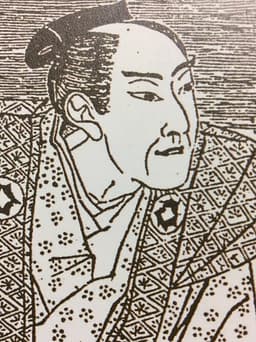
Ooka Tadasuke
Politician · Modern
49.3Total
Basic Information
Born
1822
1677
Died
1872
1752
Era
Modern
Modern
Nationality
United Kingdom
Japan
Occupation
Politician
Politician
Civilization
Western
Eastern
Score Comparison
Military (10%)
48.2
13.3
Political (20%)
46.6
68.0
Influence (20%)
48.6
57.2
Legacy (20%)
37.5
49.2
Leadership (15%)
58.8
53.2
Strategy (15%)
41.5
31.9
TOTAL
46.3
49.3
Lord Mayo — Complete Timeline
1869 AD
Financial Reforms and Famine ReliefReform◆ Major
Mayo implemented financial reforms to reduce the Indian budget deficit, including increasing taxes and cutting expenditures. He also established a famine relief system, creating a Famine Code and setting aside funds for relief works. These measures aimed to mitigate the impact of recurring famines in India.
FinanceFamineReform
Impact: regionalconstructive
Opening of the Suez Canal and Indian TradeCultural
Mayo supported the opening of the Suez Canal in 1869, which significantly reduced travel time between Britain and India. He promoted Indian trade and agriculture, including the expansion of tea, coffee, and cotton cultivation. These efforts aimed to integrate India more closely into the global economy.
TradeSuez CanalEconomy
Impact: regionalconstructive
1872 AD
Assassination by Sher Ali AfridiPolitical Action◆ Major
Lord Mayo was assassinated on February 8, 1872, by Sher Ali Afridi, a convict from the Andaman Islands, while visiting the penal settlement at Port Blair. The assassination was motivated by personal grievances. Mayo was the only Viceroy of India to be assassinated in office.
AssassinationViceroyAndaman Islands
Impact: regionaltragic
Viceroy's Visit to the Andaman IslandsPolitical Action
Mayo visited the Andaman Islands penal colony in February 1872 to inspect conditions. During this visit, he was assassinated by Sher Ali Afridi. The visit was intended to assess the administration of the penal settlement, but it ended tragically, leading to increased security measures for future viceroys.
VisitAssassinationPenal Colony
tragic
Ooka Tadasuke — Complete Timeline
1717 AD
Appointment as Edo Magistrate (Machibugyo)Political Action◆ Major
Ooka Tadasuke was appointed as one of the two Edo machibugyo, the chief magistrates of the shogun's capital. This position gave him authority over civil and criminal justice in Edo, where he became known for fair and wise judgments.
AppointmentEdo magistrateJustice
Impact: nationalconstructive
1720 AD
Judgment in the 'Ooka and the Stolen Child' CasePolitical Action
Ooka presided over a famous case where he used a psychological trick to determine a child's true mother, ordering the child to be pulled between two claimants. The real mother released her grip to avoid hurting the child, revealing the truth. This case became legendary in Japanese folklore.
FolkloreWise judgeChild custody
constructive
1725 AD
Implementation of the 'Ooka's Reforms' in Criminal JusticeReform◆ Major
Ooka introduced reforms to reduce torture and ensure fair trials, emphasizing evidence and witness testimony over forced confessions. He also established procedures for appeals and review of death sentences, improving the shogunate's legal system.
Legal reformTorture reductionCriminal justice
Impact: nationalprogressive
1736 AD
Promotion to Senior Councilor (Roju)Political Action◆ Major
Ooka was promoted to roju, becoming one of the highest-ranking officials in the shogunate under Shogun Tokugawa Yoshimune. In this role, he continued to influence legal and administrative policies until his retirement.
PromotionRojuTokugawa Yoshimune
Impact: nationalconstructive
This comparison has not been analyzed yet.
One-time AI generation (~1 minute). Scores and timeline are already available below.
Rankings
🥇
Ooka TadasukeLeader
Mil: 13.3Pol: 68.0Inf: 57.2
49.3
🥈
Lord Mayo
Mil: 48.2Pol: 46.6Inf: 48.6
46.3
+3.0 behind
How This Comparison Works
Algorithm
Each figure is scored on 6 dimensions (0—100 scale) based on structured historical data: Military (10%), Political (20%), Influence (20%), Legacy (20%), Leadership (15%), Strategy (15%). The weighted total produces the final ranking.
Data Sources
Scores are computed from structured sub-indicators in the database. Scale factors adjust for era (Ancient ×0.85, Modern ×1.0) and civilization size (Eastern ×1.05, Other ×0.80) to account for differences in population and military scale.
Maximum 3 Figures
Comparisons are limited to 2—3 figures to ensure readability and statistical meaningfulness.
Error Margins
±5 points per dimension — Sub-scores are derived from historical records with inherent uncertainty. Two figures within 5 points on a dimension should be considered roughly equivalent in that area.
Total Score Accuracy
±3 points overall — The weighted combination of 6 dimensions produces a total score with approximately ±3 points of uncertainty. Differences of less than 3 points are not statistically significant— the figures are effectively tied.
Known Limitations
- Historical records are incomplete and uneven across civilizations
- Figures from oral-tradition societies may be underrepresented
- Occupation labels can misclassify multi-role figures
- Scores measure capability and impact, not moral character
- Quantitative scoring is a comparison tool, not absolute truth
Capability Radar
Military (10%) — Battles & Warfare
Battles
31
12
Win Rate
34
20
Expansion
33
20
Political (20%) — Governance & Reform
Reform
40
45
Diplomacy
35
50
Economy
40
55
Influence (20%) — Cultural & Global Reach
Cultural
10
55
Global
10
20
Legacy (20%) — Historical Impact
Historical
15
50
Longevity
10
45
Leadership (15%) — Power & Stability
Tenure
30
40
Stability
25
60
Strategy (15%) — Tactics & Innovation
Strategy
39
22
Tactics
38
25
Reform
42
32
Similar Comparisons
Comments & Discussion
No comments yet. Be the first to share your thoughts!