Loading...
James Madison vs Ooka Tadasuke
James Madison leads by 23.8 pts · 2 figures compared
…

James Madison
Politician · Modern
73.1Total
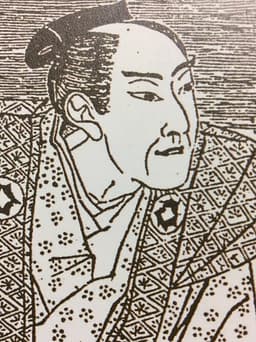
Ooka Tadasuke
Politician · Modern
49.3Total
Basic Information
Born
1751
1677
Died
1836
1752
Era
Modern
Modern
Nationality
United States
Japan
Occupation
Politician
Politician
Civilization
Western
Eastern
Score Comparison
Military (10%)
48.2
13.3
Political (20%)
82.0
68.0
Influence (20%)
80.0
57.2
Legacy (20%)
82.0
49.2
Leadership (15%)
75.0
53.2
Strategy (15%)
42.2
31.9
TOTAL
73.1
49.3
James Madison — Complete Timeline
1787 AD
Drafting of the Virginia PlanPolitical Action
Madison drafted the Virginia Plan, which proposed a strong central government with three branches and proportional representation. This plan became the basis for the US Constitution debated at the Constitutional Convention.
US ConstitutionVirginia PlanConstitutional Convention
Impact: nationalconstructive
1788 AD
Co-Authorship of The Federalist PapersCultural◆ Major
Madison co-authored The Federalist Papers with Alexander Hamilton and John Jay. These 85 essays argued for ratification of the US Constitution and remain a key source for constitutional interpretation.
Federalist PapersUS ConstitutionPolitical Philosophy
Impact: nationalconstructive
1789 AD
Drafting of the Bill of RightsPolitical Action
Madison drafted the first ten amendments to the US Constitution, known as the Bill of Rights. These amendments guaranteed individual liberties such as freedom of speech, religion, and the right to bear arms.
Bill of RightsUS ConstitutionCivil Liberties
Impact: nationalconstructive
1812 AD
Presidency and the War of 1812War◆ Major
Madison led the US into the War of 1812 against Britain, citing impressment of American sailors and trade restrictions. The war ended in a stalemate but solidified US independence and led to the burning of Washington, D.C.
War of 1812US PresidencyForeign Policy
Impact: national
1815 AD
Veto of the Second Bank of the United StatesPolitical Action◆ Major
Madison vetoed a bill to recharter the Second Bank of the United States, arguing it was unconstitutional. This action reflected his strict constructionist views and influenced later debates over federal power.
Bank of the United StatesConstitutional InterpretationEconomic Policy
Impact: national
Ooka Tadasuke — Complete Timeline
1717 AD
Appointment as Edo Magistrate (Machibugyo)Political Action◆ Major
Ooka Tadasuke was appointed as one of the two Edo machibugyo, the chief magistrates of the shogun's capital. This position gave him authority over civil and criminal justice in Edo, where he became known for fair and wise judgments.
AppointmentEdo magistrateJustice
Impact: nationalconstructive
1720 AD
Judgment in the 'Ooka and the Stolen Child' CasePolitical Action
Ooka presided over a famous case where he used a psychological trick to determine a child's true mother, ordering the child to be pulled between two claimants. The real mother released her grip to avoid hurting the child, revealing the truth. This case became legendary in Japanese folklore.
FolkloreWise judgeChild custody
constructive
1725 AD
Implementation of the 'Ooka's Reforms' in Criminal JusticeReform◆ Major
Ooka introduced reforms to reduce torture and ensure fair trials, emphasizing evidence and witness testimony over forced confessions. He also established procedures for appeals and review of death sentences, improving the shogunate's legal system.
Legal reformTorture reductionCriminal justice
Impact: nationalprogressive
1736 AD
Promotion to Senior Councilor (Roju)Political Action◆ Major
Ooka was promoted to roju, becoming one of the highest-ranking officials in the shogunate under Shogun Tokugawa Yoshimune. In this role, he continued to influence legal and administrative policies until his retirement.
PromotionRojuTokugawa Yoshimune
Impact: nationalconstructive
Expert Analysis
Origins
James Madison was born in 1751 into a wealthy Virginia planter family, receiving a classical education at Princeton (then College of New Jersey). His early exposure to Enlightenment thinkers like John Locke shaped his political philosophy. Ooka Tadasuke was born in 1677 into a samurai family in Japan, serving as a low-ranking official before rising through the Tokugawa bureaucracy. His early career involved administrative roles, where he gained a reputation for fairness.
Rise to Power
Madison rose to prominence during the American Revolution, serving in the Continental Congress and co-authoring the Federalist Papers (1787-1788) with Hamilton and Jay. His Virginia Plan became the foundation of the US Constitution. Ooka was appointed Edo Machibugyo (city magistrate) in 1717, where his reputation for wise judgments led to promotion to Senior Councilor (Roju) in 1736 under Shogun Yoshimune. His key turning point was the "stolen child" case, which cemented his folkloric status.
Leadership & Governance
Madison's leadership style was intellectual and consensus-building, focusing on checks and balances. He drafted the Bill of Rights (1791) and served as President during the War of 1812, though his military strategy scored only 42.2. Ooka's governance emphasized legal reform: he reduced torture, required evidence-based trials, and established appeals processes. His political score of 68.0 reflects his effectiveness within the Tokugawa system, while Madison's political score of 82.0 reflects his foundational role in US governance.
Triumph & Tragedy
Madison's triumphs include the Constitution and Bill of Rights, which scored 80.0 in influence. His tragedy was the War of 1812, where Washington was burned by British forces, and his veto of the Second Bank of the United States (1815) led to economic instability. Ooka's triumphs include his judicial reforms and the "Ooka's Reforms" that improved criminal justice. His tragedy is the limited impact: his reforms did not survive the Tokugawa collapse, and his legacy is more folkloric than institutional, scoring 49.2 in legacy.
Character & Destiny
Madison was cautious and methodical, but his strict constructionism sometimes hindered practical governance. His character shaped his destiny as the "Father of the Constitution" but also as a wartime president who struggled with military command. Ooka was known for his wisdom and empathy, but his role was circumscribed by the rigid Tokugawa hierarchy. His destiny was to become a legendary figure in Japanese folklore, more than a transformative politician.
Legacy
Madison's legacy is immense: the US Constitution and Bill of Rights are foundational documents for modern democracy, influencing constitutions worldwide. He scored 82.0 in legacy. Ooka's legacy is primarily cultural: he appears in countless stories, kabuki plays, and films as the archetype of the wise judge. However, his concrete political impact was limited to reforms within a feudal system that ended in 1868.
Conclusion
James Madison had greater impact. His political score of 82.0 and legacy score of 82.0 dwarf Ooka's 68.0 and 49.2. While Ooka's judicial wisdom is celebrated, Madison's contributions to constitutional government shaped the modern world. The score gap of 23.8 points reflects this: Madison's ideas endured globally, whereas Ooka's reforms were confined to a specific era.
Rankings
🥇
James MadisonLeader
Mil: 48.2Pol: 82.0Inf: 80.0
73.1
🥈
Ooka Tadasuke
Mil: 13.3Pol: 68.0Inf: 57.2
49.3
+23.8 behind
How This Comparison Works
Algorithm
Each figure is scored on 6 dimensions (0—100 scale) based on structured historical data: Military (10%), Political (20%), Influence (20%), Legacy (20%), Leadership (15%), Strategy (15%). The weighted total produces the final ranking.
Data Sources
Scores are computed from structured sub-indicators in the database. Scale factors adjust for era (Ancient ×0.85, Modern ×1.0) and civilization size (Eastern ×1.05, Other ×0.80) to account for differences in population and military scale.
Maximum 3 Figures
Comparisons are limited to 2—3 figures to ensure readability and statistical meaningfulness.
Error Margins
±5 points per dimension — Sub-scores are derived from historical records with inherent uncertainty. Two figures within 5 points on a dimension should be considered roughly equivalent in that area.
Total Score Accuracy
±3 points overall — The weighted combination of 6 dimensions produces a total score with approximately ±3 points of uncertainty. Differences of less than 3 points are not statistically significant— the figures are effectively tied.
Known Limitations
- Historical records are incomplete and uneven across civilizations
- Figures from oral-tradition societies may be underrepresented
- Occupation labels can misclassify multi-role figures
- Scores measure capability and impact, not moral character
- Quantitative scoring is a comparison tool, not absolute truth
Capability Radar
Military (10%) — Battles & Warfare
Battles
27
12
Win Rate
34
20
Expansion
37
20
Political (20%) — Governance & Reform
Reform
95
45
Diplomacy
85
50
Economy
60
55
Influence (20%) — Cultural & Global Reach
Cultural
80
55
Global
85
20
Legacy (20%) — Historical Impact
Historical
95
50
Longevity
90
45
Leadership (15%) — Power & Stability
Tenure
70
40
Stability
75
60
Strategy (15%) — Tactics & Innovation
Strategy
40
22
Tactics
40
25
Reform
42
32
Similar Comparisons
Comments & Discussion
No comments yet. Be the first to share your thoughts!