Loading...
Lian Po vs Meng Tian
Meng Tian leads by 1.4 pts · 2 figures compared
…
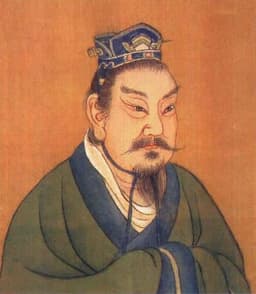
Lian Po
General · Ancient
52.5Total
Meng Tian
General · Ancient
53.9Total
Basic Information
Born
-327
-250
Died
-243
-210
Era
Ancient
Ancient
Nationality
China
China
Occupation
General
General
Civilization
Eastern
Eastern
Score Comparison
Military (10%)
67.3
60.0
Political (20%)
26.4
30.8
Influence (20%)
57.2
61.0
Legacy (20%)
50.0
54.0
Leadership (15%)
61.1
50.7
Strategy (15%)
58.0
69.1
TOTAL
52.5
53.9
Lian Po — Complete Timeline
283 BC
Defeated Qi ForcesWar
Lian Po led Zhao armies to victory against the state of Qi, capturing several cities. This campaign expanded Zhao's territory and demonstrated his military prowess as a general.
BattleZhaoQi
Impact: regional
279 BC
Reconciled with Lin XiangruCultural◆ Major
Lian Po, a veteran general of Zhao, initially resented Lin Xiangru's promotion above him. After learning of Lin's selfless behavior for the state, Lian Po apologized by carrying a thorny stick to Lin's residence, and the two became close allies.
ReconciliationZhaoFriendship
Impact: nationalconstructive
260 BC
Replaced by Zhao Kuo at ChangpingPolitical Action◆ Major
King Xiaocheng of Zhao replaced Lian Po with Zhao Kuo as commander at the Battle of Changping, against the advice of Zhao She. Lian Po's defensive strategy was abandoned, leading to a disastrous defeat for Zhao.
ReplacementBattle of ChangpingZhao
Impact: regionaltragic
Meng Tian — Complete Timeline
215 BC
Defeat of the XiongnuWar◆ Major
Meng Tian led a Qin army to defeat the Xiongnu, driving them out of the Ordos region. This victory secured the northern frontier and allowed for the expansion of Qin territory.
WarXiongnuQin Dynasty
Impact: regionalconstructive
214 BC
Construction of the Great WallOther◆ Major
Meng Tian oversaw the construction and reinforcement of the Great Wall of China, connecting and extending existing walls to defend against northern nomadic tribes. This project involved hundreds of thousands of laborers.
Great WallDefenseQin Dynasty
Impact: globalconstructive
212 BC
Construction of the Straight RoadOther
Meng Tian supervised the construction of the Straight Road, a 700-kilometer highway connecting the Qin capital Xianyang with the northern frontier. This road facilitated military movement and communication.
InfrastructureQin DynastyRoad
Impact: nationalconstructive
210 BC
Forced Suicide by Qin Er ShiPolitical Action◆ Major
After the death of Qin Shi Huang, the eunuch Zhao Gao conspired to have Meng Tian forced to commit suicide. Meng Tian complied, despite his loyalty to the Qin dynasty. His death weakened the dynasty's northern defenses.
SuicideQin DynastyPolitical Purge
Impact: nationaltragic
Expert Analysis
Origins
Lian Po was born around 327 BCE in the state of Zhao during the Warring States period. He came from a military family and rose through the ranks as a warrior. His early career was marked by successful campaigns against neighboring states, which earned him a reputation as a formidable general. In contrast, Meng Tian was born around 250 BCE into a noble family of Qin. His grandfather Meng Ao and father Meng Wu were both prominent Qin generals. Meng Tian was educated in both military and civil affairs, preparing him for a career serving the Qin state. His family's loyalty to Qin was absolute, and he grew up during the unification wars.
Rise to Power
Lian Po's rise came through his military successes. In 283 BCE, he led Zhao forces to victory against Qi, capturing several cities and expanding Zhao's territory. This victory made him a leading general of Zhao. However, his rivalry with the civilian official Lin Xiangru, who was promoted above him, nearly derailed his career. Lian Po initially insulted Lin but later apologized publicly after learning of Lin's selfless dedication to Zhao. This "reconciliation" became a famous story of putting state above personal pride. Meng Tian rose to prominence under Qin Shi Huang. In 221 BCE, after Qin's unification, Meng Tian was appointed to lead the campaign against the Xiongnu nomads in the north. His successful defeat of the Xiongnu and expulsion from the Ordos region (215 BCE) secured Qin's northern frontier and gained him the emperor's trust. He was then tasked with overseeing the construction of the Great Wall and the Straight Road, making him one of the most powerful officials in Qin.
Leadership & Governance
Lian Po's leadership style was that of a traditional warrior-general. He led from the front, shared hardships with his soldiers, and emphasized defensive tactics. At the Battle of Changping (260 BCE), he correctly adopted a defensive strategy against Qin's superior forces, building fortifications and refusing to engage. This cautious approach saved Zhao's army initially but led to his replacement by the aggressive Zhao Kuo, resulting in disaster. Lian Po scored 61.1 in leadership and 58.0 in strategy. Meng Tian was an administrator-general. He organized massive construction projects, mobilizing hundreds of thousands of workers for the Great Wall and the Straight Road. His leadership was systematic and efficient, focusing on logistics and infrastructure. He scored 50.7 in leadership but 69.1 in strategy, reflecting his ability to plan and execute large-scale operations. His governance of the frontier was strict but effective, maintaining peace through deterrence.
Triumph & Tragedy
Lian Po's greatest triumph was his early career victories, such as the defeat of Qi in 283 BCE, which expanded Zhao's territory. His greatest tragedy was the Battle of Changping, where his defensive strategy was overruled, leading to the massacre of 400,000 Zhao troops after Zhao Kuo's defeat. Lian Po later fled to Wei and then Chu, dying in exile around 240 BCE. Meng Tian's triumph was the defeat of the Xiongnu and the construction of the Great Wall, which protected China for centuries. His tragedy was his forced suicide in 210 BCE after the death of Qin Shi Huang. Despite his loyalty, he was framed by Zhao Gao and ordered to drink poison. Meng Tian complied, expressing regret that his death would weaken the frontier.
Character & Destiny
Lian Po was proud and impulsive, as shown by his initial resentment of Lin Xiangru. But he was also capable of humility, as his apology demonstrated. His destiny was tied to Zhao's decline; his replacement at Changping was due to political intrigue and the king's impatience. Meng Tian was loyal and dutiful, serving Qin with absolute dedication. His downfall came from court politics he could not control. Zhao Gao feared his power and influence, and after Qin Shi Huang's death, Meng Tian had no protector. His character of obedience led him to accept death without rebellion.
Legacy
Lian Po is remembered in Chinese history as a symbol of the loyal general who suffered from political maneuvering. His story with Lin Xiangru is taught as a lesson in putting state above personal grievance. He scored 50.0 in legacy. Meng Tian's legacy is more tangible: the Great Wall of China, which became a symbol of Chinese civilization. The Straight Road also facilitated communication and control. He scored 54.0 in legacy. However, his association with Qin's harsh policies somewhat tarnishes his reputation.
Conclusion
While Lian Po was a capable general with a military score of 67.3 compared to Meng Tian's 60.0, Meng Tian's overall impact was greater. His construction of the Great Wall and defeat of the Xiongnu had lasting effects on Chinese history, shaping its northern frontier for millennia. Lian Po's defensive strategy was sound but ultimately failed due to political interference. Meng Tian's total score of 53.9 edges out Lian Po's 52.5, reflecting his broader influence. Therefore, Meng Tian had greater historical impact.
Rankings
🥇
Meng TianLeader
Mil: 60.0Pol: 30.8Inf: 61.0
53.9
🥈
Lian Po
Mil: 67.3Pol: 26.4Inf: 57.2
52.5
+1.4 behind
How This Comparison Works
Algorithm
Each figure is scored on 6 dimensions (0—100 scale) based on structured historical data: Military (10%), Political (20%), Influence (20%), Legacy (20%), Leadership (15%), Strategy (15%). The weighted total produces the final ranking.
Data Sources
Scores are computed from structured sub-indicators in the database. Scale factors adjust for era (Ancient ×0.85, Modern ×1.0) and civilization size (Eastern ×1.05, Other ×0.80) to account for differences in population and military scale.
Maximum 3 Figures
Comparisons are limited to 2—3 figures to ensure readability and statistical meaningfulness.
Error Margins
±5 points per dimension — Sub-scores are derived from historical records with inherent uncertainty. Two figures within 5 points on a dimension should be considered roughly equivalent in that area.
Total Score Accuracy
±3 points overall — The weighted combination of 6 dimensions produces a total score with approximately ±3 points of uncertainty. Differences of less than 3 points are not statistically significant— the figures are effectively tied.
Known Limitations
- Historical records are incomplete and uneven across civilizations
- Figures from oral-tradition societies may be underrepresented
- Occupation labels can misclassify multi-role figures
- Scores measure capability and impact, not moral character
- Quantitative scoring is a comparison tool, not absolute truth
Capability Radar
Military (10%) — Battles & Warfare
Battles
65
45
Win Rate
60
50
Expansion
40
65
Political (20%) — Governance & Reform
Reform
20
55
Diplomacy
60
30
Economy
25
35
Influence (20%) — Cultural & Global Reach
Cultural
55
55
Global
40
50
Legacy (20%) — Historical Impact
Historical
60
65
Longevity
55
60
Leadership (15%) — Power & Stability
Tenure
55
40
Stability
50
50
Strategy (15%) — Tactics & Innovation
Strategy
65
70
Tactics
70
55
Reform
30
60
Similar Comparisons
Comments & Discussion
No comments yet. Be the first to share your thoughts!