Loading...
Leonidas I vs Meng Tian
Meng Tian leads by 5.8 pts · 2 figures compared
…

Leonidas I
General · Ancient
48.1Total
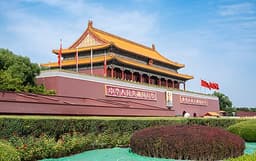
Meng Tian
General · Ancient
53.9Total
Basic Information
Born
-540
-250
Died
-480
-210
Era
Ancient
Ancient
Nationality
Greece
China
Occupation
General
General
Civilization
Western
Eastern
Score Comparison
Military (10%)
40.0
60.0
Political (20%)
33.6
30.8
Influence (20%)
72.0
61.0
Legacy (20%)
40.0
54.0
Leadership (15%)
40.4
50.7
Strategy (15%)
50.0
69.1
TOTAL
48.1
53.9
Leonidas I — Complete Timeline
490 BC
Accession as King of SpartaPolitical Action◆ Major
Leonidas became one of the two kings of Sparta, likely succeeding his half-brother Cleomenes I. As a member of the Agiad dynasty, he assumed command of the Spartan army and played a key role in Spartan foreign policy during the Persian invasion.
SpartaKingshipSuccession
Impact: national
480 BC
Battle of ThermopylaeWar
Leonidas led a small Greek force, including 300 Spartans, against the invading Persian army under Xerxes I at the pass of Thermopylae. The Greeks held for three days before being outflanked. Leonidas and his contingent were killed, but the stand became a symbol of Greek resistance.
Greco-Persian WarsBattleSparta
Impact: regionaltragic
Command at the Battle of ThermopylaeWar◆ Major
Leonidas commanded the allied Greek forces at Thermopylae. He chose to remain with the rearguard after learning of the Persian flanking maneuver, leading to his death along with his 300 Spartans and other Greek volunteers. The sacrifice delayed the Persian advance.
Greco-Persian WarsBattleSparta
Impact: regionaltragic
Meng Tian — Complete Timeline
215 BC
Defeat of the XiongnuWar◆ Major
Meng Tian led a Qin army to defeat the Xiongnu, driving them out of the Ordos region. This victory secured the northern frontier and allowed for the expansion of Qin territory.
WarXiongnuQin Dynasty
Impact: regionalconstructive
214 BC
Construction of the Great WallOther◆ Major
Meng Tian oversaw the construction and reinforcement of the Great Wall of China, connecting and extending existing walls to defend against northern nomadic tribes. This project involved hundreds of thousands of laborers.
Great WallDefenseQin Dynasty
Impact: globalconstructive
212 BC
Construction of the Straight RoadOther
Meng Tian supervised the construction of the Straight Road, a 700-kilometer highway connecting the Qin capital Xianyang with the northern frontier. This road facilitated military movement and communication.
InfrastructureQin DynastyRoad
Impact: nationalconstructive
210 BC
Forced Suicide by Qin Er ShiPolitical Action◆ Major
After the death of Qin Shi Huang, the eunuch Zhao Gao conspired to have Meng Tian forced to commit suicide. Meng Tian complied, despite his loyalty to the Qin dynasty. His death weakened the dynasty's northern defenses.
SuicideQin DynastyPolitical Purge
Impact: nationaltragic
Expert Analysis
Origins
Leonidas I was born around 540 BC in Sparta, a militaristic Greek city-state. He was a member of the Agiad dynasty, one of Sparta's two royal houses. His early life followed the strict agoge training system, which emphasized discipline and combat skills. He likely became king after his half-brother Cleomenes I died without a male heir, around 490 BC.
Meng Tian was born around 250 BC in the Qin state of China, during the Warring States period. He came from a family of distinguished generals; his grandfather Meng Ao and father Meng Wu served the Qin state. Meng Tian likely received military education and rose through the ranks due to his family's prominence and his own abilities.
Rise to Power
Leonidas ascended to the dual kingship of Sparta around 490 BC, succeeding his half-brother Cleomenes I. His rise was partly due to marrying Cleomenes' daughter, Gorgo, which solidified his claim. As king, he commanded Sparta's army, but his most famous moment came in 480 BC when he led a small Greek force to block the Persian invasion at Thermopylae.
Meng Tian rose to prominence under Qin Shi Huang, the first emperor of China. After the Qin unification in 221 BC, Meng Tian was appointed general of the northern frontier. His major turning point came around 215 BC when he led a campaign against the Xiongnu nomads, defeating them and securing the Ordos region. This victory earned him imperial favor and command of massive construction projects.
Leadership & Governance
Leonidas' leadership was defined by personal bravery and sacrifice. At Thermopylae, he commanded a coalition of Greek city-states, but his authority was limited to military matters. He made the strategic decision to hold the pass, using the terrain to neutralize Persian numbers. After being betrayed, he dismissed most allies but chose to stay with 300 Spartans and a few hundred others, fighting to the death. His governance in Sparta followed traditional laws, with power shared with the ephors and the other king.
Meng Tian exhibited administrative and engineering leadership. He oversaw the construction of the Great Wall, linking existing walls into a 5,000-kilometer defense system, and built the Straight Road, a 700-kilometer highway for rapid troop movement. His military leadership was methodical: he used fortified positions and logistics to defeat the Xiongnu. Politically, he was loyal to Qin Shi Huang but lacked the cunning to survive court intrigues, leading to his forced suicide in 210 BC.
Triumph & Tragedy
Leonidas' greatest triumph was the stand at Thermopylae, which, though a tactical defeat, became a symbol of resistance and delayed the Persian advance. It allowed the Greek fleet to regroup and ultimately win at Salamis. His greatest tragedy was his death, as he and his men were surrounded and killed. The betrayal by Ephialtes revealed the limits of relying on a single pass.
Meng Tian's triumph was defeating the Xiongnu and building the Great Wall, which protected China for centuries. The Straight Road enhanced Qin control. His tragedy was his forced suicide after Qin Shi Huang's death, despite his innocence. He was a victim of Zhao Gao's conspiracy, which also led to the Qin dynasty's rapid decline.
Character & Destiny
Leonidas was characterized by stoic bravery and a sense of duty. His decision to remain at Thermopylae despite certain death reflects Spartan values. His destiny was shaped by the Persian threat, and his sacrifice immortalized him as a martyr. Historical assessments often emphasize his role as a symbol of freedom against tyranny.
Meng Tian was diligent, loyal, and competent. He prioritized his duties over political maneuvering, which led to his downfall when the court turned against him. His destiny was intertwined with the Qin dynasty's rise and fall. Historians note his engineering achievements but criticize his inability to navigate court politics.
Legacy
Leonidas' legacy is immense in Western culture. The Battle of Thermopylae has been retold in literature, film, and art, embodying courage against overwhelming odds. He scored 72.0 in influence, reflecting his symbolic power. However, his military and political scores are lower (40.0 and 33.6) due to limited scope.
Meng Tian's legacy is tangible: the Great Wall remains a symbol of China, and the Straight Road improved infrastructure. His military score of 60.0 and strategy of 69.1 reflect his effectiveness. His influence score of 61.0 is high, but his political score of 30.8 shows his vulnerability. The wall he built influenced Chinese defense for millennia.
Conclusion
While Leonidas I is more famous, Meng Tian had greater impact. With a total score of 53.9 compared to Leonidas' 48.1, Meng Tian's achievements in defense, infrastructure, and expansion shaped Chinese history for centuries. Leonidas' stand was a tactical delay, whereas Meng Tian's wall and roads had lasting strategic effects. Meng Tian's higher strategy score (69.1 vs 50.0) and military score (60.0 vs 40.0) underscore his superior generalship. Therefore, Meng Tian is the more significant historical figure.
Rankings
🥇
Meng TianLeader
Mil: 60.0Pol: 30.8Inf: 61.0
53.9
🥈
Leonidas I
Mil: 40.0Pol: 33.6Inf: 72.0
48.1
+5.8 behind
How This Comparison Works
Algorithm
Each figure is scored on 6 dimensions (0—100 scale) based on structured historical data: Military (10%), Political (20%), Influence (20%), Legacy (20%), Leadership (15%), Strategy (15%). The weighted total produces the final ranking.
Data Sources
Scores are computed from structured sub-indicators in the database. Scale factors adjust for era (Ancient ×0.85, Modern ×1.0) and civilization size (Eastern ×1.05, Other ×0.80) to account for differences in population and military scale.
Maximum 3 Figures
Comparisons are limited to 2—3 figures to ensure readability and statistical meaningfulness.
Error Margins
±5 points per dimension — Sub-scores are derived from historical records with inherent uncertainty. Two figures within 5 points on a dimension should be considered roughly equivalent in that area.
Total Score Accuracy
±3 points overall — The weighted combination of 6 dimensions produces a total score with approximately ±3 points of uncertainty. Differences of less than 3 points are not statistically significant— the figures are effectively tied.
Known Limitations
- Historical records are incomplete and uneven across civilizations
- Figures from oral-tradition societies may be underrepresented
- Occupation labels can misclassify multi-role figures
- Scores measure capability and impact, not moral character
- Quantitative scoring is a comparison tool, not absolute truth
Capability Radar
Military (10%) — Battles & Warfare
Battles
30
45
Win Rate
20
50
Expansion
10
65
Political (20%) — Governance & Reform
Reform
20
55
Diplomacy
30
30
Economy
20
35
Influence (20%) — Cultural & Global Reach
Cultural
75
55
Global
70
50
Legacy (20%) — Historical Impact
Historical
80
65
Longevity
85
60
Leadership (15%) — Power & Stability
Tenure
40
40
Stability
35
50
Strategy (15%) — Tactics & Innovation
Strategy
55
70
Tactics
65
55
Reform
10
60
Similar Comparisons
Comments & Discussion
No comments yet. Be the first to share your thoughts!