Loading...
Li Yuan vs Toghrul Beg
Li Yuan leads by 2.3 pts · 2 figures compared
…

Li Yuan
Emperor · Medieval
73.7Total
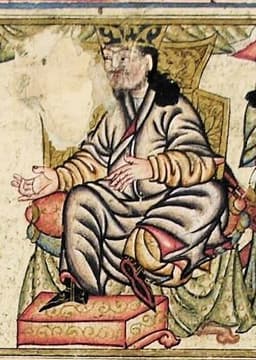
Toghrul Beg
Emperor · Medieval
71.4Total
Basic Information
Born
566
990
Died
635
1063
Era
Medieval
Medieval
Nationality
China
Seljuk Empire
Occupation
Emperor
Emperor
Civilization
Eastern
Middle Eastern
Score Comparison
Military (10%)
78.0
78.5
Political (20%)
70.0
70.0
Influence (20%)
80.0
65.0
Legacy (20%)
71.4
72.0
Leadership (15%)
72.0
79.8
Strategy (15%)
67.2
68.0
TOTAL
73.7
71.4
Li Yuan — Complete Timeline
618 AD
Founded the Tang dynastyPolitical Action
Li Yuan, Duke of Tang, rebelled against the Sui dynasty and captured Chang'an. He declared himself Emperor Gaozu, founding the Tang dynasty that would rule China for nearly 300 years.
Tang dynastyFoundingSui-Tang transition
Impact: globalconstructive
621 AD
Battle of Hulao PassWar◆ Major
Li Yuan's son Li Shimin defeated the rival warlord Dou Jiande at Hulao Pass. This victory eliminated a major competitor and secured Tang control over the central plains.
Tang unificationBattleLi Shimin
Impact: national
626 AD
Abdicated in favor of Li ShiminPolitical Action◆ Major
After the Xuanwu Gate Incident where Li Shimin killed his brothers, Li Yuan abdicated the throne to his son. He became Taishang Huang (retired emperor) and lived in retirement.
Tang dynastySuccessionXuanwu Gate
Impact: national
Toghrul Beg — Complete Timeline
1040 AD
Battle of DandanaqanWar
Toghrul Beg led the Seljuk Turks to victory over the Ghaznavid Empire at Dandanaqan in Khorasan. This defeat forced the Ghaznavids to retreat eastward, granting the Seljuks control of Khorasan and establishing their power base in Persia.
Seljuk ExpansionGhaznavid DefeatKhorasan
Impact: regional
1054 AD
Campaign against the Byzantine EmpireWar◆ Major
Toghrul Beg launched a major raid into Byzantine Anatolia, reaching as far as the city of Manzikert. Although he did not capture the city, the campaign demonstrated Seljuk military strength and foreshadowed future conflicts that would lead to the Battle of Manzikert in 1071.
Byzantine-Seljuk WarsAnatoliaManzikert
Impact: regional
1055 AD
Conquest of BaghdadWar
Toghrul Beg entered Baghdad at the invitation of the Abbasid Caliph al-Qa'im, who sought protection from the Buyid dynasty. Toghrul deposed the Buyid ruler, married the caliph's daughter, and was granted the title 'Sultan', becoming the de facto ruler of the Islamic world.
BaghdadAbbasid CaliphateSultanate
Impact: global
1058 AD
Suppression of the Rebellion of Ibrahim InalWar◆ Major
Toghrul's half-brother Ibrahim Inal rebelled against his authority, allying with the Fatimid Caliphate. Toghrul defeated and executed Ibrahim Inal, consolidating his power and eliminating a major internal threat to Seljuk unity.
Civil WarInternal ConflictIbrahim Inal
Impact: nationaldestructive
Expert Analysis
Origins
Li Yuan was born in 566 CE into a noble family in the Northern Zhou dynasty. His father, Li Bing, was a general, and his mother was a daughter of the Duke of Dugu. Li Yuan inherited the title Duke of Tang and served as a military officer under the Sui dynasty. His early career involved suppressing rebellions and governing frontier regions, which gave him administrative and military experience.
Toghrul Beg, born around 990 CE, was the grandson of Seljuk, the eponymous founder of the Seljuk clan. He grew up among the Oghuz Turks in the steppes of Central Asia. His family served as mercenaries for the Karakhanids and later the Ghaznavids. Toghrul and his brother Chaghri Beg led their nomadic followers in search of territory, initially serving under the Ghaznavids before rebelling.
Rise to Power
Li Yuan rose to prominence during the collapse of the Sui dynasty. In 617 CE, he rebelled from his base in Taiyuan, claiming to restore order. He marched on the Sui capital Chang'an, capturing it in 618 CE. He declared himself Emperor Gaozu of Tang, but his rise was aided by his son Li Shimin, who led crucial military campaigns. The Battle of Hulao Pass in 621 CE, where Li Shimin defeated Dou Jiande, secured Tang control over northern China.
Toghrul Beg's rise began with the Battle of Dandanaqan in 1040 CE, where the Seljuks defeated the Ghaznavid army. This victory gave them control of Khorasan. Toghrul then expanded westward, taking Rayy and Hamadan. In 1055 CE, he entered Baghdad at the invitation of the Abbasid Caliph al-Qa'im, who sought protection from the Buyids. Toghrul deposed the Buyid rulers and was granted the title Sultan, becoming the de facto ruler of the Islamic world.
Leadership & Governance
Li Yuan's governance focused on consolidating the Tang dynasty. He retained many Sui institutions, such as the equal-field system and the examination system for bureaucrats. He also issued a new legal code, the Tang Code, which became a model for East Asia. However, he faced challenges from his sons, leading to the Xuanwu Gate Incident in 626 CE, where Li Shimin killed his brothers and forced Li Yuan to abdicate. Li Yuan's leadership style was cautious and delegative, relying on his sons and generals.
Toghrul Beg governed as a sultan under the Abbasid caliphate, restoring Sunni orthodoxy. He suppressed the Shia Buyids and fought against the Fatimids. He adopted Persian administrative practices, employing viziers like al-Kunduri. He also maintained a nomadic military structure, rewarding his Turkmen tribesmen with land grants (iqta). His leadership was autocratic but faced rebellions, notably from his half-brother Ibrahim Inal in 1058 CE, which he crushed.
Triumph & Tragedy
Li Yuan's greatest triumph was founding the Tang dynasty, which lasted 289 years and became a golden age of Chinese civilization. He also successfully unified China after centuries of division. His tragedy was the violent conflict among his sons, culminating in the Xuanwu Gate Incident, which forced his abdication. Though he lived as retired emperor until 635 CE, his legacy was overshadowed by his son Li Shimin.
Toghrul Beg's triumph was establishing the Great Seljuk Empire, which dominated the Middle East and challenged the Byzantine Empire. His conquest of Baghdad reasserted Sunni authority. His tragedy was the rebellion of his half-brother and his failure to secure a smooth succession; he died without a direct heir in 1063 CE, leading to a succession crisis. His campaign against the Byzantines, though reaching Manzikert, did not result in lasting conquest.
Character & Destiny
Li Yuan was pragmatic and cautious, but his indecisiveness contributed to the power struggle among his sons. He scored 72.0 in leadership and 67.2 in strategy, reflecting his reliance on others. Historical assessments view him as a capable founder but overshadowed by his son. His destiny was to be a transitional figure, setting the stage for the Tang zenith.
Toghrul Beg was ambitious and ruthless, scoring 79.8 in leadership and 68.0 in strategy. He skillfully used religious legitimacy to gain power. His character was marked by determination and cruelty, as seen in his suppression of rebellions. His destiny was to create a vast empire that would later be expanded by his successors, like Alp Arslan.
Legacy
Li Yuan's legacy is the Tang dynasty, which influenced China and East Asia for centuries. The Tang Code, civil service exams, and territorial expansion set standards. He scored 71.4 in legacy. Tang culture, including poetry and art, flourished. However, his personal legacy is often eclipsed by his son Emperor Taizong.
Toghrul Beg's legacy is the Seljuk Empire, which revived Sunni Islam and checked Byzantine expansion. His conquests paved the way for later Turkic empires. He scored 72.0 in legacy. The Seljuk sultanate became a model for Turkic-Islamic governance. Yet, his empire fragmented after his death.
Conclusion
Li Yuan had a greater overall impact, scoring 73.7 total compared to Toghrul Beg's 71.4. Li Yuan's Tang dynasty lasted longer and had a more profound cultural and political influence on a larger civilization. While Toghrul Beg founded a powerful empire, its duration and legacy are less enduring. Li Yuan's contribution to Chinese history outweighs Toghrul's to Islamic history. Therefore, Li Yuan is the more significant historical figure.
Rankings
🥇
Li YuanLeader
Mil: 78.0Pol: 70.0Inf: 80.0
73.7
🥈
Toghrul Beg
Mil: 78.5Pol: 70.0Inf: 65.0
71.4
+2.3 behind
How This Comparison Works
Algorithm
Each figure is scored on 6 dimensions (0—100 scale) based on structured historical data: Military (10%), Political (20%), Influence (20%), Legacy (20%), Leadership (15%), Strategy (15%). The weighted total produces the final ranking.
Data Sources
Scores are computed from structured sub-indicators in the database. Scale factors adjust for era (Ancient ×0.85, Modern ×1.0) and civilization size (Eastern ×1.05, Other ×0.80) to account for differences in population and military scale.
Maximum 3 Figures
Comparisons are limited to 2—3 figures to ensure readability and statistical meaningfulness.
Error Margins
±5 points per dimension — Sub-scores are derived from historical records with inherent uncertainty. Two figures within 5 points on a dimension should be considered roughly equivalent in that area.
Total Score Accuracy
±3 points overall — The weighted combination of 6 dimensions produces a total score with approximately ±3 points of uncertainty. Differences of less than 3 points are not statistically significant— the figures are effectively tied.
Known Limitations
- Historical records are incomplete and uneven across civilizations
- Figures from oral-tradition societies may be underrepresented
- Occupation labels can misclassify multi-role figures
- Scores measure capability and impact, not moral character
- Quantitative scoring is a comparison tool, not absolute truth
Capability Radar
Military (10%) — Battles & Warfare
Battles
75
85
Win Rate
80
90
Expansion
80
90
Political (20%) — Governance & Reform
Reform
75
75
Diplomacy
80
85
Economy
75
70
Influence (20%) — Cultural & Global Reach
Cultural
85
65
Global
85
75
Legacy (20%) — Historical Impact
Historical
90
80
Longevity
90
70
Leadership (15%) — Power & Stability
Tenure
70
80
Stability
70
70
Strategy (15%) — Tactics & Innovation
Strategy
85
85
Tactics
70
80
Reform
65
75
Similar Comparisons
Comments & Discussion
No comments yet. Be the first to share your thoughts!