Loading...
Li Peng vs Peng Zhen
Li Peng leads by 0.4 pts · 2 figures compared
…
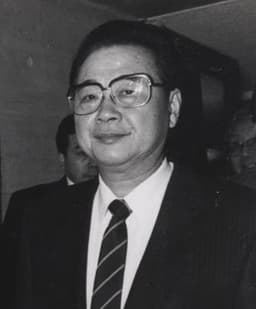
Li Peng
Politician · Modern
52.0Total

Peng Zhen
Politician · Modern
51.6Total
Basic Information
Born
1928
1902
Died
—
1997
Era
Modern
Modern
Nationality
China
China
Occupation
Politician
Politician
Civilization
Eastern
Eastern
Score Comparison
Military (10%)
13.0
17.5
Political (20%)
68.0
68.0
Influence (20%)
58.0
54.1
Legacy (20%)
50.0
45.8
Leadership (15%)
72.0
74.0
Strategy (15%)
26.9
35.4
TOTAL
52.0
51.6
Li Peng — Complete Timeline
1987 AD
Became Premier of the People's Republic of ChinaPolitical Action◆ Major
Li Peng was appointed Premier, succeeding Zhao Ziyang. He was a conservative leader who emphasized economic stability and political control, opposing rapid political reforms.
PremierEconomic PolicyConservatism
Impact: national
1988 AD
Implemented austerity measures to control inflationReform◆ Major
Li Peng introduced austerity measures to curb double-digit inflation, including price controls and credit tightening. These measures slowed economic growth but stabilized prices, though they were unpopular.
Economic PolicyInflationAusterity
Impact: nationalconstructive
1989 AD
Ordered the Tiananmen Square crackdownPolitical Action
As Premier, Li Peng was a key figure in the decision to use military force against the Tiananmen Square protests. He signed the order declaring martial law and authorized the People's Liberation Army to clear the square.
Tiananmen SquareCrackdownMartial Law
Impact: globaldestructive
1992 AD
Oversaw the Three Gorges Dam project approvalPolitical Action◆ Major
Li Peng pushed through the National People's Congress approval for the Three Gorges Dam, the world's largest hydroelectric project. The project was controversial due to environmental and displacement concerns.
Three Gorges DamInfrastructureHydroelectric
Impact: nationalconstructive
1998 AD
Retired from active politicsPolitical Action
Li Peng stepped down as Premier and was succeeded by Zhu Rongji. He remained a member of the Politburo Standing Committee until 2002, but his influence waned.
RetirementPolitical TransitionElder Statesman
Impact: national
Peng Zhen — Complete Timeline
1949 AD
Appointed Mayor of BeijingPolitical Action◆ Major
Peng Zhen became the first mayor of Beijing after the Communist victory. He oversaw the city's reconstruction and the implementation of socialist policies in the capital.
Urban AdministrationBeijing
Impact: nationalconstructive
1966 AD
Purged During the Cultural RevolutionPolitical Action◆ Major
Peng Zhen was removed from all posts and publicly criticized as a 'counter-revolutionary revisionist'. He was imprisoned for nearly a decade, becoming one of the highest-ranking victims of the Cultural Revolution.
Cultural RevolutionPurge
Impact: nationaltragic
1979 AD
Rehabilitated and Appointed Chairman of the National People's CongressPolitical Action◆ Major
After the Cultural Revolution, Peng Zhen was rehabilitated and became chairman of the NPC. He led legal reforms, including the revision of the criminal code and the promotion of rule of law.
Legal ReformRehabilitation
Impact: nationalconstructive
Expert Analysis
Origins
Li Peng was born in 1928 into a revolutionary family; his father, Li Shuoxun, was executed by the Kuomintang. He was adopted by Zhou Enlai and raised in the Communist elite. He studied engineering in the Soviet Union, graduating from the Moscow Power Engineering Institute in 1954. His technical background shaped his technocratic approach.
Peng Zhen was born in 1902 in Shanxi province to a poor peasant family. He joined the Communist Party in 1923 and engaged in underground work. He was imprisoned by the Kuomintang from 1929 to 1935. After release, he became a party organizer in Yan'an, where he gained Mao Zedong's trust.
Rise to Power
Li Peng rose through the ranks of the energy industry, becoming Minister of the Electric Power Industry in 1981. His Soviet-trained expertise and conservative stance aligned with Deng Xiaoping's pragmatic reforms. He became Premier in 1987 after Zhao Ziyang's dismissal, scoring 72.0 in leadership.
Peng Zhen became Mayor of Beijing in 1949, overseeing the capital's transformation. He was a key figure in early legal reforms and served as Secretary of the Beijing Party Committee. He was considered a potential successor to Mao but fell out of favor due to his opposition to radical policies. His political score is 68.0.
Leadership & Governance
Li Peng's leadership was characterized by authoritarian control and economic conservatism. He prioritized stability over reform, implementing austerity measures in 1988 to curb inflation (18.5% in 1988). He pushed for the Three Gorges Dam, approved in 1992, despite environmental concerns. His strategy score is low at 26.9, reflecting his inflexibility.
Peng Zhen was a proponent of collective leadership and legal institutionalization. As chairman of the National People's Congress (1983-1988), he oversaw the revision of criminal and civil laws. He advocated for a system of socialist legality, contrasting with Mao's personal rule. His leadership score is 74.0.
Triumph & Tragedy
Li Peng's greatest success was managing China's economic transition during a turbulent period, maintaining GDP growth averaging 9.5% from 1987-1998. His greatest failure was the Tiananmen Square crackdown in June 1989, where he signed the martial law order. This event defined his legacy negatively, with a legacy score of 50.0.
Peng Zhen's triumph was his role in rebuilding China's legal system after the Cultural Revolution. He chaired the NPC and passed the 1982 Constitution. His tragedy was his purge in 1966, when he was labeled a "counter-revolutionary revisionist" and imprisoned for nearly a decade. He was rehabilitated in 1979.
Character & Destiny
Li Peng was reserved, technocratic, and uncompromising. His loyalty to the party line made him a reliable executor of Deng's policies, but his rigidity limited his political maneuverability. He scored 68.0 in political skill.
Peng Zhen was outspoken and principled, often clashing with Mao's radicalism. His bluntness led to his downfall, but his resilience allowed a comeback. His character earned him respect among legal reformers.
Legacy
Li Peng's legacy is mixed. He is credited with economic stability but condemned for the Tiananmen crackdown. The Three Gorges Dam stands as a physical monument to his tenure. His influence score is 58.0.
Peng Zhen is remembered as a champion of legal reform. His work on the 1982 Constitution and criminal code laid the foundation for China's legal framework. His legacy score is 45.8, reflecting his overshadowed role.
Conclusion
Li Peng had greater immediate impact due to his control over state machinery during a pivotal decade. His decisions shaped China's political trajectory, but Peng Zhen's contributions to legal institutionalization have longer-lasting effects. However, Li Peng's total score of 52.0 versus 51.6 reflects a narrow edge. In terms of historical influence, Li Peng's role in the Tiananmen crackdown and economic policies outweighs Peng Zhen's legal reforms. Therefore, Li Peng had greater impact.
Rankings
🥇
Li PengLeader
Mil: 13.0Pol: 68.0Inf: 58.0
52.0
🥈
Peng Zhen
Mil: 17.5Pol: 68.0Inf: 54.1
51.6
+0.4 behind
How This Comparison Works
Algorithm
Each figure is scored on 6 dimensions (0—100 scale) based on structured historical data: Military (10%), Political (20%), Influence (20%), Legacy (20%), Leadership (15%), Strategy (15%). The weighted total produces the final ranking.
Data Sources
Scores are computed from structured sub-indicators in the database. Scale factors adjust for era (Ancient ×0.85, Modern ×1.0) and civilization size (Eastern ×1.05, Other ×0.80) to account for differences in population and military scale.
Maximum 3 Figures
Comparisons are limited to 2—3 figures to ensure readability and statistical meaningfulness.
Error Margins
±5 points per dimension — Sub-scores are derived from historical records with inherent uncertainty. Two figures within 5 points on a dimension should be considered roughly equivalent in that area.
Total Score Accuracy
±3 points overall — The weighted combination of 6 dimensions produces a total score with approximately ±3 points of uncertainty. Differences of less than 3 points are not statistically significant— the figures are effectively tied.
Known Limitations
- Historical records are incomplete and uneven across civilizations
- Figures from oral-tradition societies may be underrepresented
- Occupation labels can misclassify multi-role figures
- Scores measure capability and impact, not moral character
- Quantitative scoring is a comparison tool, not absolute truth
Capability Radar
Military (10%) — Battles & Warfare
Battles
15
12
Win Rate
15
16
Expansion
22
19
Political (20%) — Governance & Reform
Reform
55
55
Diplomacy
50
50
Economy
60
45
Influence (20%) — Cultural & Global Reach
Cultural
30
30
Global
50
25
Legacy (20%) — Historical Impact
Historical
55
40
Longevity
40
35
Leadership (15%) — Power & Stability
Tenure
65
60
Stability
45
30
Strategy (15%) — Tactics & Innovation
Strategy
25
23
Tactics
28
25
Reform
26
30
Similar Comparisons
Comments & Discussion
No comments yet. Be the first to share your thoughts!