Loading...
Li Chen vs Uthman
Uthman leads by 11.6 pts · 2 figures compared
…

Li Chen
Emperor · Medieval
59.4Total
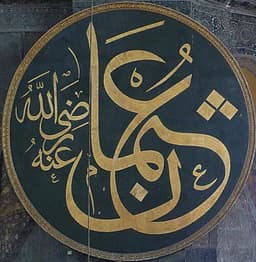
Uthman
Emperor · Medieval
71.0Total
Basic Information
Born
810
576
Died
859
656
Era
Medieval
Medieval
Nationality
China
Rashidun Caliphate
Occupation
Emperor
Emperor
Civilization
Eastern
Middle Eastern
Score Comparison
Military (10%)
70.0
40.0
Political (20%)
59.3
68.0
Influence (20%)
55.0
88.0
Legacy (20%)
55.0
80.0
Leadership (15%)
66.0
65.0
Strategy (15%)
60.7
50.0
TOTAL
59.4
71.0
Li Chen — Complete Timeline
846 AD
Restoration of Central AuthorityPolitical Action◆ Major
Li Chen ascended the throne after the death of his nephew, Li Yan. He immediately reversed the anti-Buddhist policies and began a series of reforms to restore central authority. He appointed capable chancellors and reduced the power of eunuchs.
ReformCentralizationEunuch Power Reduction
Impact: nationalconstructive
847 AD
Reform of the Salt MonopolyReform◆ Major
Li Chen reformed the state salt monopoly to increase revenue and reduce corruption. He lowered salt prices to curb smuggling and improved the efficiency of the monopoly system, which became a major source of Tang fiscal stability.
Salt MonopolyFiscal ReformEconomic Policy
Impact: nationalconstructive
849 AD
Reconquest of the Hexi CorridorWar◆ Major
Li Chen's forces launched a campaign to recapture the Hexi Corridor from the Tibetan Empire. Tang armies achieved several victories, regaining control of key cities and restoring Chinese authority over the Silk Road route.
Hexi CorridorTibetTerritorial Recovery
Impact: regionalconstructive
859 AD
Death of Li ChenOther
Li Chen died in 859 after a reign that briefly revived Tang fortunes. He was posthumously called the 'Little Taizong' for his capable rule. His death marked the end of the last period of Tang stability before the dynasty's final decline.
DeathEnd of RevivalTang Decline
Impact: nationaltragic
Uthman — Complete Timeline
644 AD
Caliphate of UthmanPolitical Action◆ Major
Uthman ibn Affan became the third caliph after Umar's assassination. His twelve-year reign saw continued expansion but also growing internal dissent, culminating in his assassination. He is known for standardizing the Quranic text.
CaliphateExpansionRashidun
Impact: global
650 AD
Conquest of Armenia and North AfricaWar◆ Major
Under Uthman, Muslim forces conquered Armenia and expanded into North Africa, capturing Tripoli and establishing control over the region. These campaigns extended the caliphate's reach and brought new territories under Islamic rule.
Islamic ConquestArmeniaNorth Africa
Impact: regional
Standardization of the QuranCultural
Uthman ordered the compilation of a standard written version of the Quran, based on the codex of Abu Bakr. He sent copies to major cities and ordered the destruction of variant texts, ensuring uniformity of the Islamic scripture.
QuranStandardizationRashidun
Impact: globalconstructive
656 AD
Siege and Assassination of UthmanPolitical Action
Rebels from Egypt and other provinces besieged Uthman's house in Medina, demanding reforms. After weeks of siege, they broke in and assassinated him while he was reading the Quran. His death sparked the First Fitna (civil war) among Muslims.
AssassinationCivil WarRashidun
Impact: globaltragic
Expert Analysis
Origins
Li Chen (810–859), posthumously known as Tang Xuanzong II, was born into the Tang imperial family. His father was Emperor Xianzong, but Li Chen was not the expected heir due to his unassuming demeanor. He spent his early years in obscurity, even feigning mental disability to survive court intrigues. His nephew, Emperor Wuzong, had him confined, but after Wuzong's death, Li Chen was placed on the throne in 846 at age 36. He had little formal education but was deeply influenced by Confucian principles and Buddhist tolerance, which shaped his later policies.
Uthman ibn Affan (c. 576–656) was born into the wealthy Umayyad clan of the Quraysh tribe in Mecca. He was an early convert to Islam and married two of the Prophet Muhammad's daughters, earning the title "Dhul-Nurayn" (Possessor of Two Lights). A successful merchant, Uthman used his wealth to support the Muslim community. He participated in the migration to Medina and was a close companion of the Prophet. After the assassination of Caliph Umar in 644, Uthman was elected as the third caliph at age 68, bringing his administrative experience and piety to the role.
Rise to Power
Li Chen's rise was a palace coup by default. After Emperor Wuzong's death in 846, the eunuch-dominated court sought a malleable emperor and chose Li Chen, believing him simple-minded. However, Li Chen immediately revealed his competence, purging corrupt officials and reversing Wuzong's anti-Buddhist persecutions. He appointed capable chancellors like Linghu Tao and pursued a policy of centralization. His reign (846–859) marked a brief restoration of Tang authority after decades of decline.
Uthman became caliph through a shura (consultative council) appointed by Umar. The council included prominent figures like Ali and Abd al-Rahman ibn Awf. Uthman's election was contested by some, but he secured the position with a promise to follow the Quran and Sunna. His early reign saw continued military expansion, but his reliance on his Umayyad relatives for provincial governorships sowed dissent. By 650, complaints of nepotism and mismanagement began to surface.
Leadership & Governance
Li Chen's leadership style was hands-on and reformist. He reduced the power of eunuchs, restored the salt monopoly to increase revenue (lowering prices to curb smuggling), and launched a campaign to recapture the Hexi Corridor from Tibet, achieving victories in 848–850. His military score of 70.0 reflects his success in securing borders. Politically, he scored 59.3, as his reforms were limited in scope and failed to address long-term structural issues. He promoted meritocracy but could not fully eradicate corruption.
Uthman's governance was decentralized and traditional. He continued Umar's administrative structures but appointed family members to key posts, such as his cousin Muawiyah as governor of Syria. This nepotism alienated many, and his political score of 68.0 indicates moderate effectiveness. His military score of 40.0 is low due to internal rebellions and the siege of his own house. Uthman's greatest governance act was standardizing the Quran, which unified the Muslim community doctrinally but could not prevent political fragmentation.
Triumph & Tragedy
Li Chen's triumph was the restoration of Tang authority in the Hexi Corridor and the revival of central power. He lowered taxes, reformed the salt monopoly, and promoted Buddhism, earning the epithet "Little Taizong." His tragedy was his death in 859, which triggered a succession crisis. His son, Emperor Yizong, proved incompetent, and the Tang dynasty resumed its decline, falling in 907. Li Chen's reforms did not outlive him.
Uthman's triumph is the standardization of the Quran, a monumental legacy that preserved Islamic scripture. He also oversaw the conquest of Armenia and North Africa. His tragedy was his assassination in 656 after a siege by rebels, which led to the First Fitna (Islamic civil war). His nepotism and inability to address grievances fractured the ummah, with lasting sectarian consequences.
Character & Destiny
Li Chen was shrewd and patient, hiding his intelligence until he became emperor. He was decisive in reversing his predecessor's policies but cautious in military matters. His character was defined by pragmatism, but his reliance on capable ministers meant his death left a vacuum. Historians note his reign as a flash of competence in a declining dynasty.
Uthman was pious and generous but weak in political judgment. His loyalty to his clan over merit led to accusations of corruption. His indecisiveness during the rebellion cost him his life. Islamic tradition views him as a martyr, but his assassination marked the end of the unified caliphate.
Legacy
Li Chen's legacy is mixed. He is remembered as "Xuanzong II" or "Little Taizong," but his impact was ephemeral. His military victories were reversed within decades. He scored 55.0 in both influence and legacy, reflecting his limited long-term effect. Today, he is a footnote in Tang history.
Uthman's legacy is immense. The Quran he standardized is used by over a billion Muslims worldwide. His influence score of 88.0 and legacy score of 80.0 underscore his lasting impact. However, his rule also sowed the seeds of the Sunni-Shia split, as his assassination led to Ali's caliphate and subsequent conflict.
Conclusion
By the numbers, Uthman's total score of 71.0 surpasses Li Chen's 59.4, a gap of 11.6 points. More importantly, Uthman's influence and legacy are far greater: 88.0 vs. 55.0 and 80.0 vs. 55.0. Li Chen's military edge (70.0 vs. 40.0) cannot compensate for the transience of his achievements. Uthman's standardization of the Quran created a permanent religious foundation, while Li Chen's revival of Tang power was temporary. Therefore, Uthman had a greater and more enduring impact on world history.
Rankings
🥇
UthmanLeader
Mil: 40.0Pol: 68.0Inf: 88.0
71.0
🥈
Li Chen
Mil: 70.0Pol: 59.3Inf: 55.0
59.4
+11.6 behind
How This Comparison Works
Algorithm
Each figure is scored on 6 dimensions (0—100 scale) based on structured historical data: Military (10%), Political (20%), Influence (20%), Legacy (20%), Leadership (15%), Strategy (15%). The weighted total produces the final ranking.
Data Sources
Scores are computed from structured sub-indicators in the database. Scale factors adjust for era (Ancient ×0.85, Modern ×1.0) and civilization size (Eastern ×1.05, Other ×0.80) to account for differences in population and military scale.
Maximum 3 Figures
Comparisons are limited to 2—3 figures to ensure readability and statistical meaningfulness.
Error Margins
±5 points per dimension — Sub-scores are derived from historical records with inherent uncertainty. Two figures within 5 points on a dimension should be considered roughly equivalent in that area.
Total Score Accuracy
±3 points overall — The weighted combination of 6 dimensions produces a total score with approximately ±3 points of uncertainty. Differences of less than 3 points are not statistically significant— the figures are effectively tied.
Known Limitations
- Historical records are incomplete and uneven across civilizations
- Figures from oral-tradition societies may be underrepresented
- Occupation labels can misclassify multi-role figures
- Scores measure capability and impact, not moral character
- Quantitative scoring is a comparison tool, not absolute truth
Capability Radar
Military (10%) — Battles & Warfare
Battles
65
30
Win Rate
70
40
Expansion
50
40
Political (20%) — Governance & Reform
Reform
80
70
Diplomacy
70
50
Economy
75
50
Influence (20%) — Cultural & Global Reach
Cultural
70
80
Global
60
85
Legacy (20%) — Historical Impact
Historical
75
85
Longevity
65
90
Leadership (15%) — Power & Stability
Tenure
75
60
Stability
60
40
Strategy (15%) — Tactics & Innovation
Strategy
65
30
Tactics
60
20
Reform
55
20
Similar Comparisons
Comments & Discussion
No comments yet. Be the first to share your thoughts!