Loading...
Al-Muazzam Isa vs Uthman
Uthman leads by 25.6 pts · 2 figures compared
…
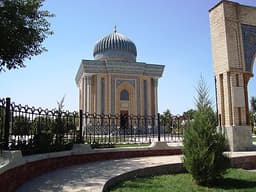
Al-Muazzam Isa
Emperor · Medieval
45.4Total
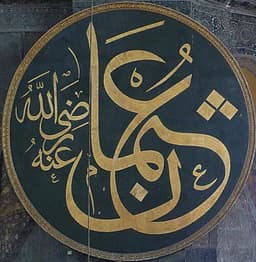
Uthman
Emperor · Medieval
71.0Total
Basic Information
Born
1176
576
Died
1227
656
Era
Medieval
Medieval
Nationality
Ayyubid Dynasty
Rashidun Caliphate
Occupation
Emperor
Emperor
Civilization
Middle Eastern
Middle Eastern
Score Comparison
Military (10%)
10.0
40.0
Political (20%)
42.3
68.0
Influence (20%)
52.5
88.0
Legacy (20%)
42.5
80.0
Leadership (15%)
55.3
65.0
Strategy (15%)
60.0
50.0
TOTAL
45.4
71.0
Al-Muazzam Isa — Complete Timeline
1218 AD
Siege of Damietta (1218-1219)War◆ Major
Al-Muazzam Isa, as Ayyubid ruler of Damascus, participated in the defense against the Fifth Crusade. The Crusaders besieged Damietta in the Nile Delta. Al-Muazzam Isa's forces were unable to prevent the city's fall in 1219, leading to a temporary Crusader occupation.
Fifth CrusadeSiegeCrusader-Ayyubid Wars
Impact: regionaldestructive
1221 AD
Treaty of Al-Kamil (1221)Political Action◆ Major
Al-Muazzam Isa, alongside his brother Sultan Al-Kamil of Egypt, negotiated the end of the Fifth Crusade. The treaty restored Damietta to the Ayyubids in exchange for a truce and the Crusaders' withdrawal from Egypt. This secured Ayyubid control over the region.
Fifth CrusadeTreatyDiplomacy
Impact: regionalconstructive
1226 AD
Conflict with Al-Kamil (1226-1227)War
Al-Muazzam Isa engaged in a power struggle with his brother Sultan Al-Kamil of Egypt. He allied with the Khwarezmian prince Jalal al-Din against Al-Kamil. This internal Ayyubid conflict weakened the dynasty and allowed Crusader states to regain territory.
Ayyubid Civil WarPower StruggleAlliance
Impact: regionaldestructive
1227 AD
Death of Al-Muazzam Isa (1227)Other◆ Major
Al-Muazzam Isa died in Damascus, likely from natural causes. His death ended his rivalry with Al-Kamil and allowed the Egyptian sultan to consolidate Ayyubid power. His son An-Nasir Dawud succeeded him but was later deposed by Al-Kamil.
DeathSuccessionAyyubid Dynasty
Impact: regional
Uthman — Complete Timeline
644 AD
Caliphate of UthmanPolitical Action◆ Major
Uthman ibn Affan became the third caliph after Umar's assassination. His twelve-year reign saw continued expansion but also growing internal dissent, culminating in his assassination. He is known for standardizing the Quranic text.
CaliphateExpansionRashidun
Impact: global
650 AD
Conquest of Armenia and North AfricaWar◆ Major
Under Uthman, Muslim forces conquered Armenia and expanded into North Africa, capturing Tripoli and establishing control over the region. These campaigns extended the caliphate's reach and brought new territories under Islamic rule.
Islamic ConquestArmeniaNorth Africa
Impact: regional
Standardization of the QuranCultural
Uthman ordered the compilation of a standard written version of the Quran, based on the codex of Abu Bakr. He sent copies to major cities and ordered the destruction of variant texts, ensuring uniformity of the Islamic scripture.
QuranStandardizationRashidun
Impact: globalconstructive
656 AD
Siege and Assassination of UthmanPolitical Action
Rebels from Egypt and other provinces besieged Uthman's house in Medina, demanding reforms. After weeks of siege, they broke in and assassinated him while he was reading the Quran. His death sparked the First Fitna (civil war) among Muslims.
AssassinationCivil WarRashidun
Impact: globaltragic
Expert Analysis
Origins
Al-Muazzam Isa (born 1176) was the son of Sultan Al-Adil I, brother of Saladin. As an Ayyubid prince, he was raised in the court of Damascus, receiving military and administrative training typical of the dynasty. His family background placed him at the center of Islamic power struggles against Crusaders and internal rivals.
Uthman ibn Affan (born 576) belonged to the powerful Umayyad clan of the Quraysh tribe in Mecca. He was an early convert to Islam, married to the Prophet Muhammad's daughter Ruqayya. His wealth and social standing made him a key supporter of the nascent Muslim community, and he participated in the emigration to Abyssinia and Medina.
Rise to Power
Al-Muazzam Isa's rise came through Ayyubid succession politics. After his father Al-Adil's death in 1218, the empire was divided among his sons. Isa received Damascus and Palestine. His power base was solidified through his role in the Fifth Crusade, where he coordinated with his brother Al-Kamil of Egypt to defend against Crusader forces. The siege of Damietta (1218-1219) tested his military capabilities, and he scored 60.0 in strategy, though his military score overall is only 10.0.
Uthman became the third caliph in 644 after Umar's assassination. He was elected by a council (shura) appointed by Umar, which included Ali and Talha. Uthman's early reign saw continued expansion, but his policies centralized power in the Umayyad clan, leading to growing discontent. His rise was marked by his piety and connection to the Prophet, but his governance style alienated many.
Leadership & Governance
Al-Muazzam Isa ruled Damascus with a focus on regional autonomy. He maintained the Ayyubid administrative system but often clashed with his brother Al-Kamil over centralization. Isa's leadership score is 55.3, reflecting his ability to hold Damascus but failure to expand influence. He allied with the Khwarezmian prince Jalal al-Din against Al-Kamil in 1226-1227, a move that showed his political maneuvering but ultimately weakened his position.
Uthman governed the rapidly expanding Islamic empire. His major administrative achievement was the standardization of the Quran (circa 650), which unified the Muslim community under a single text. He also appointed relatives to key provincial governorships, such as Muawiyah in Syria and Abdullah ibn Amir in Basra. This nepotism, while strengthening his clan, fueled accusations of corruption and led to revolts. His political score of 68.0 reflects his ability to maintain control for 12 years, but his leadership score of 65.0 is diminished by the civil unrest.
Triumph & Tragedy
Al-Muazzam Isa's greatest triumph was his role in the Treaty of Al-Kamil (1221), which ended the Fifth Crusade and restored Damietta to Ayyubid control. This diplomatic victory preserved Muslim rule in Egypt and Syria. His tragedy was his rivalry with Al-Kamil, which culminated in his death in 1227, likely from natural causes, before he could achieve lasting independence.
Uthman's triumph is the compilation of the Quran, which provided a definitive text that prevented sectarian division (though some variants persisted). His tragedy was his assassination in 656 after a siege of his house in Medina. The rebels, angered by his policies, murdered him while he read the Quran, an event that plunged the caliphate into civil war. His military score of 40.0 reflects the expansion under his reign, but his inability to suppress dissent led to his downfall.
Character & Destiny
Al-Muazzam Isa was cautious and diplomatic, preferring negotiation over conflict. His strategy score of 60.0 indicates competence, but his low military score (10.0) suggests he avoided direct combat. His character drove him to seek alliances, but his rivalry with Al-Kamil doomed his ambitions.
Uthman was pious and generous but also nepotistic and stubborn. He ignored warnings about his relatives' misrule, leading to widespread rebellion. His destiny was shaped by his refusal to compromise, resulting in his assassination. Historians often view him as well-intentioned but politically inept.
Legacy
Al-Muazzam Isa's legacy is limited to his role in the Fifth Crusade and the Ayyubid dynasty's internal struggles. He is remembered as a regional ruler who preserved Damascus but failed to secure lasting power. His influence score is 52.5, reflecting his minor impact on Islamic history.
Uthman's legacy is immense. The standardized Quran remains the authoritative text for over 1.5 billion Muslims. His caliphate also established the administrative framework for the Umayyad and Abbasid empires. However, his assassination triggered the First Fitna (Islamic civil war), which had lasting political and theological consequences. His legacy score is 80.0, and his influence score of 88.0 is among the highest in early Islamic history.
Conclusion
Uthman had a greater impact on world history. His standardization of the Quran shaped Islamic civilization permanently, while Al-Muazzam Isa's influence was confined to a short period and a small region. Uthman's total score of 71.0 far exceeds Isa's 45.4, and his decisions had consequences that persist today. Despite his flaws, Uthman's role in preserving the Quran gives him a legacy that dwarfs Isa's regional rule.
Rankings
🥇
UthmanLeader
Mil: 40.0Pol: 68.0Inf: 88.0
71.0
🥈
Al-Muazzam Isa
Mil: 10.0Pol: 42.3Inf: 52.5
45.4
+25.6 behind
How This Comparison Works
Algorithm
Each figure is scored on 6 dimensions (0—100 scale) based on structured historical data: Military (10%), Political (20%), Influence (20%), Legacy (20%), Leadership (15%), Strategy (15%). The weighted total produces the final ranking.
Data Sources
Scores are computed from structured sub-indicators in the database. Scale factors adjust for era (Ancient ×0.85, Modern ×1.0) and civilization size (Eastern ×1.05, Other ×0.80) to account for differences in population and military scale.
Maximum 3 Figures
Comparisons are limited to 2—3 figures to ensure readability and statistical meaningfulness.
Error Margins
±5 points per dimension — Sub-scores are derived from historical records with inherent uncertainty. Two figures within 5 points on a dimension should be considered roughly equivalent in that area.
Total Score Accuracy
±3 points overall — The weighted combination of 6 dimensions produces a total score with approximately ±3 points of uncertainty. Differences of less than 3 points are not statistically significant— the figures are effectively tied.
Known Limitations
- Historical records are incomplete and uneven across civilizations
- Figures from oral-tradition societies may be underrepresented
- Occupation labels can misclassify multi-role figures
- Scores measure capability and impact, not moral character
- Quantitative scoring is a comparison tool, not absolute truth
Capability Radar
Military (10%) — Battles & Warfare
Battles
45
30
Win Rate
40
40
Expansion
35
40
Political (20%) — Governance & Reform
Reform
30
70
Diplomacy
50
50
Economy
35
50
Influence (20%) — Cultural & Global Reach
Cultural
30
80
Global
25
85
Legacy (20%) — Historical Impact
Historical
35
85
Longevity
20
90
Leadership (15%) — Power & Stability
Tenure
40
60
Stability
30
40
Strategy (15%) — Tactics & Innovation
Strategy
45
30
Tactics
50
20
Reform
30
20
Similar Comparisons
Comments & Discussion
No comments yet. Be the first to share your thoughts!