Loading...
Levy Mwanawasa vs Winnie Byanyima
Winnie Byanyima leads by 2.2 pts · 2 figures compared
…
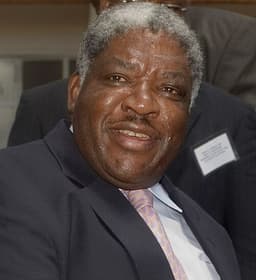
Levy Mwanawasa
Politician · Modern
53.2Total

Winnie Byanyima
Politician · Modern
55.4Total
Basic Information
Born
1948
1959
Died
—
—
Era
Modern
Modern
Nationality
Zambia
Uganda
Occupation
Politician
Politician
Civilization
Other
Other
Score Comparison
Military (10%)
28.8
31.7
Political (20%)
72.0
72.0
Influence (20%)
55.7
58.3
Legacy (20%)
45.0
50.0
Leadership (15%)
66.0
66.0
Strategy (15%)
44.7
44.9
TOTAL
53.2
55.4
Levy Mwanawasa — Complete Timeline
2002 AD
Elected President of ZambiaPolitical Action◆ Major
Mwanawasa won the presidential election as the candidate of the Movement for Multiparty Democracy, succeeding Frederick Chiluba. His victory was initially disputed but later confirmed by the Supreme Court.
ElectionZambiaMMD
Impact: national
Launched Anti-Corruption CampaignPolitical Action◆ Major
Mwanawasa initiated a high-profile anti-corruption drive, including the prosecution of former president Frederick Chiluba for corruption. This marked a significant break from his predecessor and earned him international praise.
Anti-CorruptionChilubaZambia
Impact: nationalconstructive
2006 AD
Re-elected President of ZambiaPolitical Action◆ Major
Mwanawasa won a second term with 43% of the vote in a multi-candidate election. The election was deemed largely free and fair by observers, though opposition parties alleged irregularities.
ElectionZambiaRe-election
Impact: national
2008 AD
Suffered Stroke and Died in OfficeOther◆ Major
Mwanawasa suffered a stroke at the African Union summit in Egypt. He was flown to France for treatment but died in Paris on August 19, 2008. His death triggered a presidential by-election.
DeathStrokeZambia
Impact: nationaltragic
Winnie Byanyima — Complete Timeline
1994 AD
Elected to Ugandan ParliamentPolitical Action◆ Major
Byanyima was elected to the Constituent Assembly of Uganda, which drafted the 1995 constitution. She later served in the Parliament of Uganda, representing Mbarara district, and became a prominent opposition voice against President Yoweri Museveni's government.
UgandaParliamentConstitution
Impact: nationalconstructive
2013 AD
Led Oxfam InternationalPolitical Action◆ Major
Byanyima served as Executive Director of Oxfam International from 2013 to 2019. She led the confederation of 20 charitable organizations focused on fighting poverty and inequality, advocating for tax justice and climate action.
OxfamPovertyInequality
Impact: globalconstructive
2019 AD
Appointed Executive Director of UNAIDSPolitical Action◆ Major
Byanyima was appointed as the Executive Director of the Joint United Nations Programme on HIV/AIDS (UNAIDS). She took leadership of the global effort to end the AIDS epidemic by 2030, overseeing policy and resource allocation across member states.
UNAIDSGlobal HealthHIV/AIDS
Impact: globalconstructive
Expert Analysis
Origins
Levy Mwanawasa was born on September 3, 1948, in Mufulira, Northern Rhodesia (now Zambia), to a family of modest means. His father was a miner, and his mother a homemaker. He studied law at the University of Zambia, earning a Bachelor of Laws in 1973, and later practiced as a lawyer, specializing in corporate law. He founded his own law firm, Mwanawasa & Company, in 1982. Winnie Byanyima was born on January 13, 1959, in Mbarara, Uganda, to a politically active family; her father served as a member of parliament. She studied engineering at the University of Bristol, earning a Bachelor's degree in aerospace engineering in 1981, and later studied at Cranfield University. She worked as an engineer before entering politics, serving as a member of the Constituent Assembly that drafted Uganda's 1995 constitution.
Rise to Power
Mwanawasa entered politics in 1991 when he was elected as a member of the National Assembly for the Movement for Multiparty Democracy (MMD). He served as Minister of Legal Affairs and later as Vice-President under President Frederick Chiluba from 1991 to 1994, but resigned due to disagreements over corruption. In 2001, he won the presidential election as the MMD candidate, succeeding Chiluba. His victory was contested by opponents but upheld by the courts. Byanyima's rise began in the early 1990s when she was elected to the Constituent Assembly. She later served in the Parliament of Uganda from 1994 to 2004, representing the district of Mbarara. She was a vocal critic of President Yoweri Museveni's government and aligned with the opposition. In 2004, she left politics to work internationally, becoming director of gender and development at the United Nations Development Programme (UNDP) before leading Oxfam International from 2013 to 2019.
Leadership & Governance
Mwanawasa, with a political score of 72.0, governed Zambia with a focus on anti-corruption and economic reform. He launched a high-profile anti-corruption campaign, prosecuting former president Chiluba and other officials, which earned him both praise and political enemies. His economic policies aimed at stabilizing the economy, including debt relief and privatization. Byanyima, also with a political score of 72.0, led through influence and advocacy rather than direct governance. As Executive Director of UNAIDS from 2019, she coordinates global HIV/AIDS response, pushing for equitable access to treatment. At Oxfam, she campaigned against inequality and poverty. Her leadership style is more coalition-building and international diplomacy, contrasting with Mwanawasa's domestic, confrontational approach.
Triumph & Tragedy
Mwanawasa's greatest triumph was his anti-corruption drive, which saw the first prosecution of a former African head of state. He also secured debt relief for Zambia and oversaw economic growth. His tragedy was his sudden death in office in 2008 from a stroke, leaving reforms incomplete and his party in disarray. His later years were marred by health issues and political infighting. Byanyima's triumph includes leading Oxfam during a period of global advocacy and taking the helm of UNAIDS, where she has influenced global health policy. Her tragedy is the criticism Oxfam faced under her tenure regarding sexual misconduct scandals within the organization, though she implemented reforms. She also faced personal attacks for her opposition to Museveni.
Character & Destiny
Mwanawasa was known as a quiet, reserved, and principled lawyer, often called "the lawyer" for his meticulous approach. His integrity drove his anti-corruption stance, but his aloofness and health issues limited his political maneuvering. Byanyima is characterized as assertive, strategic, and resilient. Her background in engineering and international diplomacy shaped her data-driven advocacy. Her destiny as a global health leader contrasts with Mwanawasa's as a national reformer; both faced opposition but in different arenas.
Legacy
Mwanawasa's legacy in Zambia is mixed: he is remembered for fighting corruption but criticized for authoritarian tendencies, such as using libel laws against journalists. His anti-corruption efforts set a precedent, but his death left them unfinished. Byanyima's legacy is still unfolding, but she is recognized as a key figure in global health and gender equality. Her work at UNAIDS and Oxfam has shaped international policy on HIV/AIDS and inequality. In Uganda, she remains a symbol of opposition, but her impact is more global than national.
Conclusion
While both scored similarly overall (Mwanawasa 53.2, Byanyima 55.4), Byanyima's influence and legacy scores are higher (58.3 vs 55.7, and 50.0 vs 45.0, respectively). Her impact on global health and inequality through UNAIDS and Oxfam is broader and more enduring than Mwanawasa's domestic anti-corruption campaign, which was cut short by his death. Therefore, Winnie Byanyima had a greater impact on a global scale.
Rankings
🥇
Winnie ByanyimaLeader
Mil: 31.7Pol: 72.0Inf: 58.3
55.4
🥈
Levy Mwanawasa
Mil: 28.8Pol: 72.0Inf: 55.7
53.2
+2.2 behind
How This Comparison Works
Algorithm
Each figure is scored on 6 dimensions (0—100 scale) based on structured historical data: Military (10%), Political (20%), Influence (20%), Legacy (20%), Leadership (15%), Strategy (15%). The weighted total produces the final ranking.
Data Sources
Scores are computed from structured sub-indicators in the database. Scale factors adjust for era (Ancient ×0.85, Modern ×1.0) and civilization size (Eastern ×1.05, Other ×0.80) to account for differences in population and military scale.
Maximum 3 Figures
Comparisons are limited to 2—3 figures to ensure readability and statistical meaningfulness.
Error Margins
±5 points per dimension — Sub-scores are derived from historical records with inherent uncertainty. Two figures within 5 points on a dimension should be considered roughly equivalent in that area.
Total Score Accuracy
±3 points overall — The weighted combination of 6 dimensions produces a total score with approximately ±3 points of uncertainty. Differences of less than 3 points are not statistically significant— the figures are effectively tied.
Known Limitations
- Historical records are incomplete and uneven across civilizations
- Figures from oral-tradition societies may be underrepresented
- Occupation labels can misclassify multi-role figures
- Scores measure capability and impact, not moral character
- Quantitative scoring is a comparison tool, not absolute truth
Capability Radar
Military (10%) — Battles & Warfare
Battles
19
19
Win Rate
25
27
Expansion
26
26
Political (20%) — Governance & Reform
Reform
70
60
Diplomacy
60
70
Economy
55
55
Influence (20%) — Cultural & Global Reach
Cultural
30
55
Global
35
65
Legacy (20%) — Historical Impact
Historical
40
55
Longevity
30
50
Leadership (15%) — Power & Stability
Tenure
65
65
Stability
50
50
Strategy (15%) — Tactics & Innovation
Strategy
30
28
Tactics
35
31
Reform
35
39
Similar Comparisons
Comments & Discussion
No comments yet. Be the first to share your thoughts!