Loading...
Leopold Sedar Senghor vs Levy Mwanawasa
Leopold Sedar Senghor leads by 5.0 pts · 2 figures compared
…

Leopold Sedar Senghor
Politician · Modern
58.2Total
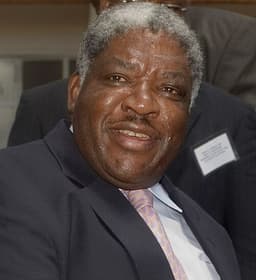
Levy Mwanawasa
Politician · Modern
53.2Total
Basic Information
Born
1906
1948
Died
2001
—
Era
Modern
Modern
Nationality
Senegal
Zambia
Occupation
Politician
Politician
Civilization
Other
Other
Score Comparison
Military (10%)
38.4
28.8
Political (20%)
55.0
72.0
Influence (20%)
68.0
55.7
Legacy (20%)
52.0
45.0
Leadership (15%)
78.0
66.0
Strategy (15%)
43.8
44.7
TOTAL
58.2
53.2
Leopold Sedar Senghor — Complete Timeline
1945 AD
Election to French National AssemblyPolitical Action◆ Major
Senghor was elected as a deputy for Senegal to the French Constituent Assembly. He became one of the first African intellectuals to hold high political office in France, advocating for African rights.
French PoliticsColonial RepresentationIntellectual
Impact: nationalconstructive
Publication of 'Chants d'Ombre'Cultural◆ Major
Senghor published his first major poetry collection 'Chants d'Ombre' (Shadow Songs), which established him as a leading figure in the Negritude literary movement. The poems celebrated African culture and identity.
NegritudePoetryAfrican Literature
Impact: globalconstructive
1960 AD
Independence of SenegalPolitical Action
Senghor became the first President of independent Senegal after the dissolution of the Mali Federation. He led the country through a peaceful transition from French colonial rule to self-governance.
IndependenceDecolonizationPresidency
Impact: nationalconstructive
1976 AD
Introduction of Multi-Party SystemReform◆ Major
Senghor amended the constitution to allow a limited multi-party system, though with restrictions. This was a gradual move toward political liberalization in Senegal, distinguishing it from many one-party African states.
Political ReformDemocratizationMulti-Party
Impact: nationalconstructive
1980 AD
Voluntary Resignation from PresidencyPolitical Action
Senghor voluntarily resigned from the presidency, handing power to his prime minister Abdou Diouf. This was a rare peaceful transfer of power in Africa, setting a precedent for democratic succession.
ResignationPeaceful TransitionDemocracy
Impact: regionalconstructive
1983 AD
Election to Académie FrançaiseCultural◆ Major
Senghor was elected to the Acad
Académie FrançaiseLiterary RecognitionFrancophonie
Impact: globalconstructive
Levy Mwanawasa — Complete Timeline
2002 AD
Elected President of ZambiaPolitical Action◆ Major
Mwanawasa won the presidential election as the candidate of the Movement for Multiparty Democracy, succeeding Frederick Chiluba. His victory was initially disputed but later confirmed by the Supreme Court.
ElectionZambiaMMD
Impact: national
Launched Anti-Corruption CampaignPolitical Action◆ Major
Mwanawasa initiated a high-profile anti-corruption drive, including the prosecution of former president Frederick Chiluba for corruption. This marked a significant break from his predecessor and earned him international praise.
Anti-CorruptionChilubaZambia
Impact: nationalconstructive
2006 AD
Re-elected President of ZambiaPolitical Action◆ Major
Mwanawasa won a second term with 43% of the vote in a multi-candidate election. The election was deemed largely free and fair by observers, though opposition parties alleged irregularities.
ElectionZambiaRe-election
Impact: national
2008 AD
Suffered Stroke and Died in OfficeOther◆ Major
Mwanawasa suffered a stroke at the African Union summit in Egypt. He was flown to France for treatment but died in Paris on August 19, 2008. His death triggered a presidential by-election.
DeathStrokeZambia
Impact: nationaltragic
Expert Analysis
Origins
Leopold Sedar Senghor was born on October 9, 1906, in Joal, Senegal, into a prosperous Serer family. His father was a wealthy merchant, and his mother was a devout Catholic. Senghor attended Catholic missionary schools and later the Lycee Louis-le-Grand in Paris, where he met future French president Georges Pompidou. He became the first African to pass the agrégation in French grammar, teaching at French universities. His early experiences of racism in France fueled his intellectual development. In contrast, Levy Mwanawasa was born on September 3, 1948, in Mufulira, Zambia, to a poor family. His father was a miner, and he grew up in a copperbelt town. He studied law at the University of Zambia, graduating in 1973, and later established a private legal practice. His early career as a lawyer defending political prisoners shaped his later focus on rule of law.
Rise to Power
Senghor's political rise began during World War II, when he was a prisoner of war and later joined the French Resistance. In 1945, he was elected as a deputy for Senegal to the French Constituent Assembly, scoring a major political breakthrough. He co-founded the Senegalese Democratic Bloc in 1948, becoming a leading figure in the independence movement. In 1960, after the dissolution of the Mali Federation, Senghor became the first President of independent Senegal, a turning point that scored 55.0 in political skill. Mwanawasa's rise started in the 1990s as a founding member of the Movement for Multiparty Democracy (MMD) and later as vice-president under Frederick Chiluba. He broke with Chiluba in 1994 over corruption allegations. In 2001, Mwanawasa won the presidency with only 29% of the vote in a disputed election, scoring 72.0 in political maneuvering. His initial mandate was weak, but he consolidated power by launching anti-corruption investigations.
Leadership & Governance
Senghor governed with a centralized, one-party state under the Senegalese Progressive Union. He prioritized cultural diplomacy and Negritude, promoting African identity while maintaining close ties with France. He introduced a limited multi-party system in 1976, scoring 78.0 in leadership for his gradual liberalization. His economic policies were moderate, focusing on agricultural cooperatives and French aid. Mwanawasa, in contrast, pursued aggressive anti-corruption measures, prosecuting former president Chiluba and recovering millions of dollars in stolen assets. His "Zero Tolerance" campaign scored 66.0 in leadership, but his governance was marked by economic reforms under the IMF and World Bank. He faced criticism for his handling of the 2006 election violence and for his authoritarian tendencies, such as using state media for propaganda. While Senghor's leadership style was intellectual and diplomatic, Mwanawasa's was confrontational and legalistic.
Triumph & Tragedy
Senghor's greatest triumph was the peaceful transition of power in 1980 when he voluntarily resigned, a rare event in Africa. His Negritude movement influenced African literature and identity, scoring 68.0 in influence. However, his failure to democratize fully and his close ties to France led to economic dependency and criticism of neocolonialism. He also suppressed opposition movements, such as the 1968 student protests. Mwanawasa's triumph was his anti-corruption campaign, which restored international confidence in Zambia. He also achieved debt relief under the HIPC initiative. His tragedy was his sudden death from a stroke in 2008, leaving his reforms incomplete. He also failed to diversify Zambia's copper-dependent economy, and his human rights record was marred by arrests of journalists and political opponents.
Character & Destiny
Senghor was an intellectual idealist, believing in cultural synthesis and African socialism. His character as a poet-politician shaped his destiny: he used his literary fame to gain political legitimacy but lacked the ruthlessness of many African leaders. His voluntary resignation reflected his belief in institutional succession. Mwanawasa was a pragmatic lawyer, determined to fight corruption even at the cost of political capital. His stubbornness led to a stroke from overwork. Historical assessments praise his integrity but note his limited vision for economic transformation.
Legacy
Senghor's legacy endures through Negritude literature and Senegal's stable democracy. He scored 52.0 in legacy for founding a peaceful political tradition. His influence on African intellectual thought remains significant. Mwanawasa's legacy is mixed: he is remembered as a corruption fighter, but his policies did not end Zambia's poverty. He scored 45.0 in legacy, with his anti-corruption framework still in place but weakened after his death. Both men left institutions—Senghor's multi-party system and Mwanawasa's anti-corruption task force—but Senegal's political stability contrasts with Zambia's continued challenges.
Conclusion
Leopold Senghor had a greater overall impact, scoring 58.2 to Mwanawasa's 53.2. While Mwanawasa's anti-corruption campaign was bold, Senghor's creation of a stable, peaceful Senegal and his cultural influence through Negritude represent more enduring contributions. Senghor's voluntary resignation set a precedent for democratic transitions in Africa, whereas Mwanawasa's reforms were cut short by his death and did not fundamentally transform Zambia's political economy. Thus, Senghor's combination of political leadership and intellectual legacy gives him a slight edge in historical significance.
Rankings
🥇
Leopold Sedar SenghorLeader
Mil: 38.4Pol: 55.0Inf: 68.0
58.2
🥈
Levy Mwanawasa
Mil: 28.8Pol: 72.0Inf: 55.7
53.2
+5.0 behind
How This Comparison Works
Algorithm
Each figure is scored on 6 dimensions (0—100 scale) based on structured historical data: Military (10%), Political (20%), Influence (20%), Legacy (20%), Leadership (15%), Strategy (15%). The weighted total produces the final ranking.
Data Sources
Scores are computed from structured sub-indicators in the database. Scale factors adjust for era (Ancient ×0.85, Modern ×1.0) and civilization size (Eastern ×1.05, Other ×0.80) to account for differences in population and military scale.
Maximum 3 Figures
Comparisons are limited to 2—3 figures to ensure readability and statistical meaningfulness.
Error Margins
±5 points per dimension — Sub-scores are derived from historical records with inherent uncertainty. Two figures within 5 points on a dimension should be considered roughly equivalent in that area.
Total Score Accuracy
±3 points overall — The weighted combination of 6 dimensions produces a total score with approximately ±3 points of uncertainty. Differences of less than 3 points are not statistically significant— the figures are effectively tied.
Known Limitations
- Historical records are incomplete and uneven across civilizations
- Figures from oral-tradition societies may be underrepresented
- Occupation labels can misclassify multi-role figures
- Scores measure capability and impact, not moral character
- Quantitative scoring is a comparison tool, not absolute truth
Capability Radar
Military (10%) — Battles & Warfare
Battles
20
19
Win Rate
27
25
Expansion
26
26
Political (20%) — Governance & Reform
Reform
65
70
Diplomacy
75
60
Economy
60
55
Influence (20%) — Cultural & Global Reach
Cultural
75
30
Global
70
35
Legacy (20%) — Historical Impact
Historical
70
40
Longevity
65
30
Leadership (15%) — Power & Stability
Tenure
70
65
Stability
70
50
Strategy (15%) — Tactics & Innovation
Strategy
30
30
Tactics
32
35
Reform
35
35
Similar Comparisons
Comments & Discussion
No comments yet. Be the first to share your thoughts!