Loading...
Analysis will be generated on first visit.
Scores and timeline are available below. The page will refresh automatically when ready.
Lester B. Pearson vs Napoleon Bonaparte
Napoleon Bonaparte leads by 15.1 pts · 2 figures compared
…

Lester B. Pearson
Politician · Modern
67.3Total
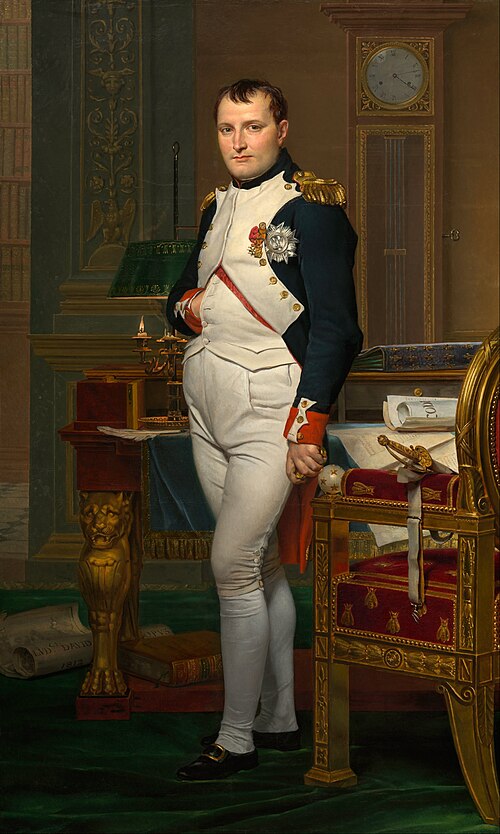
Napoleon Bonaparte
General · Modern
82.4Total
Basic Information
Born
1897
1769
Died
1972
1821
Era
Modern
Modern
Nationality
Canada
France
Occupation
Politician
General
Civilization
Western
Western
Score Comparison
Military (10%)
37.5
94.0
Political (20%)
82.0
75.0
Influence (20%)
80.0
82.0
Legacy (20%)
68.2
78.0
Leadership (15%)
81.6
80.0
Strategy (15%)
35.3
93.0
TOTAL
67.3
82.4
Rankings
🥇
Napoleon BonaparteLeader
Mil: 94.0Pol: 75.0Inf: 82.0
82.4
🥈
Lester B. Pearson
Mil: 37.5Pol: 82.0Inf: 80.0
67.3
+15.1 behind
How This Comparison Works
Algorithm
Each figure is scored on 6 dimensions (0—100 scale) based on structured historical data: Military (10%), Political (20%), Influence (20%), Legacy (20%), Leadership (15%), Strategy (15%). The weighted total produces the final ranking.
Data Sources
Scores are computed from structured sub-indicators in the database. Scale factors adjust for era (Ancient ×0.85, Modern ×1.0) and civilization size (Eastern ×1.05, Other ×0.80) to account for differences in population and military scale.
Maximum 3 Figures
Comparisons are limited to 2—3 figures to ensure readability and statistical meaningfulness.
Error Margins
±5 points per dimension — Sub-scores are derived from historical records with inherent uncertainty. Two figures within 5 points on a dimension should be considered roughly equivalent in that area.
Total Score Accuracy
±3 points overall — The weighted combination of 6 dimensions produces a total score with approximately ±3 points of uncertainty. Differences of less than 3 points are not statistically significant— the figures are effectively tied.
Known Limitations
- Historical records are incomplete and uneven across civilizations
- Figures from oral-tradition societies may be underrepresented
- Occupation labels can misclassify multi-role figures
- Scores measure capability and impact, not moral character
- Quantitative scoring is a comparison tool, not absolute truth
Capability Radar
Military (10%) — Battles & Warfare
Battles
27
95
Win Rate
35
90
Expansion
33
95
Political (20%) — Governance & Reform
Reform
75
95
Diplomacy
95
80
Economy
70
85
Influence (20%) — Cultural & Global Reach
Cultural
60
85
Global
70
90
Legacy (20%) — Historical Impact
Historical
70
95
Longevity
60
90
Leadership (15%) — Power & Stability
Tenure
65
85
Stability
80
70
Strategy (15%) — Tactics & Innovation
Strategy
37
95
Tactics
41
98
Reform
42
92
Analysis will be generated on first visit.
Scores and timeline are available below. The page will refresh automatically when ready.
Lester B. Pearson — Complete Timeline
1957 AD
Won Nobel Peace Prize for Suez Crisis mediationPolitical Action
As Canadian Secretary of State for External Affairs, Pearson proposed the creation of the United Nations Emergency Force to resolve the Suez Crisis. His diplomatic efforts earned him the Nobel Peace Prize.
Nobel PrizeDiplomacySuez Crisis
Impact: globalconstructive
1963 AD
Became Prime Minister of CanadaPolitical Action◆ Major
Pearson became the 14th Prime Minister of Canada, leading a Liberal minority government. His victory followed the collapse of Diefenbaker's government over the nuclear weapons issue.
Government FormationElectionLiberalism
Impact: national
1965 AD
Introduced the Canada Pension PlanReform◆ Major
Pearson's government established the Canada Pension Plan, a contributory social insurance program providing retirement, disability, and survivor benefits. This was a cornerstone of Canada's social safety net.
Social SecurityPensionWelfare
Impact: nationalconstructive
Adopted the Maple Leaf flagCultural◆ Major
Pearson's government adopted the red and white Maple Leaf flag as Canada's national flag, replacing the Canadian Red Ensign. The decision was controversial but became a powerful symbol of Canadian identity.
FlagNational IdentitySymbolism
Impact: nationalconstructive
1966 AD
Introduced universal medicareReform
Pearson's government passed the Medical Care Act, establishing a national system of universal health insurance. The program provided publicly funded hospital and physician services to all Canadians.
HealthcareMedicareSocial Policy
Impact: nationalconstructive
Similar Comparisons
Comments & Discussion
No comments yet. Be the first to share your thoughts!