Loading...
Analysis will be generated on first visit.
Scores and timeline are available below. The page will refresh automatically when ready.
Leo II vs Napoleon Bonaparte
Napoleon Bonaparte leads by 27.4 pts · 2 figures compared
…

Leo II
Emperor · Ancient
55.0Total
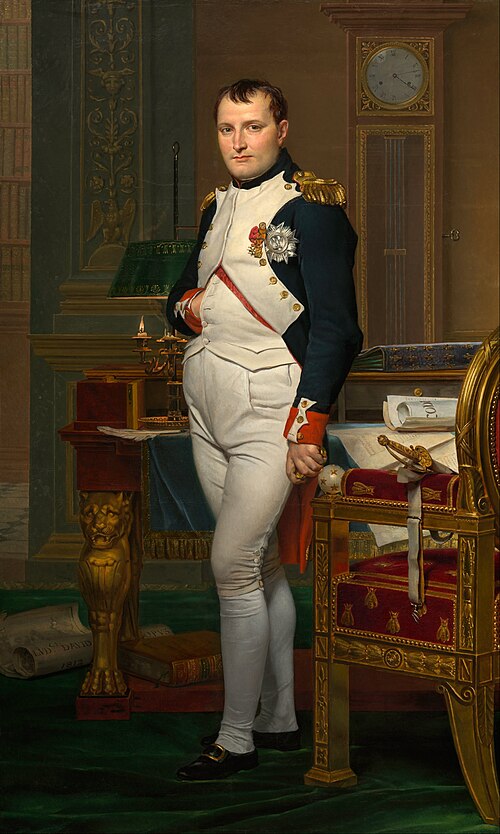
Napoleon Bonaparte
General · Modern
82.4Total
Basic Information
Born
467
1769
Died
474
1821
Era
Ancient
Modern
Nationality
Byzantine Empire
France
Occupation
Emperor
General
Civilization
Western
Western
Score Comparison
Military (10%)
13.7
94.0
Political (20%)
51.8
75.0
Influence (20%)
74.0
82.0
Legacy (20%)
65.5
78.0
Leadership (15%)
44.7
80.0
Strategy (15%)
57.7
93.0
TOTAL
55.0
82.4
Rankings
🥇
Napoleon BonaparteLeader
Mil: 94.0Pol: 75.0Inf: 82.0
82.4
🥈
Leo II
Mil: 13.7Pol: 51.8Inf: 74.0
55.0
+27.4 behind
How This Comparison Works
Algorithm
Each figure is scored on 6 dimensions (0—100 scale) based on structured historical data: Military (10%), Political (20%), Influence (20%), Legacy (20%), Leadership (15%), Strategy (15%). The weighted total produces the final ranking.
Data Sources
Scores are computed from structured sub-indicators in the database. Scale factors adjust for era (Ancient ×0.85, Modern ×1.0) and civilization size (Eastern ×1.05, Other ×0.80) to account for differences in population and military scale.
Maximum 3 Figures
Comparisons are limited to 2—3 figures to ensure readability and statistical meaningfulness.
Error Margins
±5 points per dimension — Sub-scores are derived from historical records with inherent uncertainty. Two figures within 5 points on a dimension should be considered roughly equivalent in that area.
Total Score Accuracy
±3 points overall — The weighted combination of 6 dimensions produces a total score with approximately ±3 points of uncertainty. Differences of less than 3 points are not statistically significant— the figures are effectively tied.
Known Limitations
- Historical records are incomplete and uneven across civilizations
- Figures from oral-tradition societies may be underrepresented
- Occupation labels can misclassify multi-role figures
- Scores measure capability and impact, not moral character
- Quantitative scoring is a comparison tool, not absolute truth
Capability Radar
Military (10%) — Battles & Warfare
Battles
6
95
Win Rate
9
90
Expansion
10
95
Political (20%) — Governance & Reform
Reform
51
95
Diplomacy
49
80
Economy
56
85
Influence (20%) — Cultural & Global Reach
Cultural
70
85
Global
79
90
Legacy (20%) — Historical Impact
Historical
74
95
Longevity
73
90
Leadership (15%) — Power & Stability
Tenure
44
85
Stability
57
70
Strategy (15%) — Tactics & Innovation
Strategy
16
95
Tactics
14
98
Reform
18
92
Analysis will be generated on first visit.
Scores and timeline are available below. The page will refresh automatically when ready.
Leo II — Complete Timeline
473 AD
Proclaimed co-emperor by Leo IPolitical Action◆ Major
Leo I proclaimed his grandson Leo II as co-emperor of the Eastern Roman Empire. This was done to secure the succession for the young boy, who was the son of Zeno and Ariadne. Leo II was only six years old at the time.
Imperial SuccessionCo-Emperor
Impact: national
474 AD
Became sole emperor after Leo I's deathPolitical Action◆ Major
Upon the death of Leo I, Leo II became the sole Eastern Roman Emperor. Due to his young age, his father Zeno was appointed as regent and co-emperor shortly thereafter, effectively ruling in his stead.
Imperial SuccessionRegency
Impact: national
Died of diseaseOther◆ Major
Leo II died of a disease, likely natural causes, after a reign of less than a year. His death left Zeno as the sole emperor, ending the brief reign of the child emperor and preventing any long-term impact of his rule.
DeathImperial Succession
Impact: nationaltragic
Similar Comparisons
Comments & Discussion
No comments yet. Be the first to share your thoughts!