Loading...
Analysis will be generated on first visit.
Scores and timeline are available below. The page will refresh automatically when ready.
Al-Farabi vs Napoleon Bonaparte
Napoleon Bonaparte leads by 18.2 pts · 2 figures compared
…

Al-Farabi
Politician · Medieval
64.2Total
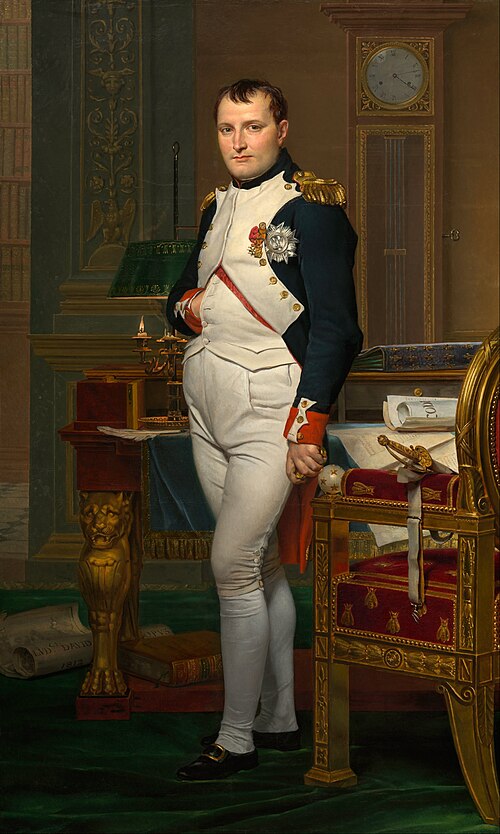
Napoleon Bonaparte
General · Modern
82.4Total
Basic Information
Born
872
1769
Died
950
1821
Era
Medieval
Modern
Nationality
Abbasid Caliphate
France
Occupation
Politician
General
Civilization
Middle Eastern
Western
Score Comparison
Military (10%)
34.6
94.0
Political (20%)
66.8
75.0
Influence (20%)
72.9
82.0
Legacy (20%)
70.0
78.0
Leadership (15%)
72.6
80.0
Strategy (15%)
52.6
93.0
TOTAL
64.2
82.4
Rankings
🥇
Napoleon BonaparteLeader
Mil: 94.0Pol: 75.0Inf: 82.0
82.4
🥈
Al-Farabi
Mil: 34.6Pol: 66.8Inf: 72.9
64.2
+18.2 behind
How This Comparison Works
Algorithm
Each figure is scored on 6 dimensions (0—100 scale) based on structured historical data: Military (10%), Political (20%), Influence (20%), Legacy (20%), Leadership (15%), Strategy (15%). The weighted total produces the final ranking.
Data Sources
Scores are computed from structured sub-indicators in the database. Scale factors adjust for era (Ancient ×0.85, Modern ×1.0) and civilization size (Eastern ×1.05, Other ×0.80) to account for differences in population and military scale.
Maximum 3 Figures
Comparisons are limited to 2—3 figures to ensure readability and statistical meaningfulness.
Error Margins
±5 points per dimension — Sub-scores are derived from historical records with inherent uncertainty. Two figures within 5 points on a dimension should be considered roughly equivalent in that area.
Total Score Accuracy
±3 points overall — The weighted combination of 6 dimensions produces a total score with approximately ±3 points of uncertainty. Differences of less than 3 points are not statistically significant— the figures are effectively tied.
Known Limitations
- Historical records are incomplete and uneven across civilizations
- Figures from oral-tradition societies may be underrepresented
- Occupation labels can misclassify multi-role figures
- Scores measure capability and impact, not moral character
- Quantitative scoring is a comparison tool, not absolute truth
Capability Radar
Military (10%) — Battles & Warfare
Battles
28
95
Win Rate
29
90
Expansion
31
95
Political (20%) — Governance & Reform
Reform
20
95
Diplomacy
30
80
Economy
10
85
Influence (20%) — Cultural & Global Reach
Cultural
85
85
Global
75
90
Legacy (20%) — Historical Impact
Historical
80
95
Longevity
85
90
Leadership (15%) — Power & Stability
Tenure
10
85
Stability
10
70
Strategy (15%) — Tactics & Innovation
Strategy
36
95
Tactics
35
98
Reform
41
92
Analysis will be generated on first visit.
Scores and timeline are available below. The page will refresh automatically when ready.
Al-Farabi — Complete Timeline
930 AD
Commentary on Aristotle's worksCultural◆ Major
Al-Farabi wrote extensive commentaries on Aristotle's logical works, including the Organon. His commentaries clarified Aristotelian logic for the Islamic world, earning him the title 'Second Teacher' (after Aristotle), and influenced later philosophers like Ibn Sina and Ibn Rushd.
LogicAristotelianismCommentary
Impact: globalconstructive
935 AD
Wrote 'The Enumeration of the Sciences'Cultural
Al-Farabi wrote 'The Enumeration of the Sciences' (Ihsa al-Ulum), a classification of knowledge. He categorized sciences into linguistic, logical, mathematical, natural, and political, providing a framework for Islamic education and influencing the curriculum of medieval universities.
Classification of KnowledgeEducationMedieval Science
Impact: globalconstructive
940 AD
Wrote 'The Virtuous City'Cultural◆ Major
Al-Farabi wrote 'The Virtuous City' (Al-Madina al-Fadila), a political and philosophical treatise. He described an ideal society governed by a philosopher-king, synthesizing Plato's Republic with Islamic concepts, and establishing political philosophy in the Islamic tradition.
Political PhilosophyUtopiaIslamic Philosophy
Impact: globalconstructive
945 AD
Served at the court of Sayf al-DawlaPolitical Action
Al-Farabi served at the court of the Hamdanid ruler Sayf al-Dawla in Aleppo. This patronage provided him with resources and a scholarly environment, allowing him to produce his major works. The court was a center of intellectual activity in the 10th century.
PatronageHamdanidsScholarly Life
Impact: regionalconstructive
Similar Comparisons
Comments & Discussion
No comments yet. Be the first to share your thoughts!