Loading...
Bashar al-Assad vs Lee Teng-hui
Lee Teng-hui leads by 7.2 pts · 2 figures compared
…

Bashar al-Assad
Politician · Modern
49.4Total
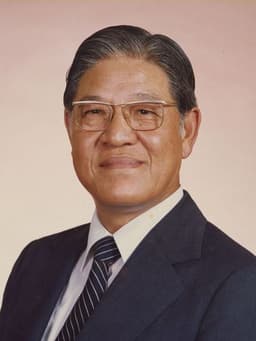
Lee Teng-hui
Politician · Modern
56.6Total
Basic Information
Born
1965
1923
Died
—
—
Era
Modern
Modern
Nationality
Syria
China
Occupation
Politician
Politician
Civilization
Middle Eastern
Eastern
Score Comparison
Military (10%)
50.0
14.3
Political (20%)
36.5
78.0
Influence (20%)
56.4
55.0
Legacy (20%)
45.0
58.0
Leadership (15%)
65.0
78.0
Strategy (15%)
38.3
35.3
TOTAL
49.4
56.6
Bashar al-Assad — Complete Timeline
2000 AD
Damascus Spring ReformsReform◆ Major
Assad initially allowed limited political liberalization, including the release of political prisoners and the emergence of civil society forums. The reforms were quickly reversed after 2001 when the regime cracked down on dissent.
Political ReformLiberalizationCrackdown
Impact: national
Assumption of PresidencyPolitical Action◆ Major
Bashar al-Assad became President of Syria after the death of his father Hafez al-Assad. He was confirmed by a referendum with 99.7% approval, inheriting a repressive authoritarian system.
SuccessionAuthoritarianism
Impact: national
2011 AD
Syrian Civil War BeginsWar
Assad responded to peaceful pro-democracy protests with military force, leading to a full-scale civil war. The conflict killed hundreds of thousands, displaced millions, and drew in regional and global powers.
Civil WarArab SpringHumanitarian Crisis
Impact: globaldestructive
2013 AD
Use of Chemical Weapons in GhoutaWar
Assad's forces used sarin gas in the Ghouta suburbs of Damascus, killing over 1,400 civilians. The attack crossed a US 'red line' but led to a negotiated deal to dismantle Syria's chemical weapons arsenal.
Chemical WeaponsWar CrimeInternational Intervention
Impact: globaldestructive
2015 AD
Russian Military InterventionWar
Assad requested Russian military intervention to support his forces. Russian airstrikes turned the tide of the civil war, allowing Assad to regain control of most of Syria's territory.
Foreign InterventionRussiaMilitary Alliance
Impact: regional
Lee Teng-hui — Complete Timeline
1987 AD
End of martial law and democratizationPolitical Action◆ Major
As president, Lee Teng-hui oversaw the lifting of martial law in Taiwan, ending 38 years of military rule. This allowed for the formation of opposition parties and expanded political freedoms.
Martial LawDemocratization
Impact: nationalprogressive
1996 AD
First direct presidential electionPolitical Action◆ Major
Lee Teng-hui won Taiwan's first direct presidential election, a landmark in the island's democratization. China conducted missile tests near Taiwan during the campaign to intimidate voters.
ElectionDemocratization
Impact: nationalprogressive
1999 AD
Special state-to-state relations statementPolitical Action◆ Major
Lee described cross-strait relations as 'special state-to-state relations,' implying Taiwan's separate sovereignty. This statement angered China and heightened tensions across the Taiwan Strait.
Cross-Strait RelationsSovereignty
Impact: regionaldestructive
Expert Analysis
Origins
Bashar al-Assad, born in 1965 in Damascus, was the second son of Hafez al-Assad, Syria's long-serving dictator. Initially trained as an ophthalmologist in London, his life changed when his elder brother Basil died in 1994, making him heir apparent. He returned to Syria, attended military academy, and was groomed for power. His background was one of privilege within a brutal security state.
Lee Teng-hui, born in 1923 in Taiwan (then under Japanese rule), was a native Taiwanese. He studied agriculture at Kyoto Imperial University and later at Cornell University (PhD in agricultural economics). He worked as a professor and government official under the Kuomintang (KMT) regime, which was dominated by mainlanders. His early life was shaped by Japanese colonialism and later authoritarian KMT rule.
Rise to Power
Assad became president in 2000 after his father's death, confirmed by a referendum with 99.7% approval. He inherited a stable but repressive system. Initially, he allowed a 'Damascus Spring' of political liberalization, but soon cracked down, signaling continuity with his father's rule.
Lee rose through the KMT ranks. He became mayor of Taipei in 1981 and governor of Taiwan Province. In 1988, he succeeded Chiang Ching-kuo as president after Chiang's death. Lee outmaneuvered hardliners to consolidate power, becoming the first native Taiwanese to lead the KMT.
Leadership & Governance
Assad's leadership is defined by his response to the 2011 Syrian Civil War. He met protests with military force, leading to a conflict that killed over 500,000 people and displaced millions. He used chemical weapons in Ghouta (2013), crossing a US 'red line' but avoiding major retaliation due to a Russian-brokered deal. His governance relies on a security apparatus, Alawite minority rule, and alliances with Russia and Iran. He scored 65.0 in leadership but only 38.3 in strategy, as his brutal tactics secured power but destroyed the country.
Lee championed democratization. He lifted martial law in 1987 (as president in 1988), legalized opposition parties, and held Taiwan's first direct presidential election in 1996, winning with 54% despite Chinese missile threats. His 'special state-to-state relations' statement in 1999 asserted Taiwan's separate sovereignty. His political score of 78.0 reflects his role in transitioning Taiwan from authoritarianism to democracy.
Triumph & Tragedy
Assad's triumph is survival: he retained power despite a civil war, foreign intervention, and sanctions. His tragedy is the devastation of Syria: the war created a humanitarian catastrophe, with cities like Aleppo in ruins and the economy collapsed. His use of chemical weapons and barrel bombs drew global condemnation.
Lee's triumph is democratizing Taiwan: he oversaw a peaceful transition, ending 38 years of martial law and establishing a multi-party system. His tragedy is the strain on cross-strait relations: his 'state-to-state' statement provoked Chinese hostility, and his legacy is contested by those who see him as pushing too far toward independence, risking conflict.
Character & Destiny
Assad is cold, calculating, and ruthless. He systematically crushed dissent, prioritizing regime survival over human life. His character—shaped by his father's paranoia and sectarian loyalty—led to a scorched-earth strategy. His destiny was to become a pariah, isolated but entrenched.
Lee is pragmatic, strategic, and reform-minded. He navigated the KMT's internal factions and gradually implemented reforms. His character—a nationalist with democratic ideals—drove him to empower native Taiwanese. His destiny was to be hailed as the 'father of Taiwanese democracy' but also as a destabilizing figure by China.
Legacy
Assad's legacy is one of destruction: he turned Syria into a failed state, caused a refugee crisis, and normalized chemical weapons use. His influence score of 56.4 reflects his impact on regional instability, but his legacy score of 45.0 is low due to the negative consequences.
Lee's legacy is democratic consolidation in Taiwan. He transformed the political system, and his reforms endure: Taiwan remains a vibrant democracy. His legacy score of 58.0 reflects his lasting impact. However, his 'special state-to-state' stance remains a flashpoint.
Conclusion
Lee Teng-hui had greater positive impact, scoring 56.6 total vs Assad's 49.4. Lee's democratization of Taiwan created a model for peaceful transition from authoritarianism, while Assad's rule produced only destruction. Lee's political and leadership scores (78.0 and 78.0) dwarf Assad's (36.5 and 65.0). Assad's military score (50.0) is higher, but his strategy (38.3) failed to preserve the state. In terms of human welfare and institutional legacy, Lee's influence is clearly superior.
Rankings
🥇
Lee Teng-huiLeader
Mil: 14.3Pol: 78.0Inf: 55.0
56.6
🥈
Bashar al-Assad
Mil: 50.0Pol: 36.5Inf: 56.4
49.4
+7.2 behind
How This Comparison Works
Algorithm
Each figure is scored on 6 dimensions (0—100 scale) based on structured historical data: Military (10%), Political (20%), Influence (20%), Legacy (20%), Leadership (15%), Strategy (15%). The weighted total produces the final ranking.
Data Sources
Scores are computed from structured sub-indicators in the database. Scale factors adjust for era (Ancient ×0.85, Modern ×1.0) and civilization size (Eastern ×1.05, Other ×0.80) to account for differences in population and military scale.
Maximum 3 Figures
Comparisons are limited to 2—3 figures to ensure readability and statistical meaningfulness.
Error Margins
±5 points per dimension — Sub-scores are derived from historical records with inherent uncertainty. Two figures within 5 points on a dimension should be considered roughly equivalent in that area.
Total Score Accuracy
±3 points overall — The weighted combination of 6 dimensions produces a total score with approximately ±3 points of uncertainty. Differences of less than 3 points are not statistically significant— the figures are effectively tied.
Known Limitations
- Historical records are incomplete and uneven across civilizations
- Figures from oral-tradition societies may be underrepresented
- Occupation labels can misclassify multi-role figures
- Scores measure capability and impact, not moral character
- Quantitative scoring is a comparison tool, not absolute truth
Capability Radar
Military (10%) — Battles & Warfare
Battles
35
16
Win Rate
30
15
Expansion
10
20
Political (20%) — Governance & Reform
Reform
15
85
Diplomacy
45
70
Economy
20
75
Influence (20%) — Cultural & Global Reach
Cultural
25
60
Global
45
60
Legacy (20%) — Historical Impact
Historical
40
70
Longevity
30
55
Leadership (15%) — Power & Stability
Tenure
70
75
Stability
10
65
Strategy (15%) — Tactics & Innovation
Strategy
35
22
Tactics
40
25
Reform
20
30
Similar Comparisons
Comments & Discussion
No comments yet. Be the first to share your thoughts!