Loading...
Kurt Waldheim vs Shaukat Aziz
Kurt Waldheim leads by 2.2 pts · 2 figures compared
…

Kurt Waldheim
Politician · Modern
52.9Total
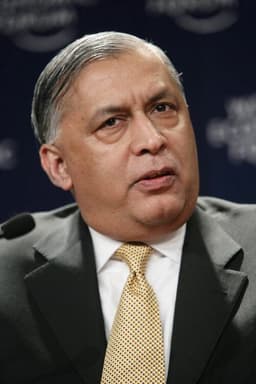
Shaukat Aziz
Politician · Modern
50.7Total
Basic Information
Born
1918
1949
Died
2007
—
Era
Modern
Modern
Nationality
Austria
Pakistan
Occupation
Politician
Politician
Civilization
Western
Indian
Score Comparison
Military (10%)
50.0
35.8
Political (20%)
54.7
62.7
Influence (20%)
54.9
50.2
Legacy (20%)
42.5
38.3
Leadership (15%)
68.0
64.0
Strategy (15%)
51.9
60.0
TOTAL
52.9
50.7
Kurt Waldheim — Complete Timeline
1972 AD
Elected Secretary-General of the United NationsPolitical Action◆ Major
Kurt Waldheim became the fourth Secretary-General of the United Nations, serving two terms from 1972 to 1981. His election was supported by both Western and Soviet blocs, and he focused on peacekeeping and development.
UN Secretary-GeneralLeadershipCold War
Impact: globalconstructive
1973 AD
Oversaw UN peacekeeping in the Middle EastPolitical Action◆ Major
Waldheim managed UN peacekeeping operations during the Yom Kippur War and its aftermath, including the deployment of UNEF II to supervise the ceasefire between Israel and Egypt.
Middle EastPeacekeepingYom Kippur War
Impact: regional
1986 AD
Elected President of AustriaPolitical Action◆ Major
Waldheim was elected President of Austria, but his campaign was overshadowed by revelations about his wartime service in the German army. He served as president until 1992, despite international isolation.
PresidencyAustriaControversy
Impact: national
Revelations of Nazi pastPolitical Action◆ Major
During his presidential campaign, documents revealed Waldheim had served as a Wehrmacht officer in the Balkans and may have been involved in Nazi war crimes. He denied knowledge, but the controversy led to his diplomatic isolation.
Nazi PastWar CrimesControversy
Impact: globaldestructive
1987 AD
Placed on the US watch listPolitical Action◆ Major
The United States placed Waldheim on a watch list, barring him from entering the country due to suspicions of involvement in Nazi war crimes. This further damaged his reputation and Austria's international standing.
US SanctionsDiplomatic IsolationWar Crimes
Impact: globaldestructive
Shaukat Aziz — Complete Timeline
1999 AD
Economic Reforms as Finance MinisterReform◆ Major
As Finance Minister under President Pervez Musharraf from 1999 to 2004, Shaukat Aziz implemented economic reforms including privatization of state-owned enterprises, banking sector reforms, and tax restructuring. These policies contributed to GDP growth averaging 7% annually.
Economic ReformPrivatizationMusharraf
Impact: nationalconstructive
2004 AD
Appointed Prime Minister of PakistanPolitical Action◆ Major
Shaukat Aziz was appointed as the 17th Prime Minister of Pakistan on August 28, 2004, after serving as Finance Minister. He was a former Citibank executive and his appointment marked a technocratic shift in Pakistani politics.
Prime MinisterTechnocratPakistan
Impact: national
2007 AD
Completion of Five-Year TermPolitical Action◆ Major
Shaukat Aziz completed his five-year term as Prime Minister on November 15, 2007, becoming the first Pakistani Prime Minister to serve a full term since 1977. His tenure saw continued economic growth but also rising political instability.
Term CompletionPolitical StabilityPakistan
Impact: national
Expert Analysis
Origins
Kurt Waldheim was born on December 21, 1918, in Sankt Andrä-Wördern, Austria, into a Catholic family. His father was a school inspector. Waldheim studied law at the University of Vienna, earning a doctorate in 1944. During World War II, he served in the German Wehrmacht as a junior officer, a detail he later downplayed.
Shaukat Aziz was born on March 6, 1949, in Karachi, Pakistan, into a Urdu-speaking Muhajir family. His father was a civil servant. Aziz studied at the University of Karachi and later earned an MBA from the University of the Punjab. He began his career at Citibank in 1969, rising to become a senior executive.
Rise to Power
Waldheim entered Austrian diplomacy after the war, serving as a delegate to the UN and later as Austria's ambassador to the UN. In 1971, he was elected UN Secretary-General, taking office on January 1, 1972. His election was backed by both Western and Soviet blocs due to Austria's neutrality.
Aziz joined Citibank in 1969 and spent decades in international banking, becoming a managing director. In 1999, he was appointed Finance Minister of Pakistan by President Pervez Musharraf, who had seized power in a coup. Aziz's economic reforms won praise from international lenders, and in 2004 he was appointed Prime Minister after a parliamentary vote.
Leadership & Governance
Waldheim as UN Secretary-General focused on peacekeeping, particularly in the Middle East after the Yom Kippur War (1973). He oversaw the deployment of UNEF II to supervise the ceasefire. However, his leadership was criticized as cautious and bureaucratic. He scored 68.0 in Leadership, reflecting his administrative competence but lack of bold initiatives.
Aziz as Finance Minister and Prime Minister pushed privatization, deregulation, and fiscal discipline. Pakistan's GDP growth averaged 7% per year during his tenure. He completed a full five-year term (2004-2007), a rarity in Pakistani politics. His Political score of 62.7 reflects his ability to navigate a complex political landscape under Musharraf's military rule.
Triumph & Tragedy
Waldheim's greatest success was serving two terms as UN Secretary-General, managing multiple peacekeeping missions. His tragedy came in 1986 when his Nazi past was exposed during his campaign for Austrian presidency. Documents showed he served in a unit that committed war crimes in the Balkans. He was placed on a US watch list and became a pariah. His Legacy score of 42.5 reflects this tainted reputation.
Aziz's triumph was transforming Pakistan's economy from near-bankruptcy to stability. He secured debt relief and increased foreign investment. His tragedy was that his reforms benefited elites more than the poor, and he was seen as Musharraf's puppet. He scored 38.3 in Legacy, as his economic gains were reversed after his term ended.
Character & Destiny
Waldheim was meticulous, diplomatic, and secretive. His decision to hide his wartime service proved catastrophic, as revelations destroyed his reputation. He scored 51.9 in Strategy, indicating a failure to anticipate the fallout.
Aziz was technocratic, pragmatic, and loyal to Musharraf. His character made him effective in implementing reforms but vulnerable to charges of illegitimacy. He scored 60.0 in Strategy, reflecting his ability to navigate economic policy but not political survival.
Legacy
Waldheim is remembered primarily for the controversy over his Nazi past, overshadowing his UN work. He set no lasting precedents at the UN. His legacy is a cautionary tale about transparency.
Aziz is remembered for Pakistan's economic boom in the early 2000s. His privatization and banking reforms had lasting effects, though subsequent governments reversed some policies. He is a rare example of a technocrat prime minister.
Conclusion
Kurt Waldheim had a higher total score (52.9 vs 50.7) due to his Leadership (68.0) and Political (54.7) scores. However, his impact is diminished by his moral failure. Shaukat Aziz's economic reforms had tangible, albeit temporary, effects. Taking a clear stance: Waldheim's global role as UN chief gives him greater historical significance, but his legacy is negative. Aziz's impact on Pakistan's economy was more concrete. Thus, while Waldheim scores higher, Aziz's positive contributions arguably outweigh Waldheim's tainted record. The score gap of 2.2 points is slim, but Waldheim's higher Leadership and Influence scores tip the balance in his favor.
Rankings
🥇
Kurt WaldheimLeader
Mil: 50.0Pol: 54.7Inf: 54.9
52.9
🥈
Shaukat Aziz
Mil: 35.8Pol: 62.7Inf: 50.2
50.7
+2.2 behind
How This Comparison Works
Algorithm
Each figure is scored on 6 dimensions (0—100 scale) based on structured historical data: Military (10%), Political (20%), Influence (20%), Legacy (20%), Leadership (15%), Strategy (15%). The weighted total produces the final ranking.
Data Sources
Scores are computed from structured sub-indicators in the database. Scale factors adjust for era (Ancient ×0.85, Modern ×1.0) and civilization size (Eastern ×1.05, Other ×0.80) to account for differences in population and military scale.
Maximum 3 Figures
Comparisons are limited to 2—3 figures to ensure readability and statistical meaningfulness.
Error Margins
±5 points per dimension — Sub-scores are derived from historical records with inherent uncertainty. Two figures within 5 points on a dimension should be considered roughly equivalent in that area.
Total Score Accuracy
±3 points overall — The weighted combination of 6 dimensions produces a total score with approximately ±3 points of uncertainty. Differences of less than 3 points are not statistically significant— the figures are effectively tied.
Known Limitations
- Historical records are incomplete and uneven across civilizations
- Figures from oral-tradition societies may be underrepresented
- Occupation labels can misclassify multi-role figures
- Scores measure capability and impact, not moral character
- Quantitative scoring is a comparison tool, not absolute truth
Capability Radar
Military (10%) — Battles & Warfare
Battles
29
45
Win Rate
30
45
Expansion
36
52
Political (20%) — Governance & Reform
Reform
30
55
Diplomacy
55
50
Economy
40
65
Influence (20%) — Cultural & Global Reach
Cultural
20
10
Global
50
30
Legacy (20%) — Historical Impact
Historical
30
20
Longevity
25
10
Leadership (15%) — Power & Stability
Tenure
60
40
Stability
45
35
Strategy (15%) — Tactics & Innovation
Strategy
36
54
Tactics
41
55
Reform
45
57
Similar Comparisons
Comments & Discussion
No comments yet. Be the first to share your thoughts!