Loading...
This comparison has not been analyzed yet.
One-time AI generation (~1 minute). Scores and timeline are already available below.
Kuroda Yoshitaka vs Tomoyuki Yamashita
Kuroda Yoshitaka leads by 6.9 pts · 2 figures compared
…
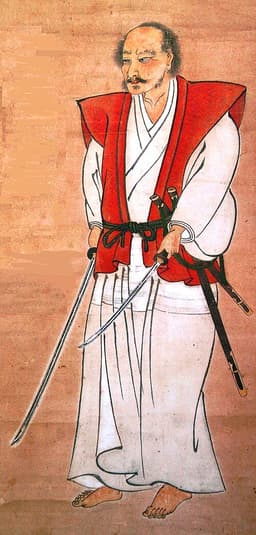
Kuroda Yoshitaka
General · Modern
60.6Total

Tomoyuki Yamashita
General · Modern
53.7Total
Basic Information
Born
1546
1885
Died
1604
1946
Era
Modern
Modern
Nationality
Japan
Japan
Occupation
General
General
Civilization
Eastern
Eastern
Score Comparison
Military (10%)
65.0
82.0
Political (20%)
68.0
35.1
Influence (20%)
56.4
60.0
Legacy (20%)
49.2
50.0
Leadership (15%)
72.0
43.8
Strategy (15%)
67.2
61.2
TOTAL
60.6
53.7
Kuroda Yoshitaka — Complete Timeline
1582 AD
Siege of TakamatsuWar◆ Major
Kuroda Yoshitaka devised the strategy of flooding Takamatsu Castle during Hideyoshi's campaign against the Mori clan. The siege was ongoing when Oda Nobunaga was assassinated, leading to a negotiated peace.
SiegeMilitary strategy
Impact: regional
1583 AD
Battle of ShizugatakeWar◆ Major
Kuroda Yoshitaka served as a strategist for Toyotomi Hideyoshi at the Battle of Shizugatake. His planning contributed to Hideyoshi's victory over Shibata Katsuie, helping secure Hideyoshi's position as Nobunaga's successor.
Sengoku periodBattle
Impact: national
Conversion to ChristianityCultural
Kuroda Yoshitaka converted to Christianity and took the baptismal name Don Simeon. He became a prominent Christian daimyo, though his faith was pragmatic and he later renounced it under pressure.
ChristianityReligion
1587 AD
Kyushu CampaignWar
Kuroda Yoshitaka served as a key strategist in Hideyoshi's invasion of Kyushu against the Shimazu clan. His planning helped secure a swift victory, bringing Kyushu under Hideyoshi's control.
CampaignUnification
Impact: regional
Tomoyuki Yamashita — Complete Timeline
1942 AD
Capture of SingaporeWar◆ Major
Yamashita commanded the 25th Army in the Malayan campaign, culminating in the capture of Singapore. His forces advanced rapidly through Malaya, outflanking British defenses. The surrender of 80,000 British and Commonwealth troops at Singapore was the largest British surrender in history.
World War IIPacific WarSingapore
Impact: globaldestructive
1944 AD
Battle of Leyte GulfWar◆ Major
Yamashita was appointed commander of the 14th Area Army in the Philippines. He oversaw the defense of Leyte and Luzon against American forces. The Battle of Leyte Gulf resulted in a decisive American naval victory, but Yamashita's forces continued to resist on Luzon.
World War IIPacific WarPhilippines
Impact: regionaldestructive
1945 AD
Defense of LuzonWar◆ Major
Yamashita commanded the defense of Luzon against the American invasion. His forces conducted a prolonged retreat into the mountains, fighting a delaying action. The campaign resulted in heavy casualties on both sides and the destruction of Manila. Yamashita surrendered in September 1945.
World War IIPacific WarPhilippines
Impact: regionaldestructive
Trial and ExecutionPolitical Action◆ Major
Yamashita was tried by a U.S. military commission in Manila for war crimes, including the Manila massacre. He was held responsible for atrocities committed by troops under his command, even if he did not order them. He was found guilty and executed by hanging in February 1946.
World War IIWar Crimes TrialExecution
Impact: globaltragic
This comparison has not been analyzed yet.
One-time AI generation (~1 minute). Scores and timeline are already available below.
Rankings
🥇
Kuroda YoshitakaLeader
Mil: 65.0Pol: 68.0Inf: 56.4
60.6
🥈
Tomoyuki Yamashita
Mil: 82.0Pol: 35.1Inf: 60.0
53.7
+6.9 behind
How This Comparison Works
Algorithm
Each figure is scored on 6 dimensions (0—100 scale) based on structured historical data: Military (10%), Political (20%), Influence (20%), Legacy (20%), Leadership (15%), Strategy (15%). The weighted total produces the final ranking.
Data Sources
Scores are computed from structured sub-indicators in the database. Scale factors adjust for era (Ancient ×0.85, Modern ×1.0) and civilization size (Eastern ×1.05, Other ×0.80) to account for differences in population and military scale.
Maximum 3 Figures
Comparisons are limited to 2—3 figures to ensure readability and statistical meaningfulness.
Error Margins
±5 points per dimension — Sub-scores are derived from historical records with inherent uncertainty. Two figures within 5 points on a dimension should be considered roughly equivalent in that area.
Total Score Accuracy
±3 points overall — The weighted combination of 6 dimensions produces a total score with approximately ±3 points of uncertainty. Differences of less than 3 points are not statistically significant— the figures are effectively tied.
Known Limitations
- Historical records are incomplete and uneven across civilizations
- Figures from oral-tradition societies may be underrepresented
- Occupation labels can misclassify multi-role figures
- Scores measure capability and impact, not moral character
- Quantitative scoring is a comparison tool, not absolute truth
Capability Radar
Military (10%) — Battles & Warfare
Battles
60
75
Win Rate
65
70
Expansion
60
70
Political (20%) — Governance & Reform
Reform
45
20
Diplomacy
70
25
Economy
40
15
Influence (20%) — Cultural & Global Reach
Cultural
40
40
Global
30
50
Legacy (20%) — Historical Impact
Historical
55
60
Longevity
40
40
Leadership (15%) — Power & Stability
Tenure
50
30
Stability
50
10
Strategy (15%) — Tactics & Innovation
Strategy
85
80
Tactics
80
85
Reform
55
40
Similar Comparisons
Comments & Discussion
No comments yet. Be the first to share your thoughts!