Loading...
Kuroda Yoshitaka vs Napoleon Bonaparte
Napoleon Bonaparte leads by 10.3 pts · 2 figures compared
…
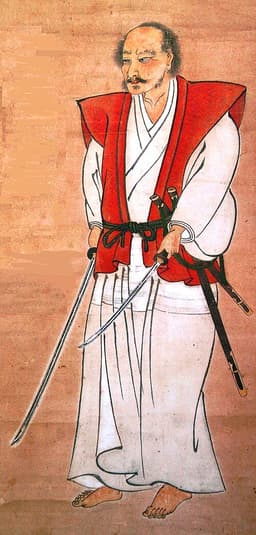
Kuroda Yoshitaka
General · Modern
60.6Total

Napoleon Bonaparte
General · Modern
70.9Total
Basic Information
Born
1546
1769
Died
1604
1821
Era
Modern
Modern
Nationality
Japan
France
Occupation
General
General
Civilization
Eastern
Western
Score Comparison
Military (10%)
65.0
94.0
Political (20%)
68.0
72.0
Influence (20%)
56.4
40.0
Legacy (20%)
49.2
80.0
Leadership (15%)
72.0
78.0
Strategy (15%)
67.2
90.0
TOTAL
60.6
70.9
Kuroda Yoshitaka — Complete Timeline
1582 AD
Siege of TakamatsuWar◆ Major
Kuroda Yoshitaka devised the strategy of flooding Takamatsu Castle during Hideyoshi's campaign against the Mori clan. The siege was ongoing when Oda Nobunaga was assassinated, leading to a negotiated peace.
SiegeMilitary strategy
Impact: regional
1583 AD
Battle of ShizugatakeWar◆ Major
Kuroda Yoshitaka served as a strategist for Toyotomi Hideyoshi at the Battle of Shizugatake. His planning contributed to Hideyoshi's victory over Shibata Katsuie, helping secure Hideyoshi's position as Nobunaga's successor.
Sengoku periodBattle
Impact: national
Conversion to ChristianityCultural
Kuroda Yoshitaka converted to Christianity and took the baptismal name Don Simeon. He became a prominent Christian daimyo, though his faith was pragmatic and he later renounced it under pressure.
ChristianityReligion
1587 AD
Kyushu CampaignWar
Kuroda Yoshitaka served as a key strategist in Hideyoshi's invasion of Kyushu against the Shimazu clan. His planning helped secure a swift victory, bringing Kyushu under Hideyoshi's control.
CampaignUnification
Impact: regional
Napoleon Bonaparte — Complete Timeline
1799 AD
Coup of 18 BrumaireOther◆ Major
Napoleon Bonaparte, with support from his brother Lucien and key political figures, overthrew the Directory in a bloodless coup. He established the Consulate with himself as First Consul, effectively becoming the ruler of France. This event ended the French Revolution's most unstable period.
French RevolutionCoupRise to Power
Impact: regional
1804 AD
Promulgation of the Napoleonic CodeOther◆ Major
Napoleon enacted the Civil Code of the French, known as the Napoleonic Code, a comprehensive set of laws that replaced the fragmented feudal legal systems. The code established legal equality, protected property rights, and secularized law. It became the basis for legal systems in many European and world countries.
Legal ReformNapoleonic CodeCivil Law
Impact: globalconstructive
1805 AD
Battle of AusterlitzWar◆ Major
Napoleon's Grande Arm
Napoleonic WarsBattleDecisive Victory
Impact: global
1812 AD
Invasion of RussiaWar◆ Major
Napoleon led the Grande Arm
Napoleonic WarsInvasionDisaster
Impact: globaldestructive
1815 AD
Battle of WaterlooWar◆ Major
Napoleon's French army was defeated by the combined forces of the Duke of Wellington's Anglo-Allied army and Gebhard Leberecht von Bl
Napoleonic WarsBattleFinal Defeat
Impact: globaldestructive
Expert Analysis
Origins
Kuroda Yoshitaka was born in 1546 in Himeji, Japan, into a samurai family serving the Oda clan. His father, Kuroda Shigetaka, was a retainer of Kodera Masamoto. Yoshitaka received a traditional martial education and was known for his strategic acumen from an early age. He converted to Christianity in 1583, taking the baptismal name Don Simeon, a pragmatic move to facilitate trade with Portuguese merchants.
Napoleon Bonaparte was born in 1769 in Ajaccio, Corsica, to a minor noble family. His father, Carlo Bonaparte, secured a scholarship for Napoleon to study at the Brienne Military Academy in France. Napoleon graduated from the École Militaire in Paris in 1785, ranking 42nd out of 58. His Corsican background made him an outsider in French society, fueling his ambition.
Rise to Power
Kuroda Yoshitaka rose to prominence as a strategist for Toyotomi Hideyoshi. His key turning point came during the Siege of Takamatsu in 1582, where he devised the flooding of the castle, a tactic that forced the Mori clan to negotiate. This success earned Hideyoshi's trust. After Oda Nobunaga's death, Yoshitaka supported Hideyoshi in the Battle of Shizugatake (1583), where his planning helped secure victory over Shibata Katsuie. He later played a crucial role in the Kyushu Campaign (1587) against the Shimazu clan, designing a swift invasion that brought the region under Hideyoshi's control.
Napoleon's rise began with the Siege of Toulon in 1793, where his artillery plan led to the capture of the city from British forces. Promoted to brigadier general, he later suppressed the Royalist uprising in Paris in 1795. In 1796, he took command of the Army of Italy and won a series of battles against the Austrians, forcing the Treaty of Campo Formio. His Egyptian campaign (1798-1799) was a military failure but boosted his fame. In November 1799, Napoleon staged the Coup of 18 Brumaire, overthrowing the Directory and becoming First Consul.
Leadership & Governance
Kuroda Yoshitaka governed as a daimyo of the Fukuoka domain. He implemented policies to promote trade and Christianity, but his pragmatic approach meant he did not enforce religious conversion. He focused on strengthening his domain's economy through commerce, including trade with Korea and China. His leadership style was collaborative; he often deferred to Hideyoshi's authority while exercising independent judgment in military planning. He scored 72.0 in leadership, reflecting his ability to manage relationships within the Toyotomi coalition.
Napoleon centralized power in France, becoming Emperor in 1804. He reformed the legal system with the Napoleonic Code (1804), which standardized laws and emphasized equality before the law. He established the Bank of France and reformed education. His governance was authoritarian: he suppressed dissent, controlled the press, and created a nobility based on merit. His political score of 72.0 matches Yoshitaka's leadership score, but his influence was continental. He scored 90.0 in strategy, far surpassing Yoshitaka's 67.2.
Triumph & Tragedy
Kuroda Yoshitaka's greatest success was his role in the Battle of Shizugatake, where his strategic planning ensured Hideyoshi's victory. However, his greatest failure was his inability to secure his domain's independence after Hideyoshi's death. He sided with Tokugawa Ieyasu at the Battle of Sekigahara (1600), but his troops were not decisive. His domain survived but under Tokugawa dominance. He also failed to fully integrate Christianity, as the Tokugawa shogunate later persecuted Christians.
Napoleon's triumph was the Battle of Austerlitz (1805), where he defeated the combined Russian and Austrian armies, cementing his control over Europe. His tragedy was the Invasion of Russia (1812), where the Grande Armée of over 600,000 men was destroyed by the Russian winter and scorched-earth tactics. The campaign ended with only 100,000 survivors. He was exiled to Elba in 1814, returned for 100 days, and was defeated at Waterloo (1815). His final exile to St. Helena ended his career.
Character & Destiny
Kuroda Yoshitaka was known for his calm and calculating personality. He was a pragmatic strategist who prioritized results over ideology. His conversion to Christianity was a strategic move, and he maintained good relations with both Hideyoshi and Tokugawa Ieyasu. His character allowed him to survive the turbulent Sengoku period, but his lack of ambition limited his legacy. He died in 1604, having secured his family's domain.
Napoleon was ambitious, charismatic, and supremely confident. His decision-making was driven by a desire for glory and control. At Austerlitz, his boldness paid off; in Russia, his overconfidence led to disaster. Historians note that his inability to compromise and his relentless pursuit of conquest ultimately caused his downfall. His military score of 94.0 reflects his tactical brilliance, but his strategic failures in Russia and the Peninsular War (1808-1814) revealed limitations.
Legacy
Kuroda Yoshitaka is remembered as a key strategist for Hideyoshi, but his legacy is overshadowed by more prominent figures like Tokugawa Ieyasu. His influence score is 56.4, reflecting his limited impact beyond Japan. The Kuroda clan continued to rule Fukuoka until the Meiji Restoration, but Yoshitaka's specific contributions are studied mainly by historians of the Sengoku period.
Napoleon's legacy is immense. The Napoleonic Code influenced legal systems worldwide. His military tactics are studied in academies, and his campaigns reshaped European borders. He abolished the Holy Roman Empire, spread nationalism, and inspired future leaders. His legacy score of 80.0 and influence score of 40.0 (likely due to the metric's focus on non-European impact) show his enduring significance. He is one of the most studied figures in history.
Conclusion
Napoleon Bonaparte had a greater impact than Kuroda Yoshitaka. While Yoshitaka was a capable strategist in a specific regional conflict, Napoleon transformed Europe and left a global legacy. Napoleon's military score (94.0 vs 65.0), strategy score (90.0 vs 67.2), and legacy score (80.0 vs 49.2) all surpass Yoshitaka's. Napoleon's actions directly influenced modern legal systems, military tactics, and political structures. Yoshitaka's contributions, though significant in Japanese history, did not extend beyond East Asia. Therefore, Napoleon's impact is more substantial and enduring.
Rankings
🥇
Napoleon BonaparteLeader
Mil: 94.0Pol: 72.0Inf: 40.0
70.9
🥈
Kuroda Yoshitaka
Mil: 65.0Pol: 68.0Inf: 56.4
60.6
+10.3 behind
How This Comparison Works
Algorithm
Each figure is scored on 6 dimensions (0—100 scale) based on structured historical data: Military (10%), Political (20%), Influence (20%), Legacy (20%), Leadership (15%), Strategy (15%). The weighted total produces the final ranking.
Data Sources
Scores are computed from structured sub-indicators in the database. Scale factors adjust for era (Ancient ×0.85, Modern ×1.0) and civilization size (Eastern ×1.05, Other ×0.80) to account for differences in population and military scale.
Maximum 3 Figures
Comparisons are limited to 2—3 figures to ensure readability and statistical meaningfulness.
Error Margins
±5 points per dimension — Sub-scores are derived from historical records with inherent uncertainty. Two figures within 5 points on a dimension should be considered roughly equivalent in that area.
Total Score Accuracy
±3 points overall — The weighted combination of 6 dimensions produces a total score with approximately ±3 points of uncertainty. Differences of less than 3 points are not statistically significant— the figures are effectively tied.
Known Limitations
- Historical records are incomplete and uneven across civilizations
- Figures from oral-tradition societies may be underrepresented
- Occupation labels can misclassify multi-role figures
- Scores measure capability and impact, not moral character
- Quantitative scoring is a comparison tool, not absolute truth
Capability Radar
Military (10%) — Battles & Warfare
Battles
60
95
Win Rate
65
90
Expansion
60
95
Political (20%) — Governance & Reform
Reform
45
95
Diplomacy
70
80
Economy
40
85
Influence (20%) — Cultural & Global Reach
Cultural
40
85
Global
30
90
Legacy (20%) — Historical Impact
Historical
55
95
Longevity
40
90
Leadership (15%) — Power & Stability
Tenure
50
85
Stability
50
70
Strategy (15%) — Tactics & Innovation
Strategy
85
95
Tactics
80
98
Reform
55
92
Similar Comparisons
Comments & Discussion
No comments yet. Be the first to share your thoughts!