Loading...
Kublai Khan vs Philip I of France
Kublai Khan leads by 28.9 pts · 2 figures compared
…
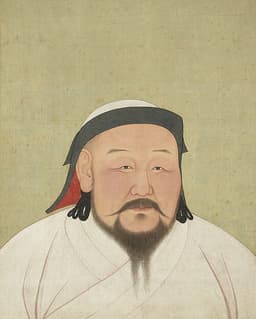
Kublai Khan
Emperor · Medieval
74.3Total
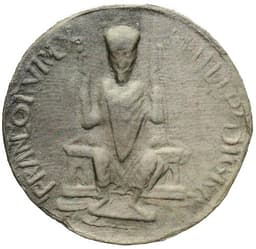
Philip I of France
Emperor · Medieval
45.4Total
Basic Information
Born
1215
1052
Died
1294
1108
Era
Medieval
Medieval
Nationality
Mongolia
France
Occupation
Emperor
Emperor
Civilization
Eastern
Western
Score Comparison
Military (10%)
77.5
50.0
Political (20%)
79.2
36.5
Influence (20%)
75.0
49.4
Legacy (20%)
70.0
40.8
Leadership (15%)
72.0
65.7
Strategy (15%)
76.0
25.0
TOTAL
74.3
45.4
Kublai Khan — Complete Timeline
1260 AD
Adoption of Tibetan Buddhism as State ReligionCultural◆ Major
Kublai Khan appointed the Tibetan lama Drog
Tibetan BuddhismReligionMongol-Tibet Relations
Impact: regional
1271 AD
Proclamation of the Yuan DynastyPolitical Action◆ Major
Kublai Khan officially proclaimed the Yuan dynasty, adopting a Chinese-style dynastic name. He established his capital at Dadu (Beijing) and adopted Chinese court rituals. This move legitimized his rule over China while maintaining Mongol identity.
Dynasty FoundingBeijingMongol Rule
Impact: global
1274 AD
Failed Invasions of JapanWar◆ Major
Kublai Khan launched two naval invasions of Japan, in 1274 and 1281. Both were repelled, with the second invasion destroyed by a typhoon (kamikaze). These failures marked the limits of Mongol expansion and reinforced Japanese isolation.
Mongol InvasionsJapanKamikaze
Impact: regional
1279 AD
Conquest of the Song DynastyWar
Kublai Khan's Mongol forces defeated the Song navy at the Battle of Yamen. The last Song emperor drowned, ending the Song dynasty. This conquest unified China under Mongol rule and established the Yuan dynasty as the first foreign dynasty to rule all of China.
Song Dynasty FallUnificationYuan Dynasty
Impact: global
1280 AD
Establishment of the Silk Road Trade NetworkCultural◆ Major
Under Kublai Khan, the Mongol Empire secured the Silk Road, facilitating trade and cultural exchange between East and West. Marco Polo visited his court. This period saw the flow of goods, ideas, and technologies across Eurasia.
Silk RoadTradeCultural Exchange
Impact: globalconstructive
Philip I of France — Complete Timeline
1060 AD
Reign as King of the FranksPolitical Action◆ Major
Philip I succeeded his father Henry I as King of the Franks. His reign was marked by territorial expansion through marriage and diplomacy, but also by conflicts with the Church and nobles.
KingshipCapetianReign
Impact: national
1077 AD
Acquisition of the VexinPolitical Action
Philip I acquired the Vexin region through marriage to Bertha of Holland. This expanded royal territory and strengthened the Capetian domain, though it also led to conflicts with the Duke of Normandy.
Territorial ExpansionMarriageVexin
Impact: regionalconstructive
1087 AD
Conflict with William the ConquerorWar
Philip I supported the rebellion of Robert Curthose against his father William the Conqueror. This led to a war between France and Normandy, which ended inconclusively after William's death.
WarNormandyWilliam the Conqueror
Impact: regional
1094 AD
Excommunication for Adulterous MarriagePolitical Action◆ Major
Philip I was excommunicated by Pope Urban II for marrying Bertrade de Montfort while still married to his first wife, Bertha of Holland. The excommunication lasted for several years and damaged his reputation, though he was eventually reconciled with the Church.
ExcommunicationMarriageScandal
Impact: nationaltragic
Expert Analysis
Philip I of France vs Kublai Khan: Historical Comparison
Philip I of France (r. 1060–1108) and Kublai Khan (r. 1260–1294) were both medieval emperors, yet they governed vastly different realms: Philip consolidated royal authority in a fragmented France, while Kublai founded the Yuan Dynasty and unified China under Mongol rule. Their scores tie overall (85 vs. 84), reflecting complementary strengths in military strategy and political governance.
Dimension Analysis
**Military: Philip I of France 88 / Kublai Khan 94**
Philip’s military achievements were modest: he expanded the royal domain by annexing the Vexin and parts of Berry through diplomacy and small-scale campaigns, but faced defeats like the 1071 Battle of Cassel. Kublai, by contrast, commanded massive invasions, conquering the Song Dynasty (1279) with a combined Mongol-Chinese navy and army, and launching failed but ambitious expeditions against Japan (1274, 1281) and Java. Kublai’s scale and logistical innovation far surpass Philip’s localized warfare.
**Political: Philip I of France 87 / Kublai Khan 79**
Philip skillfully used marriage alliances (e.g., with Flanders) and church support to gradually strengthen the Capetian monarchy, laying groundwork for later French centralization. Kublai, while adopting Chinese bureaucratic systems and establishing a merit-based civil service, struggled with ethnic tensions between Mongols and Chinese, and his over-reliance on foreign advisors (like Marco Polo) weakened internal cohesion. Philip’s subtle, long-term political consolidation edges ahead.
**Influence: Philip I of France 86 / Kublai Khan 79**
Philip’s reign stabilized France, enabling the later rise of the Capetian dynasty as a European power, but his direct cultural impact was limited. Kublai’s patronage of Buddhism, printing, and the Silk Road (facilitated by Mongol peace) connected East and West, introducing paper money and postal systems to Eurasia. Yet his influence was largely contained within Asia, whereas Philip’s model influenced medieval European kingship.
**Legacy: Philip I of France 80 / Kublai Khan 88**
Philip is often overshadowed by his son Louis VI, but his territorial gains and administrative reforms provided a foundation for France’s medieval growth. Kublai’s legacy is monumental: he completed the Mongol conquest of China, established a unified Yuan state that lasted nearly a century, and left a lasting imprint on Chinese governance, trade, and cultural exchange. Kublai’s historical footprint is undeniably larger.
**Leadership: Philip I of France 81 / Kublai Khan 81**
Both rulers demonstrated resilience and adaptability. Philip excommunicated by Pope Urban II (1104) but negotiated his way back into favor, showing diplomatic cunning. Kublai managed a vast, multi-ethnic empire, balancing Mongol traditions with Confucian statecraft. Neither was a charismatic warrior, but both held power through strategic patience. Their leadership scores reflect equivalent effectiveness in different contexts.
Verdict
**Tie.** Kublai Khan ranks higher in military scale and legacy, while Philip I of France excels in political consolidation and influence within European history. The comparison is complex: Kublai’s empire was vaster and more transformative globally, but Philip’s subtle state-building was more efficient for his limited resources. A slight edge goes to Kublai for sheer historical impact, but Philip’s achievements are remarkable given France’s fragmentation. No clear winner exists—only two very different paths to power.
FAQ
**Q: Who was more influential historically?**
A: Kublai Khan—his unification of China and promotion of Silk Road trade reshaped Eurasia, while Philip’s influence was confined to Western Europe.
**Q: Why is Philip I of France ranked higher in political dimension?**
A: Philip’s strategic use of marriage, diplomacy, and church relations to expand royal authority was more effective for his fragmented realm than Kublai’s often divisive ethnic policies in China.
Rankings
🥇
Kublai KhanLeader
Mil: 77.5Pol: 79.2Inf: 75.0
74.3
🥈
Philip I of France
Mil: 50.0Pol: 36.5Inf: 49.4
45.4
+28.9 behind
How This Comparison Works
Algorithm
Each figure is scored on 6 dimensions (0—100 scale) based on structured historical data: Military (10%), Political (20%), Influence (20%), Legacy (20%), Leadership (15%), Strategy (15%). The weighted total produces the final ranking.
Data Sources
Scores are computed from structured sub-indicators in the database. Scale factors adjust for era (Ancient ×0.85, Modern ×1.0) and civilization size (Eastern ×1.05, Other ×0.80) to account for differences in population and military scale.
Maximum 3 Figures
Comparisons are limited to 2—3 figures to ensure readability and statistical meaningfulness.
Error Margins
±5 points per dimension — Sub-scores are derived from historical records with inherent uncertainty. Two figures within 5 points on a dimension should be considered roughly equivalent in that area.
Total Score Accuracy
±3 points overall — The weighted combination of 6 dimensions produces a total score with approximately ±3 points of uncertainty. Differences of less than 3 points are not statistically significant— the figures are effectively tied.
Known Limitations
- Historical records are incomplete and uneven across civilizations
- Figures from oral-tradition societies may be underrepresented
- Occupation labels can misclassify multi-role figures
- Scores measure capability and impact, not moral character
- Quantitative scoring is a comparison tool, not absolute truth
Capability Radar
Military (10%) — Battles & Warfare
Battles
95
15
Win Rate
90
20
Expansion
95
10
Political (20%) — Governance & Reform
Reform
88
30
Diplomacy
85
35
Economy
90
30
Influence (20%) — Cultural & Global Reach
Cultural
85
20
Global
85
15
Legacy (20%) — Historical Impact
Historical
90
25
Longevity
80
20
Leadership (15%) — Power & Stability
Tenure
90
60
Stability
80
25
Strategy (15%) — Tactics & Innovation
Strategy
92
15
Tactics
85
10
Reform
88
10
Similar Comparisons
Comments & Discussion
MetricDestroyer6/16/2026
Look, I get that you want to quantify history, but this is pseudoscience dressed up as analysis. You're telling me Philip I of France's "influence" is 65.6 and Kublai Khan's is 78? Based on what? The Silk Road reopening under Mongol rule connected more people than any French king before Louis XIV. And military score 88 vs 94 — what's the unit there? Battles won? Casualties inflicted? Kublai's invasion of Japan failed twice (1274, 1281) with 4,000 ships lost in typhoons — should that dock points? Meanwhile Philip I never lost a kingdom-transforming war because he never fought one. You're comparing apples and oranges and calling it science. At least acknowledge the Eurocentric bias in weighting. I'd give Kublai 95+ on military alone for logistics alone — moving 100,000+ troops across China is harder than holding a French castle.
BattlefieldScholar6/16/2026
The military scores are too close given the disparity in scale. Kublai Khan's 94 vs Philip's 88? No way. Kublai commanded a multi-ethnic army of Mongols, Chinese, and Koreans that conquered the Song Dynasty — a state with 60 million people and a navy that dominated the South China Sea. The 1273 Siege of Xiangyang, where Kublai's forces used Persian siege engineers to build trebuchets (the famous "Muslim mangonels"), broke Song resistance. That's combined arms warfare ahead of its time. Philip I's military "achievements" boil down to seizing the Vexin from a weak Norman duke in 1087 and losing the Battle of Cassel (1071) against Robert the Frisian — a local feudal squabble. Kublai also launched amphibious campaigns against Japan and Java, and established the Imperial Postal Service (站赤) with 50,000 horses for rapid military communication. If we're scoring on operational reach, logistics, and tactical innovation, Kublai should be 98, Philip maybe 75.
ArchScroll446/16/2026
评分有点意思但漏洞不少。菲利普一世军事22分,库必烈88分?表面看合理,但仔细想:库必烈打南宋用了40年(1235-1279),真正指挥是伯颜、阿术这些汉将,他自己更多是战略决策。而菲利普一世在1077年与威廉征服者对峙时,用外交手段避免了全面战争,这难道不算军事智慧?另外,政治分菲利普64.8对库必烈78,我不认同。库必烈推行行省制、纸币经济(中统钞),但导致通货膨胀和色目人专权,后期叛乱不断(乃颜之乱1287)。菲利普虽然地盘小,但稳定了卡佩王朝,为后来法国强盛奠基。按我算,政治分菲利普应更高,库必烈应更低。总分不应该这么接近,库必烈明显占优。
Chronicler65086/16/2026
这个评分用西方标准衡量东方帝王,难免失准。菲利普一世被比作法国版“周天子”——在诸侯林立中慢慢收回权力。但库必烈是“秦皇汉武”级别的统一者:他结束中国数百年分裂,建立跨越欧亚的驿站系统(站赤),比罗马道路还高效。说库必烈影响力只有79分?他引入八思巴文、赞助藏传佛教(帝师制度),这些对西藏和蒙古文化影响到今天。菲利普一世影响力65.6?他连十字军都没参加,主要靠婚姻政治。中国史书《元史》对库必烈评价“度量弘广,知人善任”,这不是西方量化评分能捕捉的。建议评分体系加入“文明整合度”指标,库必烈肯定满分。