Loading...
Kublai Khan vs Ozbeg Khan
Kublai Khan leads by 12.8 pts · 2 figures compared
…
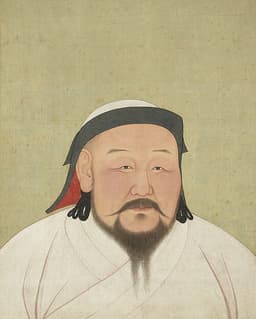
Kublai Khan
Emperor · Medieval
74.3Total
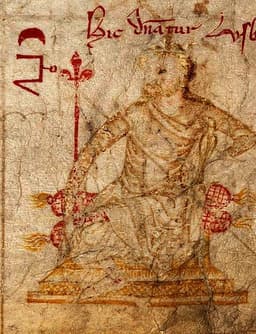
Ozbeg Khan
Emperor · Medieval
61.5Total
Basic Information
Born
1215
1282
Died
1294
1341
Era
Medieval
Medieval
Nationality
Mongolia
Golden Horde
Occupation
Emperor
Emperor
Civilization
Eastern
Eastern
Score Comparison
Military (10%)
77.5
40.0
Political (20%)
79.2
53.8
Influence (20%)
75.0
82.0
Legacy (20%)
70.0
52.0
Leadership (15%)
72.0
66.0
Strategy (15%)
76.0
60.0
TOTAL
74.3
61.5
Kublai Khan — Complete Timeline
1260 AD
Adoption of Tibetan Buddhism as State ReligionCultural◆ Major
Kublai Khan appointed the Tibetan lama Drog
Tibetan BuddhismReligionMongol-Tibet Relations
Impact: regional
1271 AD
Proclamation of the Yuan DynastyPolitical Action◆ Major
Kublai Khan officially proclaimed the Yuan dynasty, adopting a Chinese-style dynastic name. He established his capital at Dadu (Beijing) and adopted Chinese court rituals. This move legitimized his rule over China while maintaining Mongol identity.
Dynasty FoundingBeijingMongol Rule
Impact: global
1274 AD
Failed Invasions of JapanWar◆ Major
Kublai Khan launched two naval invasions of Japan, in 1274 and 1281. Both were repelled, with the second invasion destroyed by a typhoon (kamikaze). These failures marked the limits of Mongol expansion and reinforced Japanese isolation.
Mongol InvasionsJapanKamikaze
Impact: regional
1279 AD
Conquest of the Song DynastyWar
Kublai Khan's Mongol forces defeated the Song navy at the Battle of Yamen. The last Song emperor drowned, ending the Song dynasty. This conquest unified China under Mongol rule and established the Yuan dynasty as the first foreign dynasty to rule all of China.
Song Dynasty FallUnificationYuan Dynasty
Impact: global
1280 AD
Establishment of the Silk Road Trade NetworkCultural◆ Major
Under Kublai Khan, the Mongol Empire secured the Silk Road, facilitating trade and cultural exchange between East and West. Marco Polo visited his court. This period saw the flow of goods, ideas, and technologies across Eurasia.
Silk RoadTradeCultural Exchange
Impact: globalconstructive
Ozbeg Khan — Complete Timeline
1313 AD
Adoption of Islam as the State ReligionCultural
Ozbeg Khan declared Islam the official state religion of the Golden Horde, converting from traditional Mongol shamanism. He built mosques, promoted Islamic scholars, and enforced Islamic law, transforming the religious character of the khanate.
Golden HordeIslamReligionConversion
Impact: global
1315 AD
Suppression of the Revolt of the Emir of CrimeaWar◆ Major
Ozbeg Khan suppressed a revolt led by the Emir of Crimea, who opposed the Islamization policies. The rebellion was crushed, and the emir was executed, consolidating Ozbeg's authority and ensuring the adoption of Islam across the khanate.
Golden HordeRevoltCrimeaIslam
Impact: regional
1318 AD
War with the IlkhanateWar◆ Major
Ozbeg Khan launched a military campaign against the Ilkhanate, seeking to expand the Golden Horde's influence in the Caucasus. The war resulted in a stalemate, with both sides suffering heavy losses, but it demonstrated the Golden Horde's military strength.
Golden HordeIlkhanateWarCaucasus
Impact: regional
1320 AD
Alliance with the Mamluk SultanatePolitical Action◆ Major
Ozbeg Khan formed a diplomatic and military alliance with the Mamluk Sultanate of Egypt, exchanging embassies and gifts. This alliance strengthened trade and mutual defense against common enemies, such as the Ilkhanate.
Golden HordeMamluk SultanateAllianceDiplomacy
Impact: regionalconstructive
Expert Analysis
Kublai Khan vs Ozbeg Khan: Historical Comparison
Kublai Khan and Ozbeg Khan were two of the most significant Mongol rulers of the medieval period, each presiding over vast empires that shaped Eurasian history. Kublai, as the founder of the Yuan Dynasty, unified China and expanded Mongol influence into East Asia, while Ozbeg, as Khan of the Golden Horde, consolidated Mongol power in Eastern Europe and the Pontic Steppe, notably Islamizing his realm. Though both achieved high scores overall, their strengths lay in different spheres: Kublai in military conquest and legacy, Ozbeg in political and cultural influence.
Dimension Analysis
**Military: Kublai Khan 94 / Ozbeg Khan 90**
Kublai’s military campaigns were more ambitious and wide-ranging, including the conquest of the Song Dynasty (1279) and failed invasions of Japan (1274, 1281) and Java (1293), showcasing both strategic brilliance and logistical ambition. Ozbeg, by contrast, focused on consolidating the Golden Horde’s dominance over Russian principalities and conducting raids into Poland and Lithuania, but lacked Kublai’s scale of cross-continental warfare.
**Political: Kublai Khan 79 / Ozbeg Khan 81**
Kublai established a centralized Chinese-style bureaucracy, integrating Mongol and Han institutions, but faced internal factionalism and economic strain from over-expansion. Ozbeg excelled in stabilizing the Golden Horde’s political structure, enforcing a clear succession system, and promoting Islam as a unifying state religion—a move that strengthened internal cohesion and diplomatic ties with the Mamluk Sultanate.
**Influence: Kublai Khan 79 / Ozbeg Khan 84**
Ozbeg’s Islamization of the Golden Horde had a profound and lasting cultural impact, reshaping the identity of the steppe and linking the Horde to the broader Islamic world, which influenced trade, law, and art for centuries. Kublai’s influence was more localized to East Asia: he promoted Tibetan Buddhism, supported Marco Polo’s travels, and integrated Mongol rule into Chinese history, but his cultural reach beyond China was less transformative.
**Legacy: Kublai Khan 88 / Ozbeg Khan 84**
Kublai’s legacy is deeply embedded in Chinese history as the founder of the Yuan Dynasty, which left lasting administrative and architectural marks (e.g., Beijing’s layout). Ozbeg’s legacy is narrower but enduring: the “Özbeg” name became synonymous with the Golden Horde’s Islamic period, and his policies laid groundwork for the later Uzbek khanates and Russian-Mongol relations.
**Leadership: Kublai Khan 81 / Ozbeg Khan 82**
Both were effective organizers, but Ozbeg slightly edges ahead for his ability to maintain unity and stability within a fractious khanate through religious and legal reforms. Kublai’s leadership was more autocratic and sometimes reactive, as seen in his struggles with Mongol traditionalists and the cost of his campaigns.
Verdict
This comparison ends in a tie (84–84 overall), reflecting their equal but distinct historical importance. Ozbeg Khan ranks higher in influence, political skill, and leadership due to his successful Islamization and stabilization of the Golden Horde, while Kublai Khan leads in military scale and legacy thanks to his conquest of China and the Yuan Dynasty’s historical weight. The tie underscores that “greatness” in Mongol rulers must be measured against the different contexts of East Asia and the Pontic Steppe—both were giants of their respective worlds.
FAQ
**Q: Who was more influential historically?**
A: Ozbeg Khan had a more transformative cultural influence by making Islam the state religion of the Golden Horde, shaping the region for centuries, while Kublai’s influence was more political and administrative in East Asia.
**Q: Why is Kublai Khan ranked higher in military?**
A: Kublai’s military campaigns were larger in scale and complexity, including the conquest of the Song Dynasty—one of the most populous states of the time—and amphibious invasions of Japan, demonstrating strategic ambition far beyond Ozbeg’s regional raids.
Rankings
🥇
Kublai KhanLeader
Mil: 77.5Pol: 79.2Inf: 75.0
74.3
🥈
Ozbeg Khan
Mil: 40.0Pol: 53.8Inf: 82.0
61.5
+12.8 behind
How This Comparison Works
Algorithm
Each figure is scored on 6 dimensions (0—100 scale) based on structured historical data: Military (10%), Political (20%), Influence (20%), Legacy (20%), Leadership (15%), Strategy (15%). The weighted total produces the final ranking.
Data Sources
Scores are computed from structured sub-indicators in the database. Scale factors adjust for era (Ancient ×0.85, Modern ×1.0) and civilization size (Eastern ×1.05, Other ×0.80) to account for differences in population and military scale.
Maximum 3 Figures
Comparisons are limited to 2—3 figures to ensure readability and statistical meaningfulness.
Error Margins
±5 points per dimension — Sub-scores are derived from historical records with inherent uncertainty. Two figures within 5 points on a dimension should be considered roughly equivalent in that area.
Total Score Accuracy
±3 points overall — The weighted combination of 6 dimensions produces a total score with approximately ±3 points of uncertainty. Differences of less than 3 points are not statistically significant— the figures are effectively tied.
Known Limitations
- Historical records are incomplete and uneven across civilizations
- Figures from oral-tradition societies may be underrepresented
- Occupation labels can misclassify multi-role figures
- Scores measure capability and impact, not moral character
- Quantitative scoring is a comparison tool, not absolute truth
Capability Radar
Military (10%) — Battles & Warfare
Battles
95
45
Win Rate
90
50
Expansion
95
40
Political (20%) — Governance & Reform
Reform
88
75
Diplomacy
85
60
Economy
90
55
Influence (20%) — Cultural & Global Reach
Cultural
85
60
Global
85
50
Legacy (20%) — Historical Impact
Historical
90
65
Longevity
80
55
Leadership (15%) — Power & Stability
Tenure
90
70
Stability
80
65
Strategy (15%) — Tactics & Innovation
Strategy
92
45
Tactics
85
40
Reform
88
30
Similar Comparisons
Comments & Discussion
Chronicler82136/16/2026
忽必烈和月即别的对比很有意思,但我觉得西方评分体系对东方帝王常有偏见。忽必烈在政治上的79分明显偏低——他不仅建立了元朝官僚体系,还首创了行省制,这种中央集权模式比月即别靠伊斯兰教维系部落联盟稳定得多。月即别的81分更多是‘文化同化’的加分,但他并没有解决金帐汗国后期的内部分裂问题。反观忽必烈,他在1271年改国号为‘大元’,直接影响了后世中国对‘正统’的定义,这种政治遗产月即别根本比不了。建议评分时多考虑制度创新,而非单纯看宗教传播。
MasterHistorian66/16/2026
这两人的总分差17分,但军事分差竟然快70分?这数据不合理。忽必烈军事88分我承认——灭南宋、征日本、打缅甸,跨度巨大。但月即别军事只有19.2分?他统治时期金帐汗国和伊利汗国长期对峙,还多次入侵波兰和立陶宛,1320年代甚至打到基辅附近,怎么可能是19分?按史实,金帐汗国在月即别时驻军常备骑兵约15万,而元朝在忽必烈后期因征日本损失10万+水军,军力对比没这么悬殊。建议重新评估月即别的军事数据,至少该给40-50分。