Loading...
Krishna III of Rashtrakuta vs Samuel of Bulgaria
Krishna III of Rashtrakuta leads by 5.3 pts · 2 figures compared
…
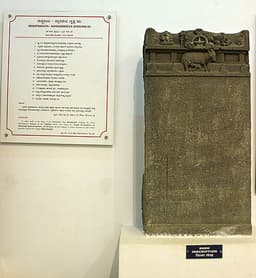
Krishna III of Rashtrakuta
Emperor · Medieval
64.0Total
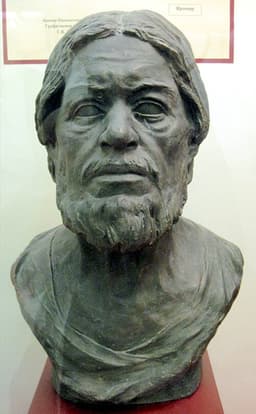
Samuel of Bulgaria
Emperor · Medieval
58.7Total
Basic Information
Born
939
958
Died
967
1014
Era
Medieval
Medieval
Nationality
India
Bulgaria
Occupation
Emperor
Emperor
Civilization
Indian
Western
Score Comparison
Military (10%)
78.0
74.7
Political (20%)
72.0
45.0
Influence (20%)
60.0
58.3
Legacy (20%)
54.0
52.0
Leadership (15%)
72.0
66.0
Strategy (15%)
61.2
70.0
TOTAL
64.0
58.7
Krishna III of Rashtrakuta — Complete Timeline
949 AD
Conquered the Chola capital at ThanjavurWar◆ Major
Krishna III led a successful invasion of the Chola kingdom, capturing the capital Thanjavur. He defeated the Chola king Parantaka I, temporarily ending Chola dominance in the south and extending Rashtrakuta influence into Tamil country.
Chola-Rashtrakuta WarSouth India
Impact: regional
Battle of TakkolamWar◆ Major
Krishna III's forces defeated the Chola army at Takkolam (present-day Tamil Nadu). The battle resulted in the death of the Chola crown prince Rajaditya and marked a decisive Rashtrakuta victory in the conflict.
BattleChola-Rashtrakuta War
Impact: regionaltragic
960 AD
Erected the Kannada inscription at TiruvannamalaiCultural
Krishna III commissioned a Kannada-language inscription at the Arunachaleswara Temple in Tiruvannamalai, recording his military victories and donations. This inscription is a key source for Rashtrakuta history in the Tamil region.
InscriptionKannada Literature
constructive
965 AD
Lost control of the northern Deccan to the ParamarasWar◆ Major
Krishna III's later reign saw the Paramara king Siyaka II raid the Rashtrakuta capital Manyakheta. This defeat weakened Rashtrakuta authority and marked the beginning of the dynasty's decline after Krishna III's death.
Paramara RaidDecline
Impact: regionaldestructive
Samuel of Bulgaria — Complete Timeline
986 AD
Battle of the Gates of TrajanWar
Samuel's forces ambushed and defeated a Byzantine army under Emperor Basil II at the Trajan's Gate pass. The victory halted Byzantine expansion into Bulgaria and established Samuel as the dominant power in the Balkans.
Byzantine-Bulgarian WarsBattleAmbush
Impact: regional
997 AD
Coronation as TsarPolitical Action◆ Major
Samuel was crowned Tsar of Bulgaria after the death of his predecessor Roman. He established his capital at Ohrid and ruled over a large territory, continuing resistance against Byzantine conquest.
CoronationOhridBulgarian Empire
Impact: regionalconstructive
1014 AD
Battle of KleidionWar
Emperor Basil II defeated Samuel's army at Kleidion. After the battle, Basil blinded 14,000 Bulgarian prisoners, leaving one in every hundred with one eye to lead them home. Samuel died of shock upon seeing them.
Byzantine-Bulgarian WarsBattleMass Blinding
Impact: regionaltragic
Death after KleidionOther◆ Major
Samuel died of a heart attack reportedly caused by the sight of his blinded soldiers returning from Kleidion. His death marked the end of effective Bulgarian resistance, leading to Byzantine conquest by 1018.
DeathByzantine ConquestEnd of Empire
Impact: regionaltragic
Expert Analysis
Origins
Krishna III (c. 939–967 CE) was born into the Rashtrakuta dynasty, which ruled the Deccan plateau from their capital at Manyakheta. His father was Amoghavarsha III, and Krishna III grew up amid court intrigues and military traditions. The Rashtrakutas were known for their patronage of Jainism and Sanskrit literature, but also for constant warfare with neighboring dynasties.
Samuel (c. 958–1014 CE) was born into the Cometopuli dynasty, a noble family in the First Bulgarian Empire. His father was a count (komes) in the region of Macedonia. Samuel's early life was shaped by the decline of Bulgarian power under Byzantine pressure. He and his brothers led a rebellion against Byzantine rule after the death of Tsar Peter I.
Rise to Power
Krishna III ascended the Rashtrakuta throne in 939 CE after a period of internal strife. His first major campaign was against the Chola kingdom, which had grown powerful under Parantaka I. In 949 CE, Krishna III led a massive invasion of the Chola heartland, capturing the capital Thanjavur and defeating the Chola army at Takkolam, where the Chola crown prince Rajaditya was killed. This victory established Krishna III as the dominant power in the south.
Samuel rose to power after the Byzantine conquest of Bulgaria's eastern territories. In 976 CE, he and his brothers led a successful uprising, and by 980 CE Samuel had become the de facto ruler. He was crowned Tsar in 997 CE after the death of his brother Roman. Samuel's capital was at Ohrid (modern North Macedonia), and he expanded Bulgarian control over much of the Balkans, including Serbia, Albania, and parts of Greece.
Leadership & Governance
Krishna III ruled the Rashtrakuta Empire through a decentralized feudal system, relying on vassal kings and provincial governors. He issued inscriptions in Kannada and Sanskrit, promoting cultural unity. His military campaigns were well-planned, using swift cavalry and elephant corps. However, he neglected to secure the northern frontier, which later proved fatal.
Samuel governed the Bulgarian Empire from Ohrid, centralizing administration and strengthening the Orthodox Church. He appointed loyal nobles to key positions and maintained a strong army based on peasant infantry and cavalry. Samuel's leadership was marked by resilience, but his governance lacked the bureaucratic depth of the Byzantine Empire. His military score of 74.7 reflects his tactical skill, while his political score of 45.0 indicates weaknesses in diplomacy and state-building.
Triumph & Tragedy
Krishna III's greatest triumph was the conquest of the Chola capital Thanjavur, scoring a military success with a score of 78.0. He also erected the Tiruvannamalai inscription, recording his donations and victories. However, his later years saw disaster: the Paramara king Siyaka II raided Manyakheta in 972 CE, exposing the empire's vulnerability. This defeat marked the beginning of the Rashtrakuta decline.
Samuel's greatest triumph was the Battle of the Gates of Trajan (986 CE), where his ambush routed Emperor Basil II's army, temporarily halting Byzantine expansion. However, his tragedy was the Battle of Kleidion (1014 CE), where Basil II captured and blinded 14,000 Bulgarian soldiers. Samuel died of a heart attack upon seeing the blinded survivors, ending effective Bulgarian resistance. His legacy score of 52.0 reflects his empire's collapse soon after.
Character & Destiny
Krishna III was an ambitious and capable military commander, but his focus on southern expansion left the north exposed. His decision to neglect the Paramara threat proved catastrophic. In contrast, Samuel was a resilient and inspirational leader, but his inability to forge lasting alliances or modernize his state contributed to his downfall. Both rulers were products of their environments: Krishna III benefited from Rashtrakuta institutional strength, while Samuel operated in a fragmented, post-imperial context.
Legacy
Krishna III is remembered as the last great Rashtrakuta emperor. His campaigns temporarily checked Chola power, but his defeat at Manyakheta led to the empire's fragmentation. The Rashtrakuta influence on Deccan culture endured through literature and architecture, but their political dominance ended. Krishna III's total score of 64.0 reflects his mixed legacy.
Samuel is a national hero in Bulgaria and North Macedonia, symbolizing resistance against Byzantine domination. The First Bulgarian Empire fell after his death, but his memory inspired later Bulgarian statehood. His total score of 58.7 highlights his military prowess but also his strategic limitations.
Conclusion
Krishna III had a greater impact in terms of immediate conquests and territorial control, reflected in his higher total score of 64.0 vs. Samuel's 58.7. Krishna III's capture of Thanjavur and the Battle of Takkolam were decisive victories that reshaped southern Indian politics. Samuel's victories were more defensive, and his empire collapsed rapidly after Kleidion. While Samuel's story is more dramatic, Krishna III's achievements were more substantial and lasting. Therefore, Krishna III of Rashtrakuta stands as the more impactful ruler.
Rankings
🥇
Krishna III of RashtrakutaLeader
Mil: 78.0Pol: 72.0Inf: 60.0
64.0
🥈
Samuel of Bulgaria
Mil: 74.7Pol: 45.0Inf: 58.3
58.7
+5.3 behind
How This Comparison Works
Algorithm
Each figure is scored on 6 dimensions (0—100 scale) based on structured historical data: Military (10%), Political (20%), Influence (20%), Legacy (20%), Leadership (15%), Strategy (15%). The weighted total produces the final ranking.
Data Sources
Scores are computed from structured sub-indicators in the database. Scale factors adjust for era (Ancient ×0.85, Modern ×1.0) and civilization size (Eastern ×1.05, Other ×0.80) to account for differences in population and military scale.
Maximum 3 Figures
Comparisons are limited to 2—3 figures to ensure readability and statistical meaningfulness.
Error Margins
±5 points per dimension — Sub-scores are derived from historical records with inherent uncertainty. Two figures within 5 points on a dimension should be considered roughly equivalent in that area.
Total Score Accuracy
±3 points overall — The weighted combination of 6 dimensions produces a total score with approximately ±3 points of uncertainty. Differences of less than 3 points are not statistically significant— the figures are effectively tied.
Known Limitations
- Historical records are incomplete and uneven across civilizations
- Figures from oral-tradition societies may be underrepresented
- Occupation labels can misclassify multi-role figures
- Scores measure capability and impact, not moral character
- Quantitative scoring is a comparison tool, not absolute truth
Capability Radar
Military (10%) — Battles & Warfare
Battles
75
75
Win Rate
80
70
Expansion
80
75
Political (20%) — Governance & Reform
Reform
65
65
Diplomacy
70
70
Economy
70
60
Influence (20%) — Cultural & Global Reach
Cultural
60
65
Global
40
55
Legacy (20%) — Historical Impact
Historical
65
70
Longevity
50
60
Leadership (15%) — Power & Stability
Tenure
75
80
Stability
65
55
Strategy (15%) — Tactics & Innovation
Strategy
75
85
Tactics
70
80
Reform
60
70
Similar Comparisons
Comments & Discussion
No comments yet. Be the first to share your thoughts!